As digital marketing becomes more complex, programmatic advertising has become one of the most important tools for brands that want to reach the right audience at the right time with the right message. What once felt like a highly technical, niche part of media buying is now a central part of modern advertising strategy. In 2025, programmatic advertising is no longer just about automation. It is about intelligence, speed, personalization, and smarter decisions across every stage of the campaign journey.
For marketers, the appeal is obvious. Instead of manually negotiating placements across dozens of publishers, programmatic advertising allows brands to buy digital inventory through software, data, and real-time bidding systems. That means less waste, more precision, and better control over performance. But while the technology has become more accessible, the strategy behind it has become more sophisticated. Success now depends on data quality, creative quality, audience understanding, measurement, and a strong grasp of privacy-first advertising.
This guide breaks down everything you need to know about programmatic advertising in 2025. Whether you are a marketer, media buyer, business owner, or strategist, you will learn how programmatic advertising works, why it matters, what tools you need, how to optimize campaigns, and what trends are shaping the future.
What Is Programmatic Advertising?
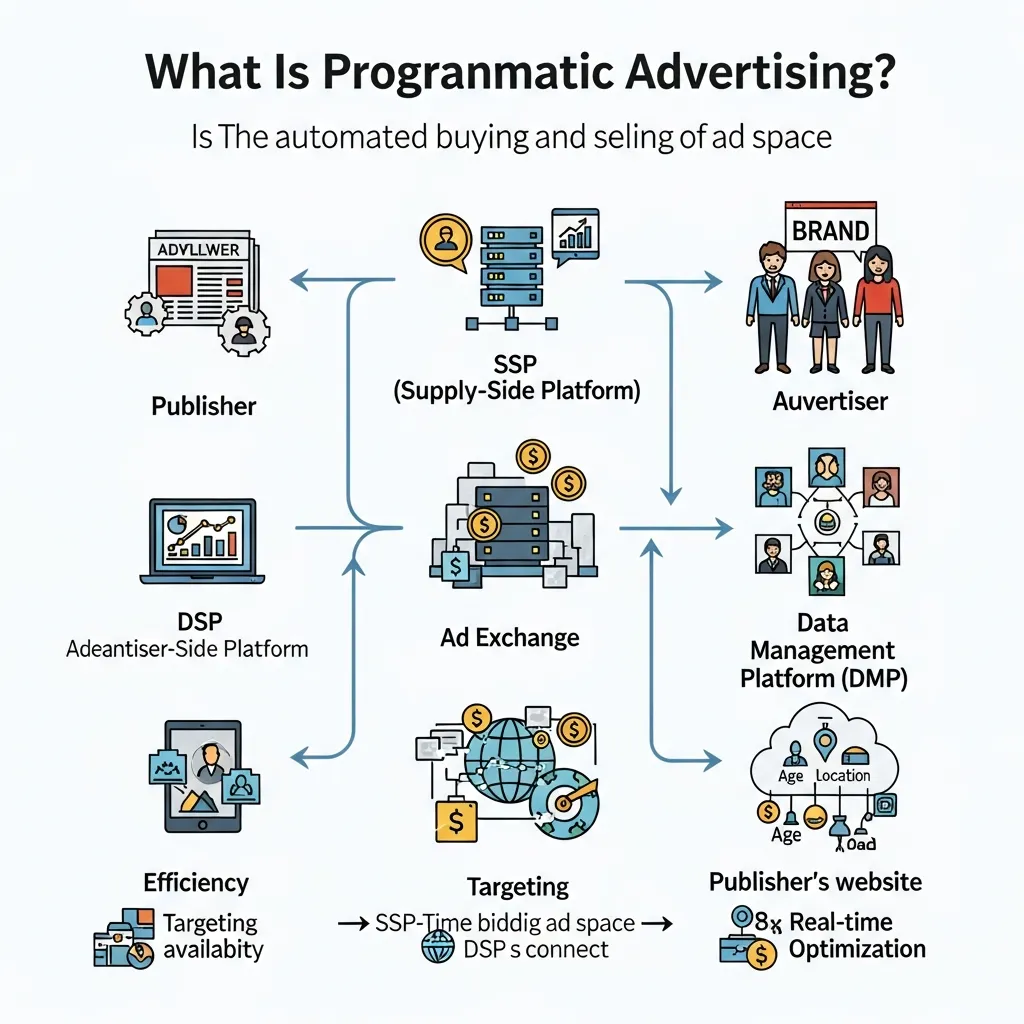
At its core, programmatic advertising is the automated buying and selling of digital ad inventory. Instead of traditional manual negotiations, ads are purchased through platforms that use algorithms and data to decide where, when, and to whom an ad should be shown. This happens in milliseconds and is powered by a combination of demand-side platforms, supply-side platforms, ad exchanges, data providers, and verification tools.
The biggest advantage of programmatic advertising is efficiency. Brands can target audiences more precisely, reduce wasted impressions, and adjust campaigns in real time. That means the system is not only faster than manual buying, but often smarter as well.
Programmatic advertising also gives marketers access to a wide variety of inventory. This includes display banners, native ads, video placements, connected TV, audio ads, digital out-of-home, and more. Instead of limiting a campaign to one channel, advertisers can build cross-channel strategies that follow users across devices and environments.
How Programmatic Advertising Works
To understand programmatic advertising properly, it helps to look at the process step by step.
When a user visits a website or app with available ad space, the publisher sends that impression to an ad exchange or supply platform. Advertisers who want to reach that user or audience segment can bid on the impression through their demand-side platform. The highest bidder usually wins, and the ad is served almost instantly.
This entire process is called real-time bidding, or RTB. It is the most common form of programmatic advertising, but not the only one. Some programmatic deals are bought directly, while others happen through private marketplaces or guaranteed placements. The structure may vary, but the principle remains the same: use technology and data to make better media buying decisions.
The sophistication of programmatic advertising comes from the signals used in the auction. These can include location, device type, browsing behavior, demographics, content context, time of day, previous site visits, and even predicted conversion potential. As machine learning becomes more advanced, these signals are increasingly combined into smarter bidding models that improve campaign performance over time.
The Main Types of Programmatic Advertising
1. Real-Time Bidding
Real-time bidding is the open auction model most people associate with programmatic advertising. Every impression is auctioned individually, and advertisers bid based on their targeting rules and campaign goals. RTB is powerful because it offers scale and flexibility. It is ideal for performance-driven campaigns that need reach and efficiency.
2. Programmatic Direct
Programmatic direct combines automation with guaranteed inventory. Instead of bidding in an open auction, advertisers purchase placements directly from publishers at fixed rates. This method offers more predictability, better transparency, and often stronger brand safety. It works well for premium placements and awareness campaigns.
3. Private Marketplaces
Private marketplaces are invitation-only environments where selected buyers and publishers negotiate access to premium inventory. PMPs offer the speed of programmatic advertising with more control over quality and brand suitability. They are often preferred by larger brands that want better inventory without giving up the automation benefits of programmatic buying.
4. Programmatic Guaranteed
This model gives advertisers guaranteed inventory at a fixed price but still uses programmatic technology to execute the deal. It is useful when a brand wants certainty on placement while still benefiting from automated delivery and reporting.
Why Programmatic Advertising Matters in 2025
Programmatic advertising matters because the digital ecosystem has become too fragmented for manual buying alone. Users move across mobile, desktop, connected TV, social platforms, streaming services, websites, and apps. Attention is scattered, privacy rules are changing, and competition for impressions is stronger than ever.
In this environment, programmatic advertising provides a clear advantage. It allows marketers to:
- Reach defined audiences with greater precision
- Adjust bids and creative in real time
- Reduce spend on low-value impressions
- Scale campaigns across multiple channels
- Measure performance more effectively
- Adapt to privacy changes with flexible data strategies
In 2025, the role of artificial intelligence is especially important. Machine learning models help advertisers predict which users are more likely to convert, which creative combinations are performing best, and which placements are worth paying for. That means programmatic advertising is no longer just automated buying. It is automated optimization.
The Core Benefits of Programmatic Advertising
Better Targeting
One of the biggest strengths of programmatic advertising is the ability to reach highly specific audiences. Advertisers can use first-party data, contextual signals, behavioral data, and lookalike models to build campaigns around real user intent.
Greater Efficiency
Because decisions are made automatically, programmatic advertising reduces the time and labor involved in media buying. Campaigns can be launched, monitored, and adjusted much faster than traditional manual campaigns.
Real-Time Optimization
Programmatic advertising platforms allow marketers to see performance data quickly and respond to it. If one audience segment is underperforming, budgets can be shifted. If one creative is generating stronger engagement, it can be prioritized immediately.
Cross-Channel Reach
Modern programmatic advertising goes beyond display banners. It includes video, connected TV, native, audio, and even digital out-of-home. That makes it easier to build a full-funnel strategy that reaches audiences across many touchpoints.
Scalable Personalization
With dynamic creative optimization, programmatic advertising can deliver different messages to different users based on behavior, context, geography, device, or stage in the funnel. This creates more relevant experiences and often better results.
Key Strategies for Successful Programmatic Advertising
Use Strong Audience Segmentation
Audience strategy is the foundation of programmatic advertising. The more clearly you understand your audience, the more efficient your campaigns will be. Start by segmenting users based on intent, behavior, demographics, or customer lifecycle stage. Then build separate strategies for each group.
Prioritize First-Party Data
As third-party cookies fade and privacy standards rise, first-party data has become even more valuable. Brands that collect their own customer data can build stronger programmatic advertising strategies through CRM lists, website behavior, purchase history, and loyalty programs.
Invest in Dynamic Creative Optimization
Creative matters just as much as media placement. Dynamic creative optimization allows brands to automatically adjust ad elements based on the user viewing them. This means one user might see a different headline, image, or CTA than another user. In programmatic advertising, this kind of flexibility can improve relevance and performance.
Build a Strong Measurement Framework
If you cannot measure the right outcomes, you cannot improve them. Programmatic advertising should always be tied to clear KPIs. These may include impressions, click-through rate, conversion rate, cost per acquisition, viewability, return on ad spend, or incremental lift.
Protect Brand Safety
Not every impression is equally valuable. Programmatic advertising can sometimes place ads near low-quality or unsuitable content if safeguards are not in place. Use whitelists, blocklists, verification partners, and private marketplace deals to keep campaigns aligned with brand standards.
Optimize for the Full Funnel
Programmatic advertising should not be treated as only a performance tool or only a branding tool. It can support awareness, consideration, and conversion when the strategy is aligned. The best campaigns use different tactics for different funnel stages.
Essential Tools and Platforms
Successful programmatic advertising requires a stack of tools that work together.
Demand-Side Platforms
DSPs are the advertiser-facing systems used to buy inventory programmatically. They allow marketers to define targeting, manage bids, launch campaigns, and monitor performance. Well-known DSPs in 2025 include platforms such as The Trade Desk and Google Display & Video 360.
Supply-Side Platforms
SSPs are used by publishers to manage and sell their inventory. These platforms help publishers maximize revenue while giving buyers access to available ad space.
Data Management Platforms
DMPs help centralize and organize audience data. Although the industry has evolved, data activation and segmentation remain central to programmatic advertising. Unified audience data improves campaign accuracy and relevance.
Verification and Brand Safety Tools
These tools help ensure ads appear in suitable environments and are seen by real people. They can detect fraud, invalid traffic, unsafe content, and viewability issues.
Measurement and Attribution Tools
Attribution tools help marketers understand which touchpoints contributed to a conversion. In programmatic advertising, this is essential for deciding where to allocate budgets and how to refine campaigns over time.
How to Measure Programmatic Advertising Performance
Measurement is one of the most important parts of any programmatic advertising strategy. A campaign can look efficient on the surface while failing to produce meaningful business results. That is why marketers need a broad view of performance.
Key Metrics to Track
- CPM: cost per thousand impressions
- CPC: cost per click
- CPA: cost per acquisition
- CTR: click-through rate
- Viewability: whether the ad had the chance to be seen
- ROAS: return on ad spend
- Conversion rate: the percentage of users who completed the desired action
Why Incrementality Matters
Programmatic advertising should not only be measured by last-click conversions. Incrementality shows whether the campaign caused additional value that would not have happened otherwise. This is especially important when running awareness or upper-funnel campaigns.
Attribution in a Privacy-First World
Attribution has become more difficult as cookies disappear and privacy rules tighten. That is why many marketers now rely on modeled conversions, media mix modeling, clean rooms, and first-party data integrations. Programmatic advertising in 2025 must account for this new reality.
Testing and Optimization
The best programmatic advertising campaigns are never static. They are constantly tested and improved. A/B testing creative, adjusting bids, experimenting with new segments, and comparing performance across devices can reveal major opportunities for growth.
Common Mistakes in Programmatic Advertising
Even experienced advertisers make mistakes when running programmatic advertising campaigns. Some of the most common include:
Over-Automating Without Strategy
Automation is powerful, but it is not a substitute for strategic thinking. Programmatic advertising still needs clear goals, audience logic, and budget discipline.
Ignoring Creative Quality
Strong targeting will not save weak creative. If the messaging is irrelevant or visually weak, even the best programmatic advertising setup will underperform. Creative should be refreshed regularly.
Focusing Only on Cheap Inventory
Low CPMs are not always a win. Cheap impressions may come with low viewability, poor placement quality, or weak conversion potential. Smart programmatic advertising balances cost with quality.
Using Too Many Overlapping Audiences
If audience segments are not carefully defined, campaigns can compete against themselves. That can inflate costs and reduce efficiency.
Forgetting About Brand Safety
In programmatic advertising, scale is valuable only if the environment is safe and suitable. Brands must monitor inventory quality carefully.
Programmatic Advertising and Privacy
Privacy is one of the biggest forces shaping programmatic advertising in 2025. The decline of third-party cookies, new regulations, and stronger consumer expectations have changed how marketers collect and use data.
The Rise of First-Party Data
Brands are investing more in direct customer relationships. First-party data from websites, apps, CRM systems, and email engagement is now a major asset in programmatic advertising.
Contextual Targeting Returns
As identity-based tracking becomes more limited, contextual targeting is gaining momentum. This means placing ads based on the content of the page rather than the identity of the user. It is a natural fit for privacy-first programmatic advertising.
Clean Rooms and Data Collaboration
Clean rooms allow advertisers and publishers to analyze data without exposing personal information directly. This helps with measurement, audience matching, and campaign planning while respecting privacy.
Identity Solutions
Industry solutions continue to evolve as replacements or complements to cookie-based targeting. The direction of programmatic advertising is clear: more privacy, more consent, and more responsible data use.
Future Trends in Digital Media Buying
1. Connected TV Growth
Connected TV continues to be one of the fastest-growing channels in digital advertising. As audiences spend more time on streaming platforms, brands gain access to premium video inventory with advanced targeting and measurement capabilities. This shift creates new opportunities to reach highly engaged viewers beyond traditional television.
2. Audio and Digital Out-of-Home Expansion
The advertising landscape is becoming increasingly omnichannel. Streaming audio services, podcasts, and digital billboards are now integrated into broader media strategies. These channels allow marketers to extend their reach while maintaining consistent messaging across multiple touchpoints.
3. AI-Driven Creative and Bidding
Artificial intelligence is transforming campaign management. Advanced algorithms can predict user behavior, optimize bids in real time, and generate personalized creative assets. As AI evolves, marketers will be able to improve efficiency while reducing manual workload.
4. Better Cross-Channel Measurement
Modern advertisers need a complete picture of customer journeys. New measurement technologies are helping brands track performance across devices, platforms, and formats. This improved visibility enables smarter budget allocation and more accurate attribution.
5. Greater Focus on Quality and Transparency
The industry is placing increased importance on trusted inventory, reliable data, and transparent reporting. Advertisers are prioritizing premium environments, stronger fraud prevention, and higher-quality audience insights to improve campaign outcomes.
How to Build a Successful Campaign
Creating a high-performing campaign starts with careful planning and a clear understanding of business objectives.
Step 1: Define Clear Objectives
Determine whether the primary goal is lead generation, sales growth, customer acquisition, website traffic, or brand awareness. Clear objectives help guide targeting, bidding, and creative decisions.
Step 2: Know Your Audience
Use customer research, behavioral insights, and first-party data to identify the people most likely to engage with your message. Strong audience understanding leads to more relevant communication and better results.
Step 3: Select the Right Buying Approach
Different goals require different purchasing methods. Open exchanges provide scale, while private deals and guaranteed placements offer more control, transparency, and premium inventory access.
Step 4: Develop Relevant Creative
Ad creatives should align with audience interests, platform requirements, and the stage of the customer journey. Personalized messaging often performs better than generic advertisements.
Step 5: Establish Measurement Frameworks
Before launch, define the key performance indicators that matter most. Set up tracking systems, attribution models, and reporting dashboards to evaluate effectiveness accurately.
Step 6: Monitor and Optimize
Campaign success depends on ongoing refinement. Analyze performance data regularly, adjust budgets, test new creative variations, and expand high-performing audience segments while reducing spend on underperforming placements.
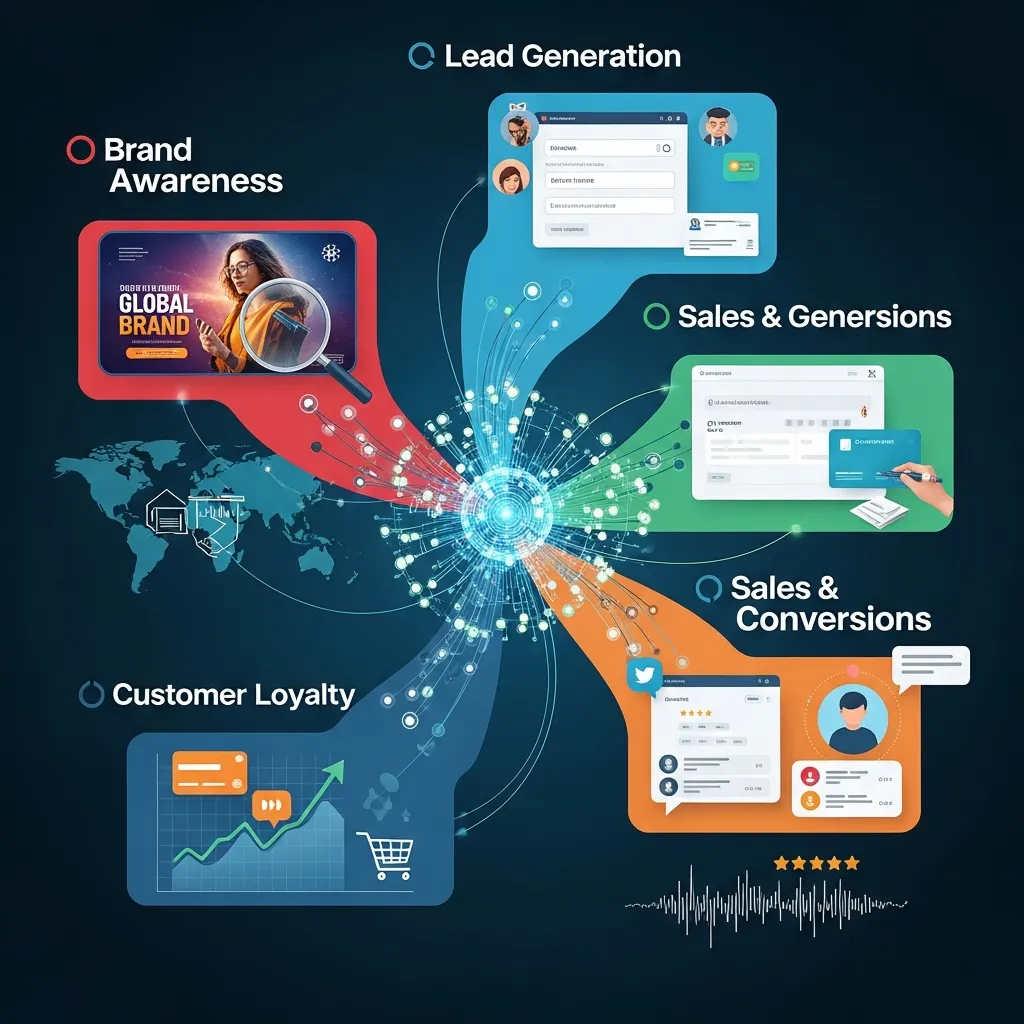
Programmatic Advertising for Different Business Goals
For Brand Awareness
Programmatic advertising can deliver premium reach through video, display, and connected TV. The goal here is exposure, recall, and emotional connection.
For Lead Generation
Performance-focused programmatic advertising can target high-intent audiences with conversion-driven creative and landing pages.
For Retargeting
Retargeting remains one of the most effective uses of programmatic advertising. It helps bring back users who showed interest but did not convert.
For E-Commerce
E-commerce brands can use programmatic advertising to showcase products dynamically, recover abandoned carts, and scale seasonal campaigns.
For B2B Marketing
B2B programmatic advertising works well when combined with account-based targeting, content syndication, and lead nurturing.
Building the Right Mindset
Programmatic advertising is not magic. It is a system. And like any system, it works best when the inputs are strong. Good data, good creative, good measurement, and good strategy all matter. Brands that treat programmatic advertising as a long-term capability, rather than a one-time tactic, usually see the strongest returns.
The advertisers who win in 2025 will not necessarily be the ones with the biggest budgets. They will be the ones who understand their audience better, adapt faster, and use technology with discipline. Programmatic advertising rewards precision, testing, and continuous learning.
Conclusion
Programmatic advertising has matured into one of the most powerful tools in modern digital marketing. In 2025, it offers brands the ability to buy media with greater intelligence, scale campaigns across channels, personalize messaging in real time, and measure performance more effectively than ever before.
But the technology alone is not enough. Success in programmatic advertising depends on strategy, data quality, creative excellence, privacy awareness, and continuous optimization. Brands that combine automation with thoughtful planning will be best positioned to thrive.
If you approach programmatic advertising with clarity and discipline, it can do far more than lower costs or save time. It can help you build stronger audience connections, improve campaign efficiency, and generate lasting business growth.
FAQs
1. What is programmatic advertising?
Programmatic advertising is the automated buying and selling of digital ad inventory using software, data, and real-time bidding systems.
2. Why is programmatic advertising important in 2025?
It matters because it helps advertisers target audiences more precisely, optimize in real time, and adapt to a fragmented, privacy-first digital environment.
3. What platforms are used for programmatic advertising?
Advertisers typically use demand-side platforms, along with data tools, verification tools, and measurement platforms.
4. Is programmatic advertising only for large brands?
No. While large brands use it heavily, smaller businesses can also benefit from programmatic advertising with the right strategy and budget.
5. How do I measure programmatic advertising success?
Use metrics such as CPM, CPC, CTR, CPA, viewability, conversion rate, and ROAS, depending on your campaign goals.
6. What is the future of programmatic advertising?
The future is being shaped by connected TV, AI, privacy-first measurement, omnichannel buying, and stronger data transparency.