In today’s digital landscape, businesses face evolving consumer expectations around seamless shopping experiences. Customers no longer rely solely on text-based queries when seeking products—they crave intuitive, image-driven discovery. AI-Powered Visual Search Advertising bridges this gap by allowing users to upload photographs, screenshots, or catalog images to immediately find matching items online. By combining advanced computer vision with machine learning capabilities, this innovative approach meets shoppers where they are, turning inspiration into instant purchase opportunities.
As online marketplaces become increasingly competitive, brands that implement AI-Powered Visual Search Advertising can differentiate their offerings through personalized, contextually relevant promotions. Instead of sifting through endless keyword options, consumers simply point, click, and explore curated ads that reflect their unique tastes and needs. Today, this technology not only enhances user engagement but also drives higher conversion rates and stronger brand loyalty. In this post, we’ll examine the core components, benefits, strategic implementation steps, and performance measurement techniques that define successful AI-Powered Visual Search Advertising campaigns.
Whether you’re a marketing professional seeking fresh growth strategies or an e-commerce leader looking to modernize your ad portfolio, this article will guide you through each critical phase, from understanding the underlying AI technologies to optimizing real-time ad delivery. Let’s delve into how AI-Powered Visual Search Advertising is reshaping the future of digital marketing.
Understanding AI-Powered Visual Search Advertising

AI-Powered Visual Search Advertising transforms how consumers discover products by leveraging image-based inputs instead of traditional text queries. When a user uploads a photo—be it a snapshot from their smartphone or a screenshot from social media—the system’s computer vision algorithms deconstruct the image into identifiable attributes such as color, texture, and shape. These attributes are then matched against a retailer’s indexed catalog, producing targeted ad placements that align precisely with the user’s visual cues.
Key Components of Visual Search Workflows
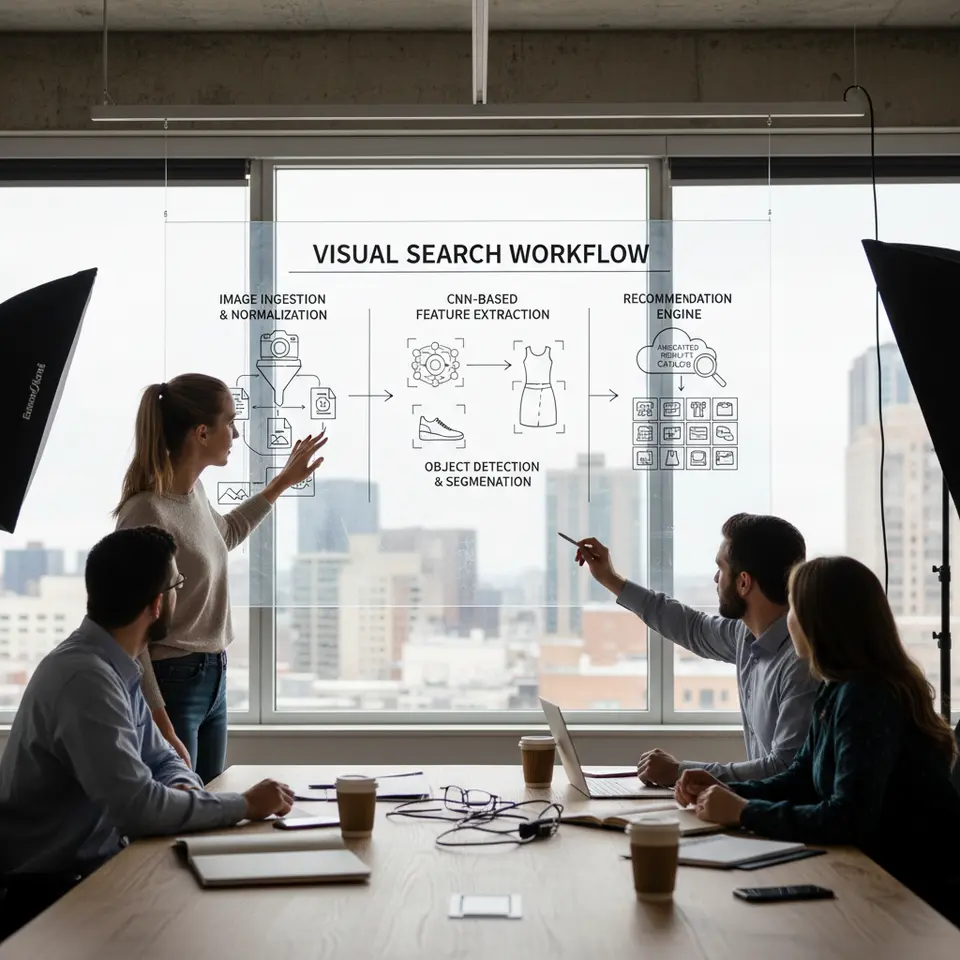
At its core, a visual search workflow involves three principal stages: image ingestion, feature extraction, and recommendation. During ingestion, the AI model normalizes the image for lighting, orientation, and scale. In the feature extraction phase, convolutional neural networks (CNNs) detect objects and segment the scene into discrete elements. Finally, a ranking engine cross-references these features with annotated product catalogs to serve the most relevant advertisements.
Why Image-Based Queries Resonate
Image-driven interactions align naturally with consumer behavior in sectors such as fashion, home decor, and automotive parts. For example, a user admiring a designer sofa in a magazine can now use a mobile app to scan the page and instantly view similar pieces available for purchase. By eliminating the friction associated with guessing the right keywords, AI-Powered Visual Search Advertising taps directly into intent signals embedded within images, yielding a more intuitive and satisfying shopper journey.
Leading firms in this space leverage partnerships with academic and research institutions to refine their algorithms. Carnegie Mellon University’s Practical Vision Lab and the National Institute of Standards and Technology’s Computer Vision Programs drive many open-source frameworks that inform commercial deployments. These collaborations ensure continuous improvements in accuracy and scalability, making AI-Powered Visual Search Advertising a cutting-edge solution for brands today.
Core AI Technologies Powering Visual Search
Underpinning AI-Powered Visual Search Advertising are several interrelated technologies designed to analyze, interpret, and respond to visual inputs in real time. Understanding these components is crucial for marketers aiming to harness the full potential of image-driven ad campaigns.
1. Computer Vision
Computer vision converts pixel data into structured information. State-of-the-art CNNs scan images for objects, patterns, and scenes, identifying bounding boxes around products or distinguishing background elements. This process relies on massive labeled datasets to train models, enabling them to recognize subtle details such as fabric weave in apparel or trim style in accessories.
2. Deep Learning Architectures
Deep learning frameworks, including ResNet and EfficientNet variants, are pivotal for achieving high-precision object classification. These networks learn hierarchical feature representations—edges, textures, shapes—across multiple layers. As a result, they can discern even slight visual differences, such as distinguishing between matte and glossy finishes on electronics.
3. Natural Language Processing (NLP) Integration
Combining visual inputs with textual metadata enriches search accuracy. NLP engines parse keywords, user reviews, and product descriptions to augment image-based findings. By fusing computer vision outputs with semantic context, AI-Powered Visual Search Advertising delivers more relevant ad creative that matches both the visual and descriptive attributes users seek.
4. Real-Time Analytics and A/B Testing
Dynamic ad platforms leverage analytics to adapt creative in real time. By monitoring key performance indicators—click-through rates, dwell time, and conversion funnels—brands can A/B test various ad formats, color schemes, and calls-to-action. This iterative approach refines ad relevance based on live user feedback, optimizing ROI throughout the campaign lifecycle.
Collectively, these AI technologies form a robust ecosystem that powers scalable, precise, and engaging visual search experiences for users everywhere.
Key Benefits of Visual Search Advertising
Integrating AI-Powered Visual Search Advertising into your marketing mix unlocks a host of strategic advantages. By aligning with the way consumers naturally search for products, brands can foster deeper engagement, accelerate purchasing decisions, and boost overall campaign effectiveness.
Enhanced Engagement Through Interactive Ads
Visual search ads encourage exploration by placing interactive elements directly within search results. Shoppers can tap to view multiple angles, swipe through product variations, and instantly access pricing details. This immersive format increases time spent interacting with ads, driving up engagement metrics compared to static banners or text-only links.
Higher Conversion Rates from Intent-Driven Queries
Image-based queries often indicate strong purchase intent. When a user points their smartphone at a pair of sneakers they admire, they’re already thinking about acquiring a similar product. AI-Powered Visual Search Advertising capitalizes on this intent, serving relevant promotions that convert more readily than generic keyword-based ads.
Reduced Search Friction
Eliminating the need for precise keywords streamlines the discovery process. Consumers no longer struggle with finding the right descriptors; instead, they rely on visual cues. This reduction in friction enhances user satisfaction, lowers bounce rates, and shortens the path to checkout.
Personalized, Contextual Experiences
AI models analyze individual visual preferences to deliver tailored ads. For instance, a shopper using an image of a minimalist office desk may receive targeted ads for sleek, Scandinavian-style furniture. By customizing content based on actual visual inputs, brands can create more meaningful connections with their audience.
Seamless Cross-Channel Consistency
AI-Powered Visual Search Advertising integrates effortlessly across mobile apps, in-store kiosks, and social platforms like Instagram and Pinterest. This omnichannel approach maintains consistent branding and messaging, ensuring a cohesive user journey whether customers are browsing from home or browsing in a physical store.
With these benefits, marketers can justify investment in visual search technologies that deliver measurable impact across key performance metrics.
Integrating Visual Search into Your Marketing Strategy
Implementing AI-Powered Visual Search Advertising requires a structured approach, from selecting the right platform to continuous optimization. Below are five essential steps to guide your integration process.
Step 1: Evaluate Platform Providers
Begin by researching specialized vendors and major technology firms offering visual search SDKs and APIs. Popular options include Google Lens, Bing Visual Search, and bespoke solutions from AI innovators. Assess their accuracy rates, latency benchmarks, and ease of integration with your existing ad exchanges or content management system.
Step 2: Optimize Your Image Catalog
Ensure your product images meet quality standards: high resolution, consistent styling, and well-defined backgrounds. Enrich each image with descriptive metadata—color labels, material tags, size dimensions—to empower the AI engine’s matching algorithms. The richer your catalog’s data, the more precise the ad recommendations.
Step 3: Connect to Ad Platforms
Integrate the chosen visual search solution with your programmatic advertising channels or social media APIs. Set up dynamic creative templates that automatically populate with product details and pricing. This connection enables on-the-fly generation of tailored ad units based on individual image queries.
Step 4: Leverage Dynamic Creative Optimization (DCO)
Use data feeds to adjust visual elements—product angle, background, call-to-action text—in real time. AI-driven DCO ensures that each user receives an ad variant most likely to resonate with their visual preference, maximizing engagement and conversion potential.
Step 5: Establish Testing and Iteration Protocols
Design A/B tests to compare different image inputs, ad layouts, and targeting parameters. Monitor performance metrics closely and iterate based on data-driven insights. Agile optimization cycles will help refine your AI-Powered Visual Search Advertising approach and drive continuous improvements in ROI.
By following these steps, your organization can effectively deploy visual search technology into its broader marketing ecosystem and begin capturing untapped consumer intent signals.

Measuring Performance and Optimization
Quantifying the impact of AI-Powered Visual Search Advertising is critical for long-term success. Establishing clear metrics and optimization frameworks ensures your campaigns remain efficient, relevant, and cost-effective.
Essential Metrics to Track
- Visual Search Query Volume: Monitor the number of image-based searches and growth trends to gauge adoption.
- Engagement Rate: Compare click-through rates on visual search ads versus traditional formats to assess user interest.
- Conversion Rate: Measure the percentage of sessions initiated via visual search that result in purchases.
- Average Order Value (AOV): Track revenue per transaction to determine whether image-driven ads yield higher basket sizes.
- Return on Ad Spend (ROAS): Calculate revenue generated for each dollar invested in visual search campaigns.
Optimization Techniques
Regularly audit your image catalog and metadata for completeness and accuracy. Conduct periodic model retraining to incorporate new product lines and seasonal styles. Leverage user feedback loops—surveys, on-site ratings, and session replays—to uncover friction points and refine the visual search experience. Finally, integrate privacy controls aligned with GDPR and CCPA requirements to maintain consumer trust.
Advanced marketers may experiment with multi-sensory inputs such as voice commands or gesture recognition to supplement visual queries. Others might explore edge AI implementations that process images directly on user devices, reducing latency and bolstering data privacy. By continually refining your measurement and optimization approach, you’ll stay ahead of emerging trends and maximize the value of AI-Powered Visual Search Advertising.
Conclusion
AI-Powered Visual Search Advertising represents a transformative shift in how brands connect with consumers by leveraging the power of images to drive discovery and purchase. In today’s fast-paced environment, shoppers expect intuitive, contextually relevant experiences that align with their visual preferences. By understanding the underlying AI technologies, implementing strategic workflows, and rigorously measuring performance, marketers can unlock new levels of engagement, conversion, and customer satisfaction.
As you move forward, remember to prioritize high-quality imagery, rich metadata, and dynamic creative testing. Collaborate with reputable research organizations and technology partners to refine your models and maintain competitive advantage. Whether integrating visual search into your e-commerce site, social media ads, or in-store kiosks, embracing AI-Powered Visual Search Advertising today will position your brand for success in 2026 and beyond.
FAQ: AI-Powered Visual Search Advertising
1. What is AI-Powered Visual Search Advertising?
AI-Powered Visual Search Advertising is a technology that allows users to search products using images instead of text, delivering highly relevant ads based on visual inputs.
2. How does AI-Powered Visual Search Advertising work?
It uses computer vision and deep learning to analyze images, extract features like color and shape, and match them with product catalogs to display targeted ads.
3. Why is AI-Powered Visual Search Advertising important in modern marketing?
It improves user experience by making product discovery faster, more intuitive, and more aligned with real consumer intent.
4. What technologies power AI-Powered Visual Search Advertising?
It relies on computer vision, deep learning models (like CNNs), and natural language processing to interpret and match visual data with products.
5. Which industries benefit most from AI-Powered Visual Search Advertising?
Fashion, home decor, furniture, automotive, and e-commerce industries benefit the most due to strong visual buying behavior.
6. How does AI-Powered Visual Search Advertising improve conversion rates?
It targets users with high purchase intent by matching exact or similar visual items, reducing search friction and increasing conversions.
7. Do users need special apps for AI-Powered Visual Search Advertising?
Not always. Many platforms like Google Lens or Pinterest already support visual search directly through mobile apps or browsers.
8. Is AI-Powered Visual Search Advertising better than keyword search ads?
It complements keyword search by capturing intent that users cannot easily express in words, making discovery more natural and precise.
9. How can businesses implement AI-Powered Visual Search Advertising?
Businesses can integrate APIs, optimize product images, add metadata, and connect visual search tools with their ad platforms.
10. What metrics measure success in AI-Powered Visual Search Advertising?
Key metrics include engagement rate, conversion rate, ROAS (return on ad spend), and visual search query volume.
11. What challenges exist in AI-Powered Visual Search Advertising?
Challenges include data quality, image recognition accuracy, privacy concerns, and the need for large training datasets.
12. What is the future of AI-Powered Visual Search Advertising?
It will become more advanced with real-time recognition, AR integration, and personalized ad experiences across multiple digital platforms.