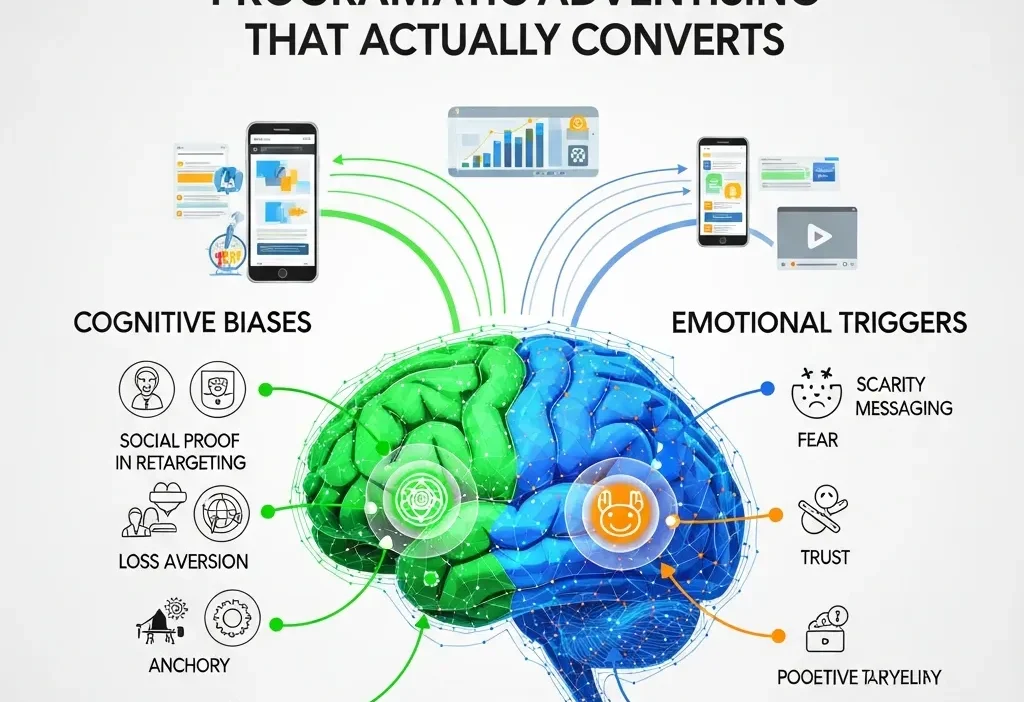
Programmatic advertising automates the buying and placement of digital ads using real-time data. When combined with emotional advertising psychology and psychological triggers in ads, programmatic campaigns consistently outperform standard digital advertising by targeting not just who sees an ad—but why they’re likely to respond to it.
Programmatic advertising has fundamentally changed how brands reach their audiences. What once required extensive manual negotiations and guesswork now happens in milliseconds—automated, data-driven, and increasingly precise. But raw data alone doesn’t move people to click, buy, or subscribe. Emotion does.
The most effective programmatic campaigns don’t just find the right person at the right time. They speak to something deeper—tapping into the psychological triggers in ads that shape how humans make decisions. From fear of missing out to the warmth of belonging, emotional advertising psychology is the layer that transforms a well-placed ad into a conversion.
This post breaks down how programmatic advertising works, why advertising psychology techniques are central to campaign performance, and how you can apply these principles—ethically and effectively—to drive better results. Whether you’re managing large-scale campaigns or just getting started with programmatic, understanding the psychology behind your creative is what separates forgettable ads from ones that actually land.
What Is Programmatic Advertising and How Does It Work?
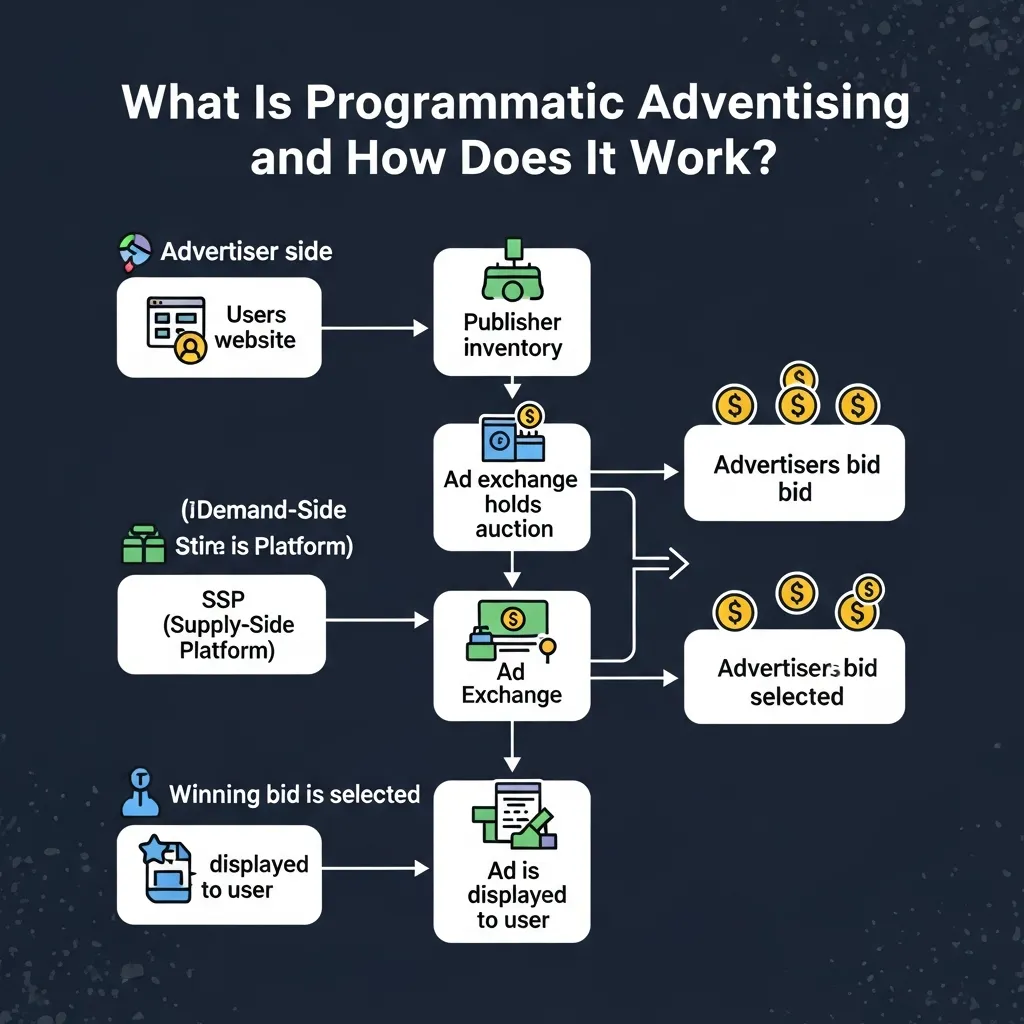
Programmatic advertising is the automated buying and selling of digital ad space using software, algorithms, and real-time data. Instead of negotiating placements manually, advertisers use demand-side platforms (DSPs) to bid on individual ad impressions across a vast network of publishers—all in the time it takes a webpage to load.
At the core of this system is real-time bidding (RTB). When a user visits a website, an auction takes place almost instantly. The advertiser whose bid wins gets their ad shown to that specific user. This process happens billions of times per day, across display, video, native, and connected TV formats.
What are the core benefits of programmatic advertising for marketers?
The appeal of programmatic advertising goes beyond automation. It offers:
- Precision targeting based on demographics, behaviors, browsing history, location, and device type
- Scalability across thousands of publishers without manual effort
- Real-time optimization so underperforming placements are cut and budgets shift to what works
- Cost efficiency through competitive bidding rather than flat-rate buys
- Rich data for audience analysis and campaign improvement
These advantages make programmatic advertising the dominant channel for digital display spending globally. But efficiency only gets you so far. The creative and messaging within your programmatic ads—and the psychological principles behind them—determine whether that well-placed impression actually converts.
How Emotional Advertising Psychology Shapes Consumer Behavior
Humans are not purely rational decision-makers. Decades of behavioral science research confirm that emotion drives the vast majority of purchasing decisions, with logic often used to justify choices made instinctively. This is where emotional advertising psychology becomes a critical tool for programmatic marketers.
How do psychological triggers in ads influence consumer engagement?
Psychological triggers in ads work by activating mental shortcuts—what researchers call heuristics—that guide attention and behavior. When someone sees an ad that triggers curiosity, urgency, or social validation, their brain processes it differently than neutral content.
Effective emotional advertising psychology levers include:
- Anticipation — teasing a benefit without revealing everything, driving curiosity clicks
- Trust — using familiar visual cues, authoritative voices, or brand recognition to lower resistance
- Joy and aspiration — connecting a product with a desired future state
- Empathy — reflecting the audience’s pain points back to them before presenting the solution
In programmatic advertising, these emotional cues must work fast. You have a fraction of a second to capture attention. That means emotional advertising psychology isn’t just relevant—it’s essential.
What role does emotional advertising psychology play in targeting decisions?
Programmatic platforms allow segmentation based on behavioral signals that often reflect emotional states. Someone repeatedly browsing travel content may be in a state of aspiration. A user researching financial planning tools might be driven by anxiety or a desire for control.
Matching the emotional tone of your ad creative to the emotional state of your audience—using programmatic data as the guide—dramatically improves relevance. The result is higher click-through rates, lower cost-per-acquisition, and stronger brand recall.
Psychological Triggers in Ads and Consumer Decision-Making
Certain psychological triggers in ads have proven consistently effective across industries and formats. Understanding when and how to apply them is at the heart of smart programmatic advertising.
How do fear, urgency, and scarcity work as advertising psychology techniques?
Fear of missing out (FOMO) is one of the most reliable psychological triggers in ads. Limited-time offers, countdown timers, and low-stock warnings all activate loss aversion—the psychological tendency to prioritize avoiding loss over achieving gain. Research in behavioral economics has consistently shown that losses feel roughly twice as powerful as equivalent gains, making scarcity messaging particularly effective.
Urgency creates a time-based pressure that motivates immediate action. Programmatic campaigns can amplify this by serving urgency-driven ads at the exact moment a user is most likely to convert—such as during a retargeting window after they’ve already viewed a product.
Scarcity signals exclusivity, which also appeals to status-seeking behavior. When something appears rare or limited, perceived value rises.
How does social proof influence programmatic ad design?
Social proof—ratings, reviews, testimonials, and user counts—reduces the psychological risk of a decision by signaling that others have already made it successfully. In programmatic ad design, this might mean featuring a star rating in a display banner or referencing the number of customers served in ad copy.
Belonging is a closely related trigger. Ads that frame a product or service as something “people like you” use or love tap into in-group identity, making the offering feel personally relevant rather than generic.
How can marketers apply psychological triggers in ads ethically?
The ethical application of advertising psychology techniques means using them to inform and persuade, not manipulate or mislead. Urgency should be genuine—if a sale ends at midnight, it should actually end. Scarcity claims should be accurate. Social proof should be real.
Transparency builds trust, and in programmatic advertising, trust is a long-term asset. Campaigns that exploit psychological triggers without substance behind them may generate short-term clicks but damage brand reputation over time.
Advertising Psychology Techniques for Programmatic Success
Beyond emotional triggers, a range of advertising psychology techniques can be embedded directly into programmatic campaign strategy.
Why is personalization central to effective programmatic advertising psychology?
Personalization works because it signals relevance. An ad that speaks to a user’s specific context—their location, the product they viewed yesterday, the content they regularly consume—feels less like advertising and more like a helpful nudge.
From a psychological standpoint, personalization reduces cognitive load. The viewer doesn’t have to work to figure out whether the ad applies to them. The relevance is immediate, which reduces resistance and increases engagement. Dynamic creative optimization (DCO) tools within programmatic platforms make this possible at scale, automatically assembling ad variants based on audience signals.
How do color psychology and messaging affect programmatic ad performance?
Color psychology is one of the most researched areas of advertising design. Different colors trigger different emotional associations:
- Red creates urgency and excitement—commonly used in clearance sales
- Blue conveys trust and calm—frequently used by financial and healthcare brands
- Green signals safety, health, or sustainability
- Yellow evokes warmth and optimism, but can also create anxiety if overused
In programmatic advertising, where ads appear across wildly different publisher environments, color consistency ensures brand recognition and emotional consistency regardless of placement.
Messaging tone should align with the emotional goal of the campaign. Aspirational language (“imagine your best summer yet”) serves awareness campaigns. Direct language (“get 30% off today”) serves conversion campaigns.
How does timing and frequency optimization use psychological insights?
Psychological research on decision fatigue shows that people make worse decisions as the day progresses. Morning ad delivery may be better suited for complex or considered purchases, while impulse-driven purchases may respond better to evening placements.
Frequency caps are equally important. Overexposing a user to the same ad triggers reactance—a psychological response where people resist being influenced, often developing a negative association with the brand. Smart frequency management prevents this, ensuring psychological triggers in ads remain effective rather than counterproductive.
Advertising Design Tips for Programmatic Campaigns
Creative execution determines whether advertising psychology techniques translate into real-world results. These advertising design tips bridge the gap between psychological principles and practical implementation.
What visual hierarchy principles improve programmatic ad performance?
Visual hierarchy guides the eye to the most important elements in a predictable sequence. In programmatic display ads, this typically means:
- A strong visual hook — an image or graphic that triggers an emotional response immediately
- A clear headline — short, benefit-led, and aligned with the emotional tone of the creative
- Supporting copy — brief, reinforcing the headline without repeating it
- A compelling CTA — specific action language (“start your free trial” rather than “click here”)
High-contrast designs perform better in cluttered environments. Faces—especially those making direct eye contact or expressing emotions—draw attention more effectively than abstract graphics due to the brain’s evolved sensitivity to human expression.
How does copy optimization enhance the psychological impact of programmatic ads?
Strong ad copy uses the language of the audience, not the language of the brand. If your audience describes their problem as “wasting money on ads that don’t work,” your copy should reflect that phrasing—not industry terminology.
Benefit-led copy consistently outperforms feature-led copy because it connects to emotion. “Reach more customers” lands differently than “multi-channel distribution platform.” One speaks to aspiration; the other speaks to infrastructure.
Why is A/B testing essential for validating psychological triggers in ads?
A/B testing removes guesswork from advertising psychology. Even well-researched psychological principles respond differently across audiences, industries, and contexts. What triggers urgency in one segment might feel manipulative in another.
Test one variable at a time—headline, image, CTA, color scheme—and use programmatic campaign data to determine which psychological trigger in ads drives the strongest result for each audience segment. Over time, this builds a proprietary understanding of what moves your specific audience.
Advanced Strategies: Combining Programmatic Advertising and Psychology at Scale

How can audience segmentation be built around psychological profiles?
Traditional audience segmentation uses demographic and behavioral data. Psychographic segmentation goes deeper—grouping audiences by values, motivations, lifestyle, and personality traits. Combining psychographic insights with programmatic targeting creates campaigns that feel genuinely personal.
For example, an audience segment identified as “status-motivated” might respond strongly to exclusivity messaging and premium visual cues, while a “security-motivated” segment may engage more with trust signals and risk-reduction messaging.
How does dynamic creative optimization apply emotional advertising psychology?
Dynamic creative optimization (DCO) automatically assembles ad variants from modular creative components—headlines, images, CTAs, offers—based on audience signals. From a psychological standpoint, DCO allows emotional advertising psychology to be applied at the individual level, not just the segment level.
A user who browsed running shoes sees an ad featuring an energized athlete and urgency-driven copy. A user who read product reviews sees an ad leading with social proof and trust indicators. Same product, different psychological entry point—both optimized for conversion.
How do you measure the psychological impact of programmatic advertising campaigns?
Standard metrics like CTR, conversion rate, and ROAS capture behavioral outcomes but don’t directly measure psychological impact. To understand emotional advertising psychology effectiveness, complement quantitative data with:
- Brand lift studies — measuring shifts in awareness, favorability, and purchase intent
- Engagement time — longer engagement signals stronger emotional resonance
- Sentiment analysis — monitoring social and review data for emotional response patterns
- Post-purchase surveys — asking customers directly what influenced their decision
Attribution modeling should account for upper-funnel touchpoints where emotional advertising psychology builds intent before conversion happens further down the funnel.
The Competitive Edge Is Psychological
Programmatic advertising gives marketers the infrastructure to reach the right person at the right moment. Emotional advertising psychology and psychological triggers in ads provide the substance that makes that moment matter.
The brands winning with programmatic advertising aren’t just outspending their competitors—they’re out-thinking them. They understand that data reveals who to reach, but psychology determines whether that reach becomes a relationship.
As programmatic technology grows more sophisticated—with AI-driven creative assembly, real-time sentiment analysis, and increasingly granular audience data—the gap between brands that understand advertising psychology techniques and those that don’t will only widen.
The practical next step is straightforward: audit your current programmatic creatives through a psychological lens. Ask whether each ad speaks to an emotional need, applies a genuine trigger, and delivers the relevance your audience expects. Then test, measure, and refine. The combination of programmatic precision and psychological intelligence is where modern advertising performance is built.
Frequently Asked Questions
How does programmatic advertising use psychological triggers in ads?
Programmatic advertising uses audience data to serve ads at the most relevant moment, then relies on psychological triggers in ads—such as urgency, social proof, and fear of missing out—to motivate action. The combination of precise timing and emotionally resonant creative is what makes programmatic campaigns effective.
What is emotional advertising psychology and why does it matter?
Emotional advertising psychology is the study of how emotions influence consumer responses to advertising. It matters because purchasing decisions are predominantly emotion-driven. Ads that trigger the right emotional response—whether curiosity, aspiration, or trust—consistently outperform those built on logic and features alone.
How can advertising design tips improve programmatic campaign performance?
Applying strong advertising design tips—such as clear visual hierarchy, benefit-led copy, and emotionally resonant imagery—ensures that psychological triggers land effectively. Even the best-targeted ad fails if the creative doesn’t capture attention and guide the viewer toward action within seconds.
What psychological triggers in ads are most effective?
The most consistently effective psychological triggers in ads include scarcity (limited availability), urgency (time pressure), social proof (peer validation), reciprocity (giving before asking), and loss aversion (fear of missing out). Effectiveness varies by audience and context, so A/B testing is essential for identifying which triggers resonate with your specific target segment.
How do advertising psychology techniques reduce customer acquisition costs?
Advertising psychology techniques improve relevance and emotional resonance, which increases click-through and conversion rates. Higher conversion rates mean each ad impression and click generates more value, effectively lowering cost-per-acquisition. Personalization, in particular, reduces wasted spend by ensuring ad messaging matches audience intent.
Why is personalization important in programmatic advertising psychology?
Personalization signals relevance, which reduces cognitive resistance to advertising. From a psychological standpoint, an ad that reflects a user’s specific context—their recent behavior, location, or expressed interests—requires less mental effort to process, making the viewer more receptive to the message.
Can psychological triggers in ads improve brand loyalty?
Yes. When psychological triggers in ads are used consistently and authentically, they build emotional associations with a brand over time. Ads that make audiences feel understood, valued, or part of a community contribute to long-term loyalty, not just one-time conversions.
What role does emotional advertising psychology play in retargeting?
Retargeting campaigns benefit significantly from emotional advertising psychology because the audience already has some familiarity with the brand. At this stage, urgency and scarcity messaging is particularly effective, as is social proof—reinforcing the user’s existing interest and reducing the psychological risk of completing a purchase.
How do colors impact programmatic ads through advertising design tips?
Color choices trigger emotional associations that directly affect ad performance. Red creates urgency; blue builds trust; green signals safety or sustainability; yellow evokes warmth. Consistent use of brand colors also drives recognition across programmatic placements, which reinforces familiarity and trust over time.
What are the ethical considerations of psychological triggers in ads?
Ethical use of psychological triggers in ads means the triggers are accurate, the messaging is honest, and the intent is to inform and persuade—not to deceive. Fake scarcity, manufactured urgency, or misleading social proof may generate short-term results but erode brand trust and can violate advertising standards regulations.
How do you measure the success of emotional advertising psychology campaigns?
Measuring emotional advertising psychology effectiveness requires both quantitative and qualitative metrics: conversion rates and ROAS for direct response performance, brand lift studies for awareness and sentiment shifts, and engagement time for deeper resonance signals. Post-purchase surveys that ask what influenced a customer’s decision provide direct qualitative insight.
How can small businesses leverage programmatic advertising and psychology?
Small businesses can access programmatic advertising through self-serve DSPs with lower minimum budgets. Applying basic advertising psychology techniques—such as social proof in ad copy, clear urgency in promotions, and emotionally resonant imagery—doesn’t require a large production budget. Starting with retargeting campaigns, where intent is already established, delivers strong ROI for smaller advertisers.