
dvertising design helps brands earn attention, build trust, and move people toward action by combining psychology, message clarity, visual structure, and audience-focused creativity consistently across campaigns.
Why advertising design matters
advertising design is the bridge between a brand’s idea and a viewer’s first reaction. People scroll fast, compare quickly, and ignore anything that feels unclear. Good advertising design slows that moment just enough for the message to land. It gives shape to value, and it turns a simple offer into something people notice.
In competitive markets, advertising design often decides whether a campaign is remembered or forgotten. The visuals do not just decorate the message. They tell the viewer where to look, what matters most, and why the offer deserves attention. When the layout is disciplined, the message feels easier to believe.
The psychology behind better results

At its core, advertising design works because the human brain prefers simplicity, contrast, and pattern. People do not read ads line by line the way writers hope they will. They scan. They make quick judgments. They look for signs of relevance, safety, and value. advertising design should respect that behavior instead of fighting it.
That is why hierarchy matters so much. If every element competes for attention, the viewer feels confusion. If the headline, image, and call to action work together, the message feels cleaner. Strong advertising design reduces friction by making the decision process feel shorter and safer.
Emotion also plays a major role. A viewer may not consciously say, “I trust this ad,” but they can feel that trust through color, spacing, tone, and order. advertising design influences that emotional reading before logic fully kicks in. This is one reason a polished campaign can outperform a technically detailed but visually messy one.
First impressions and trust
People decide whether a brand looks credible in seconds. advertising design has to support that quick judgment with clarity and consistency. A clean ad suggests control. A cluttered ad suggests carelessness. Even before the offer is read, the quality of the design can signal whether the brand deserves attention.
The business role of advertising design
advertising design is not just a creative department concern. It affects sales, lead generation, brand memory, and audience trust. When a campaign performs well, it often does so because the creative makes the offer easier to understand. In that sense, advertising design is a revenue tool as much as a visual one.
A brand may run a strong offer, but if the ad looks confusing, the market may never notice it. advertising design gives the offer a chance to breathe. It helps the audience process the value quickly, which is essential in paid media, where every second matters and every impression has a cost.
The most effective campaigns usually focus on one message per creative. That does not mean the design must be boring. It means the design should be intentional. advertising design works best when the audience can understand the core idea without needing extra effort.
A useful comparison of campaign goals
| Goal | Design focus | What the viewer should feel |
|---|---|---|
| Awareness | Bold, simple visuals | Instant recognition |
| Consideration | Clear explanation | Confidence |
| Conversion | Strong CTA and proof | Readiness |
| Retargeting | Familiarity and urgency | Motivation |
| Education | Structured layout | Understanding |
This table shows that advertising design is not one-size-fits-all. A social awareness ad should not look identical to a retargeting ad. The visual structure should follow the campaign goal, because different goals require different psychological triggers.
Message and visual form must match
When a campaign promises speed, the creative should feel fast and direct. When a campaign promises premium quality, the visual style should feel refined and controlled. When a campaign promises ease, the layout should remove visual noise. The form should reinforce the message, not compete with it.
This alignment matters because viewers interpret visuals emotionally before they interpret them logically. advertising design creates a tone before the words are fully processed. If that tone supports the promise, the audience is more likely to keep engaging. If it conflicts with the promise, trust weakens.
Common mistakes brands make
One of the biggest mistakes in advertising design is clutter. Brands often try to include too many messages, icons, colors, and claims in one frame. That creates confusion and lowers recall. A viewer should not need to decode the ad. They should feel the point immediately.
Another mistake is weak visual hierarchy. If all elements appear equally important, nothing stands out. advertising design should guide the eye in a specific order. The main benefit should lead, the support should follow, and the action should finish the path. This sequence is what makes the creative effective.
A third mistake is ignoring platform behavior. What works in a banner may fail in a short-form video feed. What works on desktop may be too crowded on mobile. advertising design should always reflect the screen, the context, and the attention span of the platform.
A strategic way to think about creative
The best teams do not begin with colors. They begin with audience intent. They ask what the person wants, what they fear, what they hope to gain, and what objection might stop them. Once those questions are clear, the visual work becomes much easier to shape.
Strategy also means deciding what not to say. A page or ad that tries to explain everything usually explains nothing well. The creative should make the message feel lighter, not heavier. The best advertising design removes distractions so the viewer can focus on the one thing that matters most.
How copy and design work together
Many campaigns fail because the words and the visuals are disconnected. The message may be strong, but the design does not support it. Or the design may be beautiful, but the copy is vague. advertising design becomes more powerful when the visual and verbal parts reinforce each other.
The headline should match the image. The body text should support the claim. The button should feel like the natural next step. When all of those parts fit together, the ad feels coherent. Coherence is one of the most important traits in good advertising design because it lowers mental effort.
AI-Generated Video Ads and production speed
AI-Generated Video Ads are changing how teams produce creative at scale. They allow faster testing, more variations, and quicker adaptation across channels. But speed does not automatically create good performance. AI-Generated Video Ads still need a strong creative idea and thoughtful advertising design to be effective.
The smartest use of AI is not to replace strategy. It is to support it. If the campaign concept is weak, automation will only make weak work faster. advertising design still needs human direction, because the creative system has to know what the audience should feel and do.
Blockchain Advertising and trust building
Blockchain Advertising often faces a credibility problem because many people are skeptical of the category or confused by the language. This is exactly where design becomes useful. When an audience is unsure, the creative should simplify the experience and reduce perceived risk.
Clarity matters more than complexity in this space. A polished but confusing ad will not solve the trust problem. advertising design should make the brand look grounded, professional, and easy to understand. Clean structure and plain language often work better than flashy claims.
Retargeting Ads for Online Courses and warm audiences
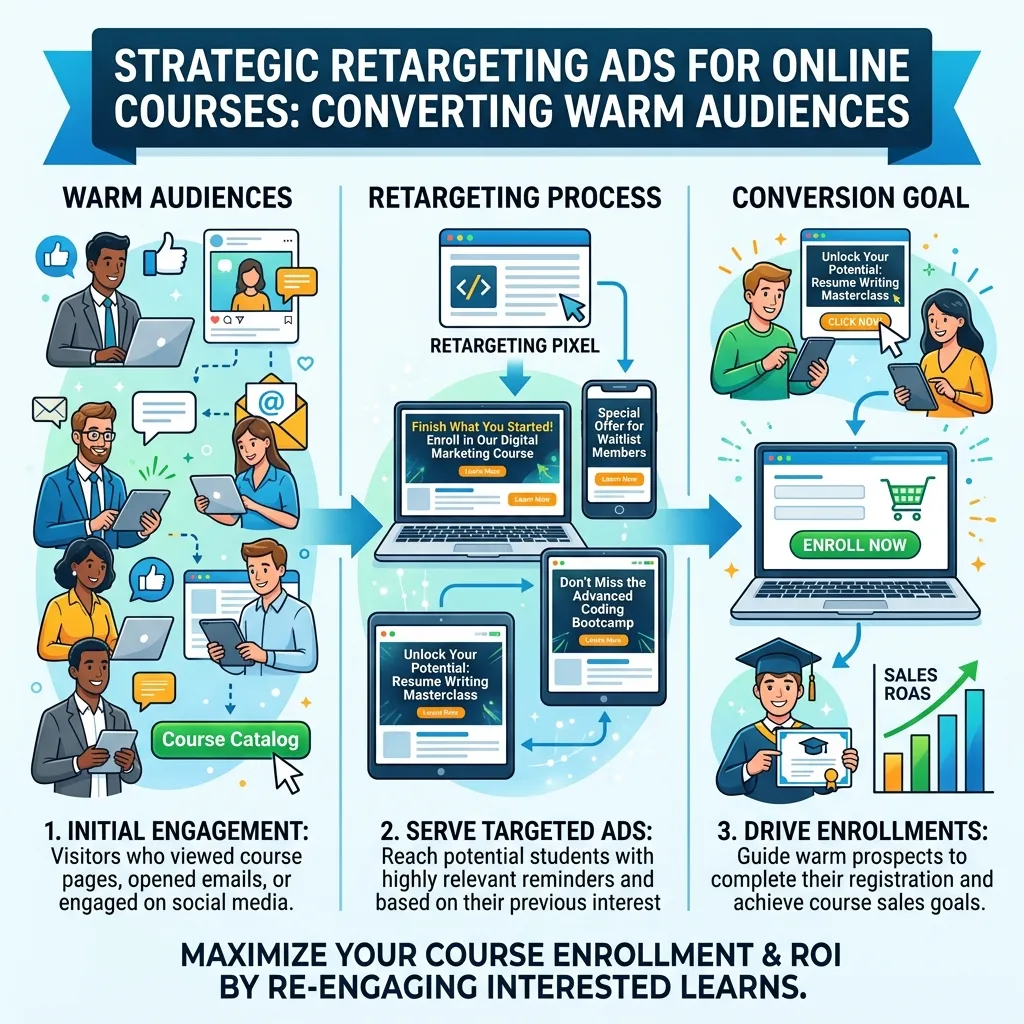
Retargeting Ads for Online Courses require a different tone from cold ads. The audience already knows something about the course, the topic, or the brand. That means the ad can focus more on outcomes, reminders, and reasons to return. The visual approach for retargeting should feel familiar but still fresh enough to re-engage attention.
Warm audiences respond well to proof and momentum. They may need a reminder of what they were interested in, what they could gain, or what they might miss by waiting. advertising design supports that by keeping the message focused and the next step obvious.
The main elements of effective creative
Strong campaigns usually rely on hierarchy, contrast, spacing, typography, imagery, and one clear call to action. These are the building blocks that guide the eye and shape the feeling of the ad. The creative works when those parts are coordinated rather than random.
Hierarchy tells viewers what to read first. Contrast helps important details stand out. Spacing gives the content room to breathe. Typography sets the tone. Imagery adds context and emotion. The CTA gives direction. When those parts work as a system, the ad becomes easier to act on.
Branding and memory
Branding gives the visual system consistency over time. If a brand looks completely different in every campaign, people struggle to remember it. Familiar visual cues make recognition easier, and recognition can reduce the friction that often stands between interest and action.
A stable brand system also makes future creative work easier. Teams can test different messages while keeping the underlying identity consistent. That is useful because the visual approach should evolve without losing its core personality. People trust brands that feel reliable from one touchpoint to the next.
Measuring performance
Good creative should be judged by behavior, not opinion alone. Look at click-through rate, engagement, conversion rate, and scroll-stop performance. If the ad gets attention but no action, the message or presentation may need refinement. If it gets action but poor-fit leads, the targeting or positioning may be off.
Testing helps reveal what actually works. A small change in image choice, CTA placement, or headline arrangement can sometimes create a meaningful shift. The visual system improves faster when teams treat every campaign as a learning opportunity rather than a final answer.
Simple structure often wins
Simplicity is not weakness. In advertising design, simplicity is often a sign of discipline. It means the team removed what was unnecessary and kept what mattered. In a crowded feed or a noisy marketplace, that discipline can make the difference between being ignored and being noticed.
Simple does not mean plain. A simple creative can still feel premium, bold, or memorable. The goal is not to remove personality. The goal is to make the message easier to receive. The visual system should create clarity first and style second, while still making the brand feel distinct.
Why the journey matters after the click
An ad is rarely the final touchpoint. Usually it leads to a landing page, a form, a product page, or an app screen. That means the visual system should be connected to the full conversion path. If the ad and destination feel disconnected, trust can drop very quickly.
Consistency across touchpoints matters because the viewer should feel they are in the same experience. The ad promised something, and the next page should continue that promise. Good design helps create that continuity by making the message, mood, and structure feel aligned.
Small business opportunities
Small businesses can benefit greatly from advertising design because even small improvements can have visible effects. They do not need huge budgets to create clear, persuasive campaigns. They need a strong audience understanding, a simple message, and a disciplined visual approach.
The best small-business campaigns often focus on one audience and one action. The creative becomes more effective when it avoids trying to do too much at once. A clear offer with a clear path can outperform a crowded creative with a vague promise.
Choosing visual tone carefully
Color, contrast, and spacing create emotional signals. A warm palette can feel inviting. A cooler palette can feel professional. High contrast can feel energetic. Open spacing can feel premium. The creative should match the emotional promise of the offer.
That is especially important when the subject matter is sensitive, technical, or high-stakes. The wrong tone can make the ad feel confusing or untrustworthy. The right tone can make the same message feel more reassuring and easier to accept.
Select Copywriting Services Online: A Complete Guide for Businesses
Select Copywriting Services Online: A Complete Guide for Businesses is a useful mindset for teams that want stronger message support. Even in a visually focused channel, the written offer matters because the audience still needs a reason to care. Good creative and good copy should always support each other.
How creativity and testing should work together
Teams often think creativity and testing are opposites, but they are not. The best work comes from a creative idea that is then tested and refined. Testing is not there to kill creativity. It is there to protect the budget from assumptions that do not hold up in the market.
This process becomes more important as channels multiply. A strong idea may work in one format and need adaptation in another. The visual system should be flexible enough to evolve across placements while keeping the core message intact.
What a strong workflow looks like
A useful workflow starts with a brief that defines the audience, offer, platform, and goal. Then comes concept development, visual planning, production, and review. Each stage should answer one question: does this make the ad clearer and more persuasive?
After launch, review the data and the feedback. Teams that improve consistently are usually the ones that document wins, note weaknesses, and build a repeatable creative process. That discipline creates better output over time.
How to make ads more memorable

Memorability comes from repetition, clarity, and a distinct visual rhythm. If the ad feels too generic, it disappears. If it is too complex, it becomes hard to process. The visual system should find the middle ground where the idea is simple but the presentation still feels recognizable.
A recurring motif, a consistent type style, or a distinct framing device can help. The goal is not novelty for its own sake. The goal is to make the brand easier to remember after the viewer has moved on.
A checklist before publishing
Before an ad goes live, ask whether the main message is visible in seconds, whether the CTA is obvious, whether the design is consistent with the brand, and whether the layout supports the offer. If the answer is yes, the campaign is in stronger shape.
It also helps to check for visual fatigue. The creative should not ask the viewer to work too hard. If the ad feels crowded or unclear, it may be wise to simplify before launch. Often the strongest improvement is removing one unnecessary thing.
Conclusion
advertising design is more than visual decoration. It is a practical system for turning attention into action. It shapes first impressions, supports trust, and helps the audience understand value quickly. It also connects strategy, copy, branding, and psychology into one experience that feels easier to process. Good advertising design works because it respects how people actually make decisions: quickly, emotionally, and with limited attention. Brands that invest in clearer creative usually gain stronger engagement and better conversion over time. In a market full of noise, advertising design remains one of the most reliable ways to make a message stand out and perform.
FAQs
1. What is advertising design?
advertising design is the process of creating visual ads that communicate a message clearly and support a marketing goal.
2. Why is advertising design important?
advertising design is important because it helps a brand get noticed, build trust, and guide viewers toward action.
3. What makes advertising design effective?
Effective creative combines clear hierarchy, strong visuals, relevant messaging, and a simple next step.
4. How does psychology affect advertising design?
Psychology shapes how people notice, trust, and respond to ads, so the creative should match natural attention patterns.
5. Can advertising design improve conversions?
Yes, strong advertising design can improve engagement and conversion by making offers easier to understand.
6. How does advertising design differ across platforms?
The visual system changes by platform because each screen, format, and audience behavior creates different viewing conditions.
7. What role does branding play in advertising design?
Branding helps the creative stay recognizable and consistent, which makes the message easier to remember.
8. Are AI-Generated Video Ads enough on their own?
No, AI-Generated Video Ads still need strong strategy and visual direction to perform well.
9. Why is Blockchain Advertising harder to design?
Blockchain Advertising often involves trust and complexity, so the creative must simplify the message and reduce uncertainty.
10. How should Retargeting Ads for Online Courses be designed?
Retargeting Ads for Online Courses should use familiar cues, focused messaging, and clear motivation to re-engage warm audiences.