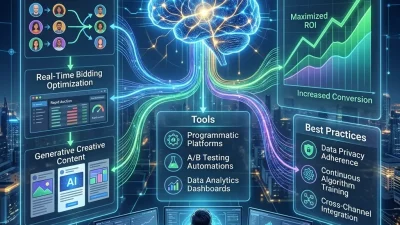
AI-Generated Video Ads are reshaping how brands plan, produce, test, and scale video creative, especially as platforms add more AI tools, stronger disclosure rules, and faster creative workflows.
Why AI-Generated Video Ads matter now
AI-Generated Video Ads are becoming a major part of modern marketing because the ad ecosystem is moving toward faster creation, more variants, and better alignment between creative and user intent. Google’s 2025 ads updates highlighted new AI tools in Google Ads, including creative generation and new video ads across surfaces like Search, Image Search, and Shopping, which shows how central video is becoming to discovery. AI-Generated Video Ads are not just about making content faster; they are about making content easier to test, easier to localize, and easier to fit into different customer journeys. As more advertisers adopt generative AI for video, the format is shifting from novelty to workflow.
AI-Generated Video Ads also matter because the creative process itself is changing. Instead of starting from a single finished concept, teams can now build a message system with many variations, each designed to test a different hook, benefit, or call to action. That matters in a market where attention is limited and the cost of manual production can slow learning. AI-Generated Video Ads let marketers explore more ideas with less friction, while still leaving room for human judgment on brand voice, timing, and message quality. In practice, AI-Generated Video Ads work best when strategy comes first and automation comes second.
What AI-Generated Video Ads actually do
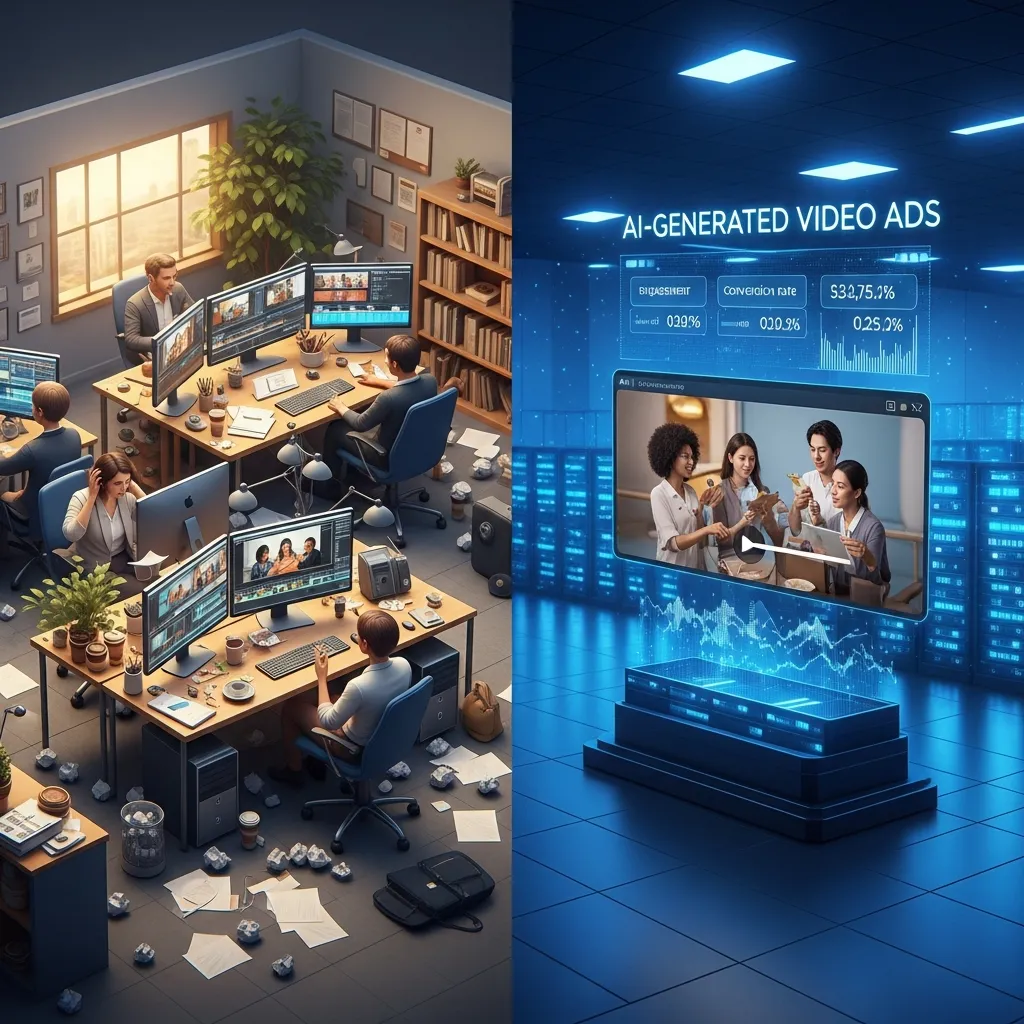
AI-Generated Video Ads combine prompt-based generation, asset automation, and editing workflows to create video creative at scale. That can mean turning a product URL into a draft ad, generating multiple versions of the same message, or adapting the same core concept into different lengths and formats. Google’s recent creative tools are pushing in this direction, with Asset Studio and related updates focused on generating and scaling creative assets more efficiently. AI-Generated Video Ads are useful because they reduce the number of manual steps between an idea and a testable ad. They make it possible to move from concept to iteration without waiting on a full production cycle.
AI-Generated Video Ads are especially useful when brands need volume without losing control. A campaign may need one long-form explainer, three short cutdowns, and several versions for different audiences or placements. AI-Generated Video Ads help teams create those assets without rebuilding the entire video from scratch. The real value is not only speed but also decision quality, because more variations create better data. When the team can see which opening line, visual sequence, or CTA performs best, the campaign becomes smarter over time. That is why AI-Generated Video Ads are best treated as a learning system, not just a content factory.
Why advertisers are adopting them so quickly
AI-Generated Video Ads are expanding because advertisers need more output with less operational drag. IAB reported in 2025 that half of advertisers were already using generative AI to build video ads, and nearly 90% expected to use it, which signals broad acceptance rather than niche experimentation. That matters because advertising teams are under pressure to create more content for more channels while keeping budgets under control. AI-Generated Video Ads help answer that pressure by shrinking production time and increasing the number of testable ideas. When creative iteration gets cheaper, learning gets faster.
AI-Generated Video Ads are also attractive because they fit the direction of major ad platforms. Google’s 2025 announcements emphasized AI-driven creative generation, AI Max, and stronger measurement, which shows that the ecosystem is building tools around automation rather than around one-off manual production. AI-Generated Video Ads therefore sit inside a much larger shift: brands want creative that can move from inspiration to placement with fewer bottlenecks. The result is a workflow that is more responsive to data, more adaptable to placements, and more capable of supporting rapid experimentation.
How the production workflow changes
AI-Generated Video Ads change the traditional workflow by moving creative teams from linear production to modular production. Instead of making one polished ad and hoping it works, teams can define the message, generate several angles, and then test which one gets the best response. Google’s creative updates in Ads and Asset Studio are built to support that kind of workflow, which makes it easier to generate assets, preview them, and scale what works. AI-Generated Video Ads are most effective when they are built from reusable pieces: scripts, scenes, product shots, transitions, and CTA variants.
AI-Generated Video Ads also reduce the cost of localization and adaptation. A brand can take one core message and adapt it for different audiences, regions, or placements without reshooting everything. That matters because the same idea often needs a different tone for Search, Shopping, YouTube, or social. AI-Generated Video Ads give teams the flexibility to keep brand identity stable while still adjusting pacing, visuals, and wording for each channel. In other words, the system becomes more agile, and the creative team gains time to focus on strategy instead of repetitive editing.
Why video creative works on human attention
AI-Generated Video Ads perform well when they respect how people actually pay attention. Video has an advantage because motion, sound, timing, and visual sequencing can communicate value quickly. A viewer does not need to read a long explanation if the first few seconds clearly show the problem, the product, and the payoff. AI-Generated Video Ads can be designed to make that first impression sharper by testing opening hooks, visual introductions, and text overlays. The goal is not to overwhelm the viewer; it is to create instant clarity.
AI-Generated Video Ads also work because repetition supports memory. When the same core promise appears in slightly different visual forms, the audience has more chances to remember it. That matters in environments where people scroll quickly and make decisions in seconds. AI-Generated Video Ads give brands the ability to repeat the same value proposition in multiple versions without sounding identical or stale. This is one reason they fit performance marketing so well: the creative system can keep learning while the audience experiences the message in a way that feels fresh.
How Contextual AI Ads strengthen relevance
Contextual AI Ads are especially important because relevance changes how people react to an ad. Research on contextual advertising found that simpler contextual placements can improve recall and brand attitudes, which supports the idea that fit matters as much as creative quality. AI-Generated Video Ads become stronger when they appear in environments that make the message feel useful instead of intrusive. Contextual AI Ads help align the ad with the surrounding content, so the viewer sees a message that feels timely. That makes the ad easier to understand and more likely to feel like part of the experience.
Contextual AI Ads also help brands avoid the trap of over-targeting and over-complexity. When the ad is visually and semantically aligned with the content around it, viewers do not need as much cognitive effort to understand why it is there. AI-Generated Video Ads benefit from that low-friction environment because the creative can stay focused on a single promise. In practical terms, Contextual AI Ads are one of the best ways to make AI video feel relevant without relying only on personal data signals. That balance is increasingly important in privacy-sensitive advertising environments.
How AI-Powered Visual Search Advertising changes discovery
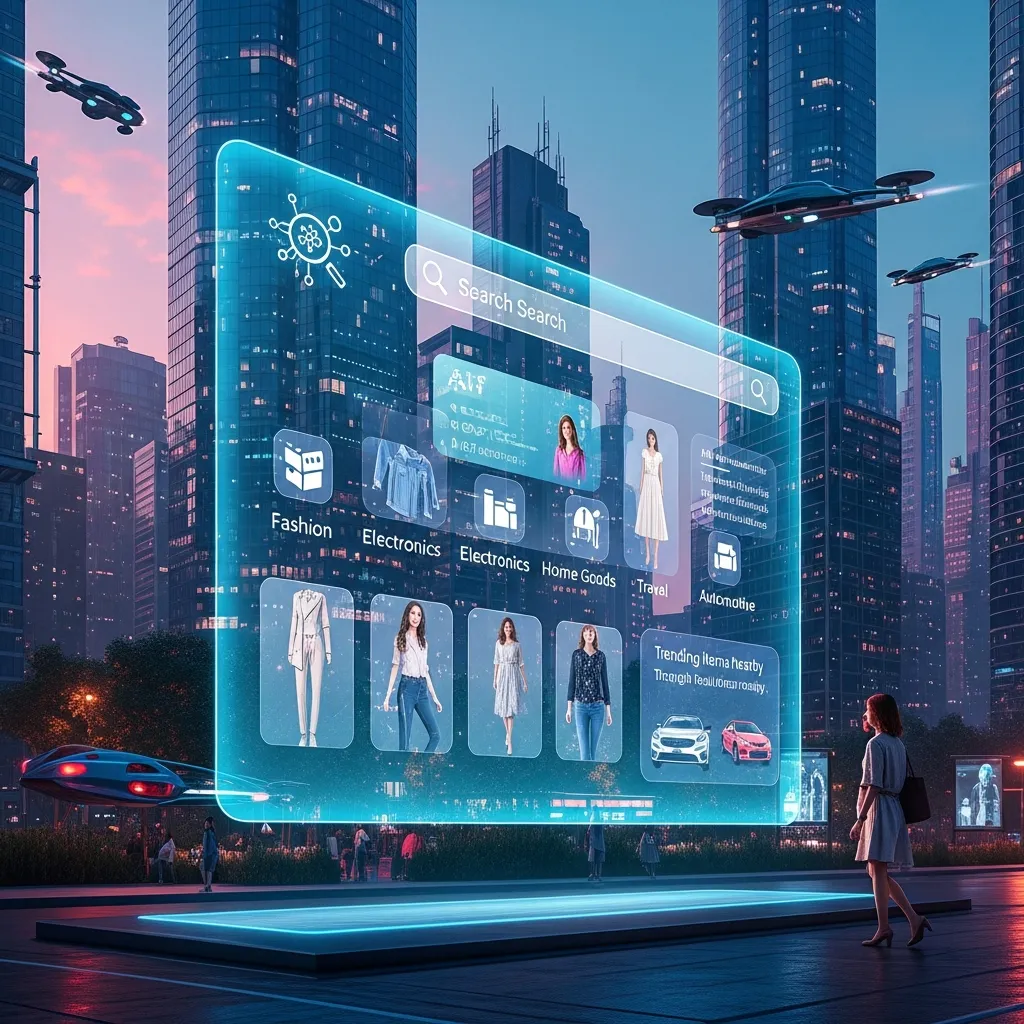
AI-Powered Visual Search Advertising works because many users now discover products visually before they ever type a keyword. Google has pushed visual search further in Search and Lens-style experiences, making image-driven discovery more natural and more accessible. That matters for AI-Generated Video Ads because product-led campaigns can now connect inspiration to action more quickly. AI-Powered Visual Search Advertising turns visual interest into search intent, and that can shorten the path from seeing a product to wanting it. For brands, that means the creative must be visually clear, product-forward, and easy to recognize.
AI-Powered Visual Search Advertising also changes how video should be built. If viewers are likely to discover a product by image or camera-based search, then the ad should show distinctive product details, color, shape, use case, or style cues early. AI-Generated Video Ads are stronger in this environment when the visuals are obvious enough to support follow-up discovery. In other words, the ad is no longer just a brand story; it becomes a bridge between visual curiosity and purchase intent. That is why visual search and video creative now work better together than ever.
Why advertising affects consumer behavior
Advertising Affects Consumer Behavior because it shapes attention, memory, credibility, and decision confidence. Recent research on social media advertising found that authenticity and perceived credibility influence consumer response, while contextual-ad research shows that ad fit can change recall and attitude. AI-Generated Video Ads can use those same mechanisms when the message feels believable, visually clean, and emotionally easy to process. People are more likely to respond when the ad feels relevant and trustworthy rather than overly polished or disconnected. That is why the psychology of the message matters as much as the technology behind it.
Advertising Affects Consumer Behavior most strongly when the viewer can quickly connect the ad with a need, a desire, or a familiar context. AI-Generated Video Ads make that connection easier to test because the same concept can be presented in multiple ways to see which version creates the best response. That means brands can learn not only what people click, but also what kind of story earns trust. The more clearly the ad matches the viewer’s mental state, the easier it becomes to move from awareness to consideration to action.
How platform changes are shaping the format
AI-Generated Video Ads are being shaped by major platform changes, especially at Google and YouTube. Google’s 2025 ads announcements introduced stronger AI-driven creative tools, new video ads across Google surfaces, and more automation built into the campaign workflow. At the same time, YouTube continues to clarify how synthetic or altered content should be disclosed. That combination matters because the future of AI video is not only about generation; it is about distribution, compliance, and visibility. AI-Generated Video Ads are becoming part of a broader platform ecosystem instead of living in a separate creative silo.
AI-Generated Video Ads also benefit from the way Google is pushing visual discovery and AI-powered ad experiences. Google has expanded visual search in Search, increased AI support for creative output, and emphasized better measurement across campaigns. That means AI-Generated Video Ads can be used more strategically across the funnel, not just as social clips or experimental assets. The format now sits inside an integrated system where creative, placement, and optimization can all inform one another. For marketers, that is a major change in how video campaigns are planned and evaluated.
Why disclosure and transparency matter
AI-Generated Video Ads need transparency because viewer trust is now part of performance. YouTube requires disclosure when realistic synthetic content is generated or meaningfully altered, and it also says it clearly labels content created by its AI products. That policy reflects a larger industry reality: people want to know whether what they are watching is real, synthetic, or edited with AI. AI-Generated Video Ads can still be effective, but they work better when the audience understands the origin of the content. Trust is not an obstacle to performance; it is one of the reasons performance lasts.
AI-Generated Video Ads are more sustainable when brands build approval and disclosure into the workflow from the start. That means legal, creative, and media teams should agree on what counts as synthetic, what needs labeling, and how the final asset will be reviewed before launch. AI-Generated Video Ads become safer and more scalable when the team treats transparency as a creative standard rather than a final compliance step. That is especially important in high-trust categories where viewers are sensitive to authenticity.
How to measure performance properly
AI-Generated Video Ads should be evaluated with the same seriousness as any other paid media asset. Google’s recent ads updates emphasize better reporting and more relevant campaign control, which reinforces the need to look beyond surface-level metrics. Watch time, view-through behavior, click-through rate, conversions, and creative fatigue all matter when testing AI-Generated Video Ads. A version that gets attention but does not convert is not automatically successful. The best AI video workflows are the ones that connect creative changes to business outcomes, not just to impressions.
AI-Generated Video Ads become more valuable when teams compare versions systematically. One hook may win on attention, another may win on conversion, and a third may win on lower cost per result. That is why AI video should be managed as a testing engine. AI-Generated Video Ads are strongest when they help answer practical questions: Which opening line holds attention? Which product framing feels most credible? Which CTA gets the clearest response? The more disciplined the measurement, the more useful the creative system becomes.
Common mistakes advertisers make
AI-Generated Video Ads often fail when teams assume automation can rescue a weak strategy. If the offer is vague, the message is unclear, or the product story is too generic, AI simply produces faster confusion. Another mistake is making the ad too busy. Viewers need clarity, not a flood of effects, claims, and transitions. AI-Generated Video Ads work best when the concept is simple enough to remember and specific enough to feel real. Strategy still has to do the heavy lifting.
AI-Generated Video Ads also underperform when brands forget the channel. A creative that works on one surface may feel wrong on another if the pacing, framing, or CTA is not adapted. Google’s recent expansions across Search, Image Search, Shopping, and YouTube show that placements differ, so the creative should differ too. AI-Generated Video Ads become much more effective when each placement gets a version that respects the user’s mindset. That is how relevance turns into performance rather than just exposure.
A practical workflow for better results
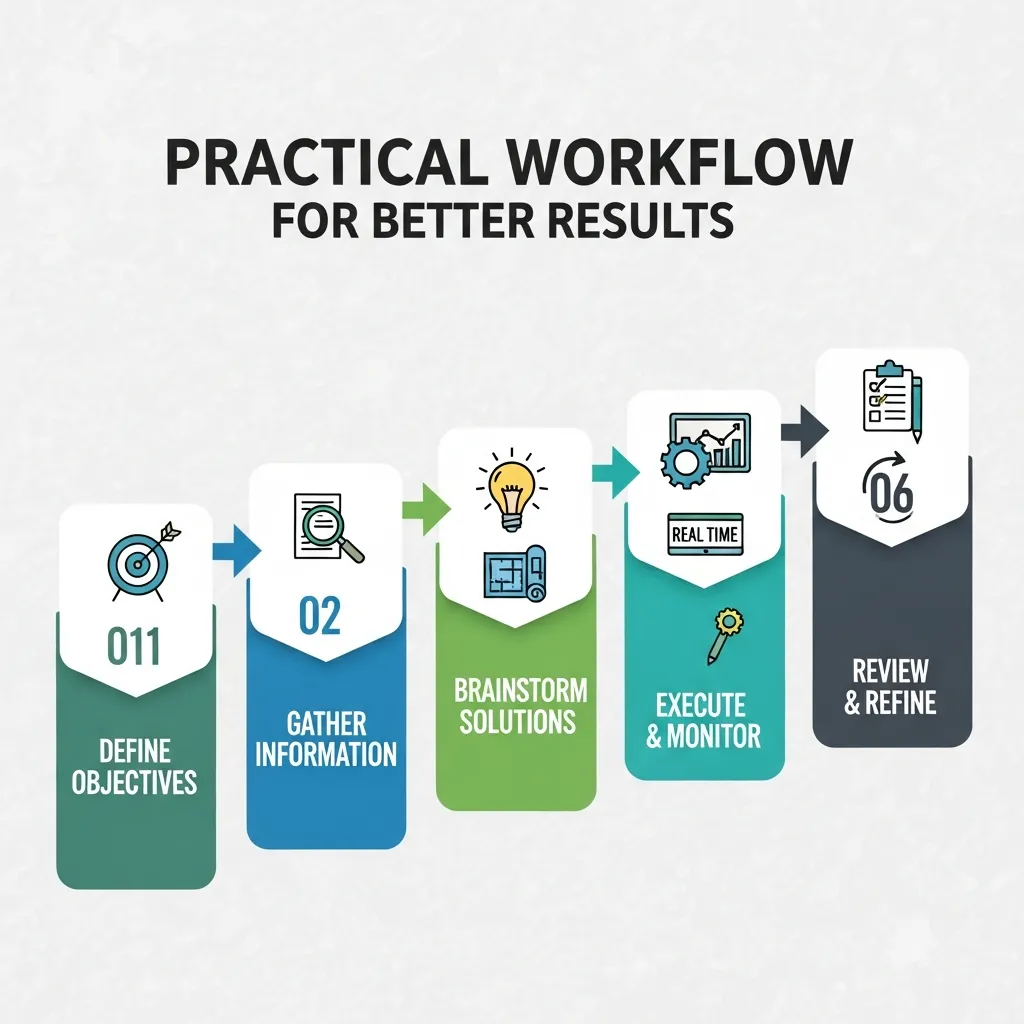
The best way to use AI-Generated Video Ads is to build a repeatable workflow. Start with one core promise, one target audience, and one clear outcome. Then create variations around the hook, the opening visual, the product demonstration, and the call to action. Use AI to generate the drafts, but use humans to approve the message, protect the brand, and verify the disclosure rules. AI-Generated Video Ads are strongest when the workflow is designed to learn quickly and improve continuously.
AI-Generated Video Ads also work better when teams think in layers. The first layer is strategy, the second is creation, the third is placement, and the fourth is measurement. Each layer should feed the next. If the data shows that one message angle performs best, the creative team can build more versions from that insight. If visual search signals improve discovery, the next version can lean into stronger visuals. That feedback loop is what turns AI-Generated Video Ads from a trend into a durable capability.
Conclusion
AI-Generated Video Ads are not just a faster way to make ads; they are a new way to think about creative production, audience relevance, and campaign learning. As Google adds more AI tools, YouTube strengthens disclosure expectations, and advertisers adopt generative AI more widely, the format is moving from experimental to essential. AI-Generated Video Ads work best when brands keep the story clear, the visuals useful, and the measurement disciplined. They become even more powerful when paired with Contextual AI Ads, AI-Powered Visual Search Advertising, and a serious understanding of how Advertising Affects Consumer Behavior. The brands that win with AI will be the ones that use it to sharpen judgment, not replace it.
FAQ
1. What are AI-Generated Video Ads?
AI-Generated Video Ads are video ads created or heavily assisted by generative AI tools. They help teams produce more versions, test more messages, and move faster from idea to launch. AI-Generated Video Ads are especially useful when one campaign needs multiple edits for different platforms or audiences.
2. Do AI-Generated Video Ads need disclosure?
Yes. When realistic synthetic content is generated or meaningfully altered, YouTube requires disclosure. That makes transparency part of the creative process, not an afterthought. AI-Generated Video Ads are stronger when viewers can trust what they are watching.
3. Why are advertisers using them more often?
Advertisers are adopting them because they reduce production friction and increase creative output. IAB’s 2025 report showed strong adoption of gen AI in video ad creation, which suggests that AI-Generated Video Ads are becoming a normal part of the workflow.
4. How do Contextual AI Ads help performance?
Contextual AI Ads improve relevance by matching the message to the surrounding content or moment. Research shows that better contextual fit can improve recall and brand attitudes, which makes AI-Generated Video Ads feel more useful and less intrusive.
5. How does AI-Powered Visual Search Advertising matter?
It matters because visual discovery is becoming a bigger part of search behavior. Google has expanded visual search and Lens-style interactions, which means AI-Generated Video Ads can support product discovery through stronger visuals and clearer product cues.
6. What does Advertising Affects Consumer Behavior mean in practice?
It means ads influence recall, credibility, and the willingness to act. Recent research shows that authenticity, trust, and contextual fit shape consumer response, which is why AI-Generated Video Ads should feel clear, believable, and relevant.
7. What is the biggest mistake with AI video?
The biggest mistake is relying on automation without a strong strategy. If the message is weak or confusing, AI-Generated Video Ads will only create faster confusion. The best results come from clear offers and disciplined editing.
8. How should brands measure success?
Brands should track watch time, CTR, conversions, and creative fatigue, then compare versions systematically. Google’s recent reporting and measurement updates show that AI-Generated Video Ads should be managed with real performance data, not guesswork.
9. Can AI-Generated Video Ads replace human creatives?
No. Human judgment is still needed for brand voice, compliance, disclosure, and quality control. AI-Generated Video Ads work best when AI handles speed and humans handle strategy, editing, and trust.
10. What is the best way to start?
Start with one offer, one audience, and one measurable goal. Then build a few AI-Generated Video Ads variations around the hook, the visual story, and the CTA. That gives you a clean testing system and a better path to learning.