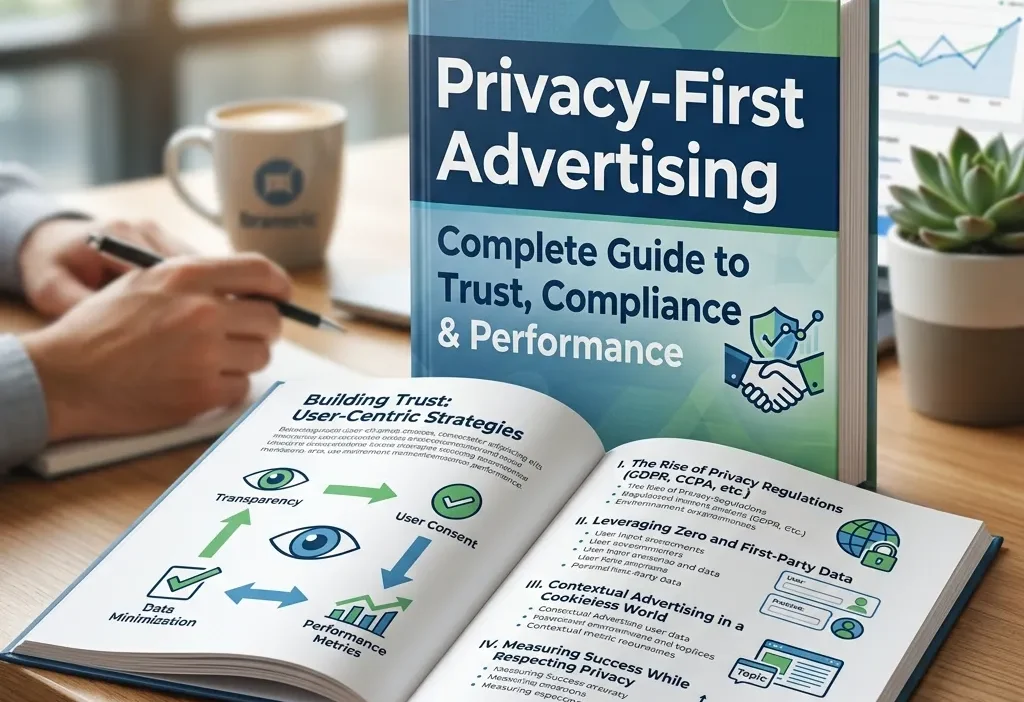
Privacy-First Advertising helps brands reach audiences responsibly by prioritizing consent, transparency, and first-party data, while still improving relevance, trust, and measurable campaign performance.
Privacy-First Advertising is no longer a niche idea. It is becoming the practical standard for brands that want to market responsibly while adapting to changing browser rules, mobile privacy controls, and consumer expectations. Google’s Privacy Sandbox positions private advertising APIs as replacements for use cases that traditionally depended on third-party identifiers, and Apple’s App Tracking Transparency requires user permission before tracking across apps and websites. At the same time, regulators such as the FTC have been increasingly focused on commercial surveillance and data security concerns.
Privacy-First Advertising asks a simple question: how can a brand stay relevant without over-collecting personal data? The answer is not to stop advertising. It is to redesign the system around consent, limited data use, contextual intelligence, better creative, and stronger measurement discipline. That shift is why Privacy-First Advertising matters to marketers, publishers, product teams, and agencies alike. IAB’s 2024 State of Data report describes the industry as moving toward a privacy-by-design ecosystem, with real operational and financial adjustments required across the ad stack.
Why Privacy-First Advertising Matters
Privacy-First Advertising matters because trust has become part of performance. When people understand why data is collected and how it is used, they are more likely to engage. When they feel watched, coerced, or confused, they leave, block, opt out, or disengage. Privacy-First Advertising reduces that friction by making the user experience cleaner and the brand relationship more honest.
Privacy-First Advertising also matters because the old targeting model is less reliable than it used to be. Browser and platform restrictions are reshaping the way advertisers reach people, and both Google and Apple have introduced privacy-centered approaches that limit traditional tracking paths. Google’s Privacy Sandbox is designed to support advertising use cases without third-party identifiers, while Apple’s App Tracking Transparency places control in the hands of the user.
Privacy-First Advertising is therefore not just a compliance exercise. It is a growth strategy. The brands that win are the ones that build durable signals, better creative, and better customer relationships. Privacy-First Advertising turns marketing from a surveillance habit into a value exchange.
What Privacy-First Advertising Really Means
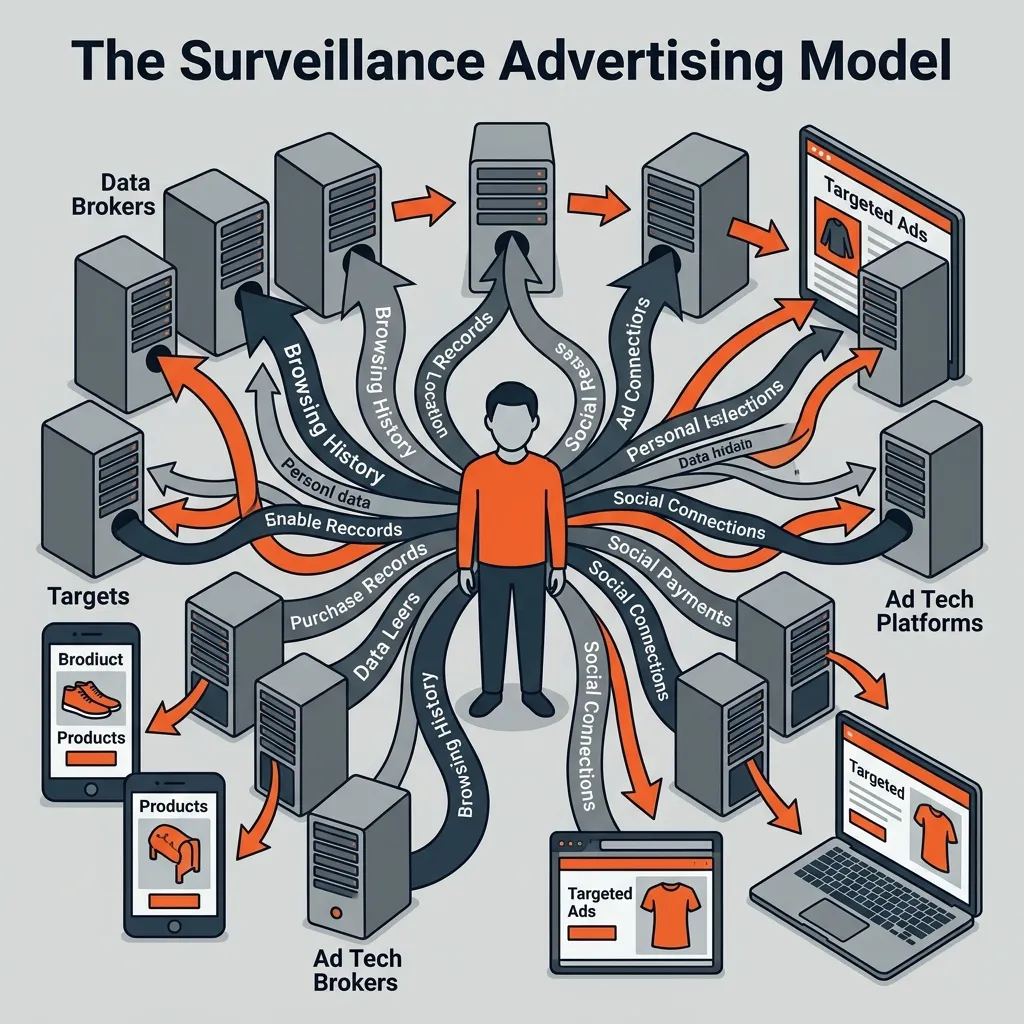
Privacy-First Advertising means collecting less, using data more carefully, and making sure the consumer understands what is happening. It means shifting away from hidden tracking and toward consent, contextual relevance, modeled insights, and first-party relationships. It also means making privacy part of the planning stage rather than an afterthought.
Privacy-First Advertising is not anti-personalization. It is pro-boundary. A brand can still be helpful, relevant, and memorable without building its entire system on invasive identifiers. This is why Privacy-First Advertising works best when it combines policy, product, media strategy, and creative design into one coordinated approach.
Privacy-First Advertising also requires operational discipline. Data retention must be limited. Permissions must be meaningful. Vendor relationships must be reviewed. Internal teams must understand what information is truly necessary. The FTC’s privacy and security guidance, along with its focus on commercial surveillance concerns, shows why these controls are no longer optional for serious advertisers.
The Psychology Behind Privacy-First Advertising
Privacy-First Advertising works because people are not only rational but emotional. They notice when a brand feels respectful, and they notice when it feels intrusive. That emotional reaction shapes clicks, conversions, loyalty, and long-term value.
Privacy-First Advertising reduces the “creepy factor.” When an ad seems to know too much, it can create discomfort even if the targeting is technically accurate. When a brand uses clearer intent signals, contextual relevance, or permission-based data, the message feels more natural. That emotional safety can improve response rates because users feel less defensive.
Privacy-First Advertising also supports confidence. Consumers are increasingly aware that their data has value. A brand that behaves transparently signals maturity and responsibility. That signal can strengthen brand equity, especially in categories where trust is already fragile, such as finance, health, parenting, or education.
A Practical Framework for Privacy-First Advertising
Privacy-First Advertising becomes easier when you break it into four layers.
First is data collection. Only collect what you truly need, and make the purpose obvious.
Second is audience strategy. Use first-party data, consented data, contextual signals, and aggregated insights instead of unnecessary personal identifiers.
Third is creative strategy. The message should do more work because tracking does less.
Fourth is measurement. Build a measurement plan that respects privacy while still giving the business enough signal to optimize.
Privacy-First Advertising is strongest when these layers reinforce one another. A company can have perfect consent language but weak creative. It can also have beautiful creative but poor measurement. The brands that do well connect all four layers into a single operating model.
Table: Privacy-First Advertising vs Traditional Advertising
| Area | Traditional Approach | Privacy-First Advertising Approach |
|---|---|---|
| Data use | Broad collection, often excessive | Minimal, purpose-driven collection |
| Targeting | Heavy dependence on identifiers | Context, consent, and first-party signals |
| User experience | Hidden tracking, unclear value | Transparent choice and clearer value exchange |
| Measurement | Frequent reliance on user-level tracking | Aggregated, modeled, or privacy-safe measurement |
| Trust | Often fragile | Designed to build trust |
Privacy-First Advertising improves the long-term quality of the relationship between brand and audience. That is a better foundation than chasing short-lived tracking loopholes.
Core Pillars of Privacy-First Advertising

1. Consent and transparency
Privacy-First Advertising begins with consent. People should know what they are agreeing to and why it matters. Apple’s App Tracking Transparency framework shows the direction of modern digital advertising: users must be asked before apps track them, and the tracking status is explicitly controlled by the system. Apple also requires apps to request permission through the framework when tracking or accessing advertising identifiers.
Privacy-First Advertising should never treat consent as a cosmetic pop-up. Consent is the relationship. The copy, timing, and explanation all matter. Clear disclosure builds confidence, while vague wording creates suspicion.
2. First-party data
Privacy-First Advertising relies heavily on first-party data because it comes from direct relationships. This includes customer sign-ups, purchase history, site behavior, and email engagement, used in ways that match the user’s expectations and permissions. Google has also described privacy-preserving advertising solutions that support ad use cases without third-party identifiers.
Privacy-First Advertising is stronger when your first-party data is organized, accurate, and permissioned. Clean CRM records, event tracking discipline, and preference centers all help. The point is not to collect everything. The point is to collect what creates value.
3. Contextual relevance
Privacy-First Advertising does not depend only on who the user is. It also depends on what the user is doing in the moment. Contextual signals can be incredibly powerful when the content, page, and intent all align.
Privacy-First Advertising works well with contextual buying because the message fits the environment. A travel ad on a travel article, a finance offer on a budgeting guide, or a sports brand on a match preview can feel useful instead of intrusive. Context becomes a feature, not a compromise.
4. Privacy-safe measurement
Privacy-First Advertising still needs measurement. The challenge is to measure without turning every user into a permanent dossier. Aggregated reporting, incrementality tests, modeled conversions, conversion APIs, and clean-room style collaboration are part of the new toolkit.
Privacy-First Advertising should be judged on business outcomes, not only on how much user-level data it extracts. If a brand can prove lift, revenue, retention, or qualified leads without invasive tracking, it is in a stronger long-term position.
How Creative Changes in Privacy-First Advertising
Privacy-First Advertising changes creative expectations. When targeting narrows, the message must work harder. Copy needs to be clearer. Visuals need to be stronger. The offer must be obvious. Creative becomes one of the most important levers left.
Privacy-First Advertising benefits from better storytelling. A meaningful headline, a strong value proposition, and a respectful tone can outperform over-targeted but weak messaging. In a privacy-centered world, good creative is not decoration. It is the engine.
Advertising Design matters even more here because design has to communicate trust instantly. Layout, typography, contrast, and visual hierarchy all influence whether the user feels safe enough to continue. A cluttered ad often feels more invasive than a clean one. Privacy-First Advertising rewards simplicity.
Privacy-First Advertising also rewards creative variety. When one audience definition becomes less precise, multiple creative angles can help different intent states. Instead of chasing one hyper-specific profile, the brand can test benefits, pain points, trust signals, and emotional hooks.
Privacy-First Advertising and Programmatic Buying
Programmatic Advertising Demystified becomes especially important in a privacy-centered world because automated media buying still exists, but the inputs are changing. Programmatic systems used to lean heavily on identifiers and audience graphs. Privacy-First Advertising asks those systems to operate with fewer personal signals and more aggregate, contextual, and permissioned data.
Privacy-First Advertising in programmatic environments is about quality, not quantity. Better inventory selection, cleaner supply paths, stronger contextual signals, and more disciplined audience definitions can outperform noisy targeting. The market is learning that less invasive does not mean less effective.
Privacy-First Advertising also benefits from supply-side transparency. Advertisers need to know where their ads appear, what data flows are involved, and how partners handle consent. The more complex the ecosystem becomes, the more important governance becomes.
Privacy-First Advertising Across Channels
Privacy-First Advertising is not limited to one channel. It affects search, social, display, mobile apps, video, connected TV, email, and retail media.
Privacy-First Advertising in search focuses on intent rather than identity. The query itself can be one of the strongest signals available.
Privacy-First Advertising in social often depends on platform tools, consent settings, and strong creative performance rather than external tracking.
Privacy-First Advertising in mobile apps is deeply shaped by platform permissions. Apple’s framework made consent explicit, and that changed how app marketers think about attribution and user-level data.
Privacy-First Advertising in video and streaming environments also has to cope with closed ecosystems and shifting measurement access. IAB’s recent discussions around cross-platform analytics highlight how advertisers are adapting to these realities.
The Role of Technology in Privacy-First Advertising

Privacy-First Advertising depends on technology, but the technology must serve the user, not exploit them. Privacy-preserving APIs, consent management systems, analytics layers, server-side tagging, and clean-room collaboration tools all support the new model.
Privacy-First Advertising does not mean every company needs the same stack. A small business may need a lightweight consent banner, strong analytics hygiene, and better landing pages. A larger brand may need deeper governance, data mapping, partner reviews, and measurement experimentation. The stack should fit the risk profile.
Privacy-First Advertising also benefits from platform innovation. Google has repeatedly positioned Privacy Sandbox technologies as ways to preserve ad use cases while reducing reliance on third-party identifiers. Even as the product landscape evolves, the direction of travel is clear: more privacy, less unnecessary tracking.
Common Mistakes in Privacy-First Advertising
Privacy-First Advertising fails when companies treat it like branding theater. A privacy policy alone is not a strategy. Neither is a cookie banner with confusing buttons. Real privacy-first work happens in data architecture, creative planning, vendor governance, and measurement design.
Privacy-First Advertising also fails when teams overreact and remove too much signal without replacing it with strategy. If a business deletes useful first-party data discipline, weakens creative testing, and stops measuring outcomes, it will not improve. It will only become blind.
Privacy-First Advertising should also avoid false certainty. Privacy-safe measurement is powerful, but it is not magic. Teams still need testing, triangulation, and judgment. The goal is to make better decisions with less invasive data, not to pretend data limits do not exist.
How to Build a Privacy-First Advertising Strategy
Privacy-First Advertising starts with an audit. Map what data you collect, where it goes, who can access it, and how long you keep it. Then separate essential data from unnecessary data. That exercise alone often reveals easy wins.
Privacy-First Advertising should then move into consent language, user experience, and value exchange. People are more willing to share data when the benefit is obvious and the request is respectful. That means better copy, better timing, and better preference controls.
Privacy-First Advertising also needs audience redesign. Build segments that are based on context, declared preferences, lifecycle stage, and permissioned behavior rather than broad surveillance. The cleaner the audience logic, the more durable the system.
Privacy-First Advertising should include creative testing from the beginning. When signal quality changes, creative matters more. Test offers, headlines, proof points, formats, and emotional tones. The message has to carry more of the load.
Privacy-First Advertising must finish with measurement governance. Decide what success looks like, what methods are privacy-safe, and how often you will review results. Keep the system simple enough that the team can actually use it.
Why Brands Are Moving Now
Privacy-First Advertising is rising because the old playbook is under pressure from multiple directions. Browsers are reducing trackability, mobile platforms are requiring clearer permissions, consumers are more aware of data practices, and regulators are paying closer attention to surveillance concerns.
Privacy-First Advertising is also being pushed by economics. Data complexity is expensive. Teams need specialists, compliance support, better technology, and more coordination across departments. IAB’s State of Data reporting describes substantial organizational adjustments as the industry moves toward privacy-by-design.
Privacy-First Advertising is the response that turns pressure into advantage. Brands that adapt early tend to build better systems than brands that wait and then scramble.
Building Trust as a Competitive Edge
Trust grows when brands practice restraint. Instead of asking for every possible data point, they collect only what is necessary. Rather than hiding behind complex policies, they explain the value exchange clearly. Instead of tracking endlessly, they respect user boundaries.
This approach can become a powerful differentiator. Two companies may offer similar products, but the one that communicates transparently and handles data responsibly is more likely to earn long-term loyalty. Trust is not only an ethical advantage; it is a strategic one.
It also benefits internal teams. When privacy standards and processes are clearly defined, employees spend less time debating edge cases and more time improving campaigns. The result is a faster, more focused, and more resilient organization.
How the Market Should Think About Effectiveness
Success should not be measured by how much information a company gathers about an individual. The real objective is sustainable business growth while maintaining respect for consumer privacy. This may reduce user-level visibility, but it often strengthens overall marketing health.
Performance should be evaluated across multiple dimensions, including reach, relevance, conversion quality, retention, incrementality, and trust indicators. A campaign can be less invasive and still deliver stronger long-term results.
Organizations that rely less on unstable identifiers are also better prepared for future platform changes and regulatory shifts. That adaptability creates a valuable competitive advantage.
Where Television Advertising Effectiveness Fits In
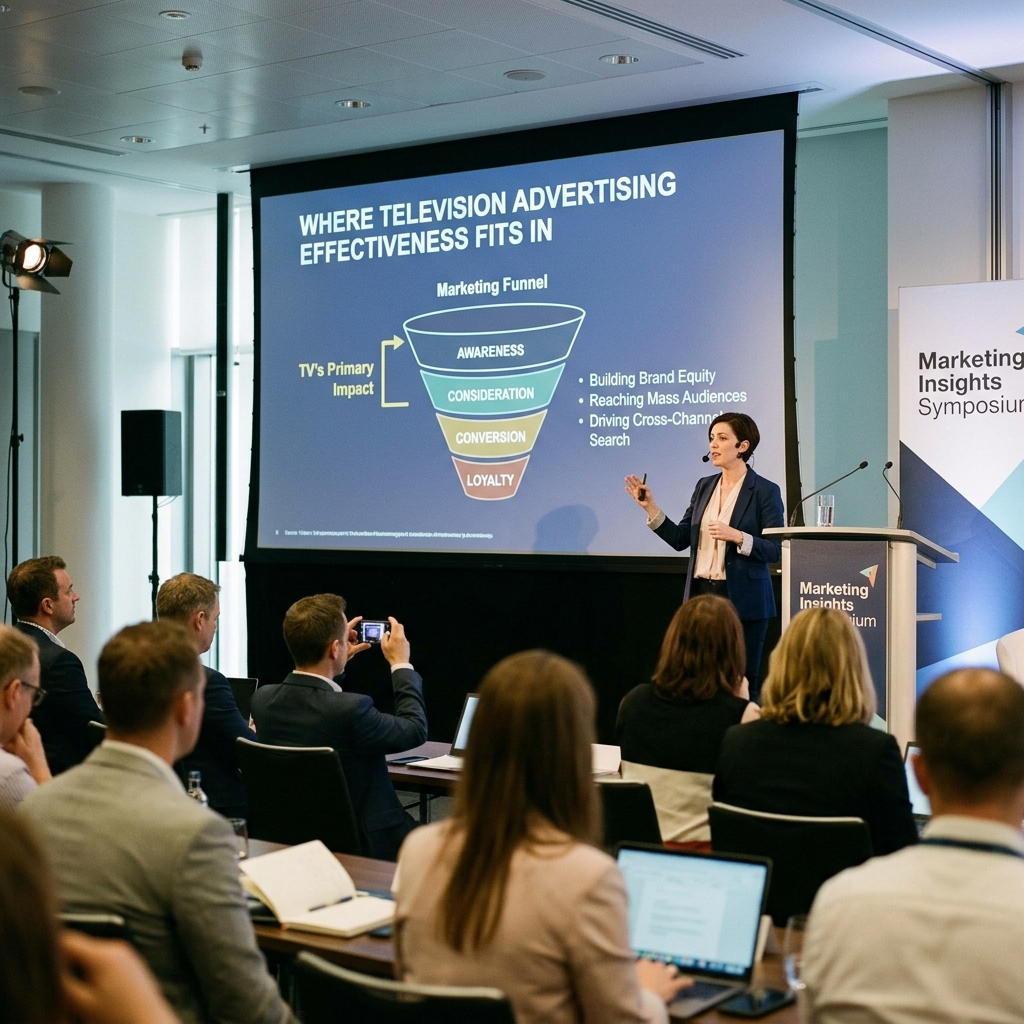
Modern marketers can learn from Television Advertising Effectiveness because television has historically driven results through broad reach, compelling creative, and memorable repetition rather than extensive personal tracking.
The lesson remains relevant today. Even in highly digital environments, strong branding, creative recall, and audience trust continue to influence outcomes. In many cases, a clear and memorable message can outperform overly complex targeting strategies in crowded markets.
A More Human Way to Advertise
Privacy-First Advertising is ultimately about respecting people. It acknowledges that attention is limited, trust is fragile, and data has boundaries. It does not reject performance. It makes performance more sustainable.
Privacy-First Advertising is also more humane for the teams building campaigns. Marketers do not need to treat users like invisible data points. They can build with clearer goals, better ethics, and more creativity.
Privacy-First Advertising is not a temporary trend. It is the direction the advertising industry has already taken. The sooner a brand aligns with that direction, the stronger its future will be.
Conclusion
Privacy-First Advertising is the modern answer to a simple business problem: how do you stay relevant when tracking gets harder and trust matters more? The strongest answer is to build around consent, first-party data, contextual relevance, better creative, and privacy-safe measurement. That approach is not only more respectful; it is also more durable. As platforms, regulators, and consumers continue to push for tighter boundaries, Privacy-First Advertising will keep growing as the smarter way to market. Brands that adapt now can earn attention without overstepping, improve performance without overcollecting, and build a reputation that lasts.
FAQs
1. What is Privacy-First Advertising?
It is a marketing approach that prioritizes user consent, transparency, responsible data collection, and privacy-safe targeting methods.
2. Why is this approach important?
Consumers expect greater control over their personal information, while regulators and technology platforms continue to strengthen privacy requirements.
3. Does it eliminate personalization?
No. Brands can still personalize campaigns by using contextual insights, first-party data, and permission-based signals instead of excessive tracking.
4. What type of data is most effective?
First-party data is often the most valuable because it comes directly from customer interactions and typically includes clearer consent.
5. How does it impact advertising creative?
Creative assets become more important since compelling messaging and strong audience understanding help offset reduced tracking capabilities.
6. Is programmatic advertising still possible?
Yes. Modern programmatic strategies rely on privacy-safe signals, contextual targeting, and improved measurement frameworks rather than third-party identifiers alone.
7. How has mobile advertising changed?
Mobile campaigns are increasingly influenced by user permissions and privacy controls, including frameworks like App Tracking Transparency.
8. What is the biggest mistake brands make?
Many businesses treat privacy as a compliance requirement only, instead of integrating it into their overall marketing and customer experience strategy.
9. Can small businesses benefit from this model?
Absolutely. Smaller brands can build trust, improve customer relationships, and create more sustainable marketing systems with privacy-conscious practices.
10. Is this the future of digital marketing?
Most industry trends suggest that privacy-focused strategies will continue to shape the future of digital advertising and customer engagement.