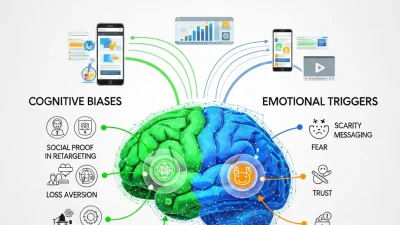
Psychological triggers in ads tap into deeply rooted cognitive biases and emotional responses to influence purchasing decisions. From scarcity and social proof to fear of missing out, understanding these advertising psychology techniques helps marketers craft campaigns that move audiences through the complete advertising funnel more effectively.
Every ad you’ve ever clicked, every product you’ve ever bought on impulse, every subscription you’ve signed up for “just to try it”—there’s a good chance a psychological trigger was involved. That’s not manipulation. That’s science.
Advertisers have long known that purchasing decisions are rarely purely rational. Research from Harvard Business School professor Gerald Zaltman suggests that 95% of purchasing decisions are made subconsciously. The human brain processes information through layers of emotion, memory, and bias before logic ever gets a look in. Marketers who understand this don’t just write better ads—they build more persuasive, more profitable campaigns.
This guide breaks down the core psychological triggers in ads, explains the science behind why they work, and shows you exactly how to apply them across every stage of your paid advertising strategy. Whether you’re building a full-funnel campaign or tightening up a single ad set, these advertising psychology techniques are the difference between an ad that scrolls past and one that converts.
By the end of this post, you’ll have a practical, research-backed framework for integrating psychological triggers into your paid media strategy—and the tools to measure their impact.
The Science Behind Advertising Psychology Techniques
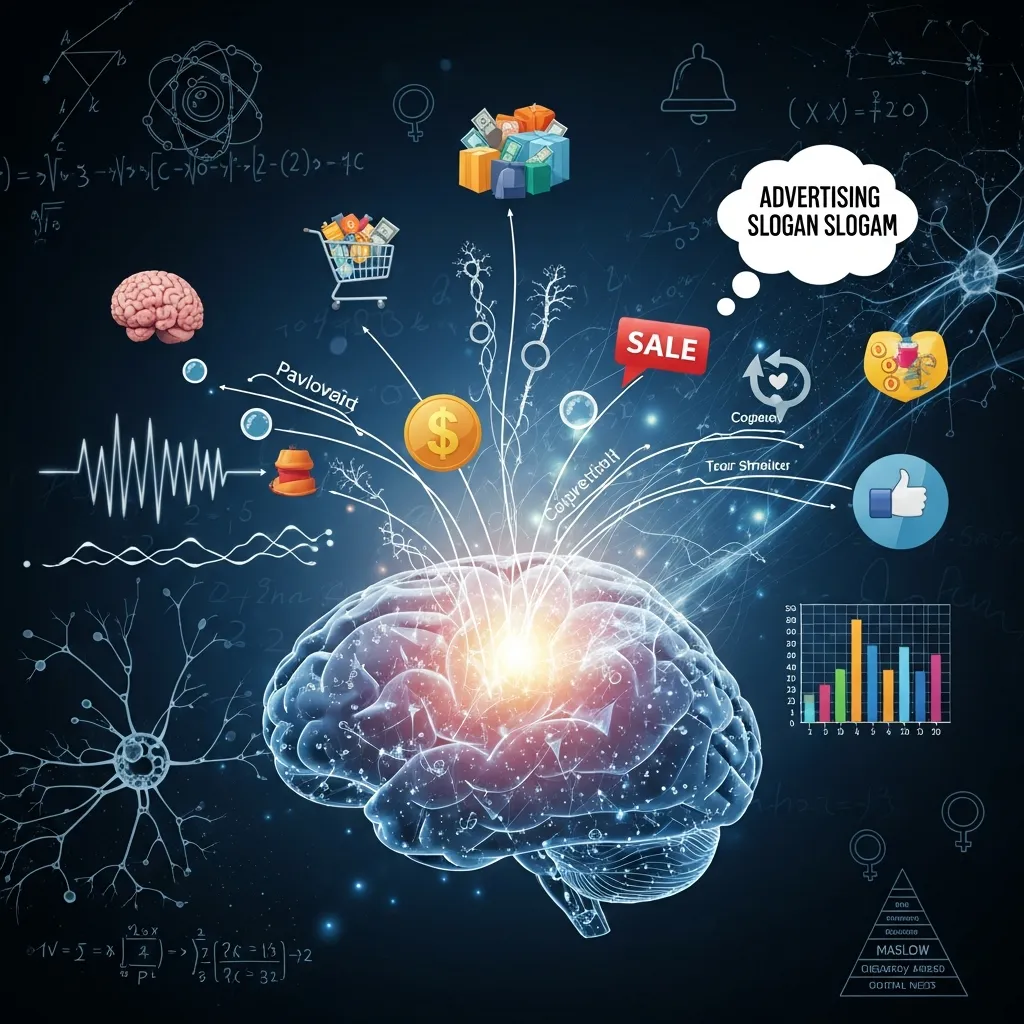
How does the human brain respond to advertising?
The brain doesn’t evaluate ads the way a spreadsheet evaluates data. It filters. It pattern-matches. It reacts emotionally first, and rationalizes second.
Two systems drive this process—what psychologist Daniel Kahneman calls System 1 and System 2 thinking. System 1 is fast, automatic, and emotion-driven. System 2 is slow, deliberate, and analytical. Most advertising psychology techniques are designed to engage System 1, triggering instinctive reactions before the analytical brain has a chance to object.
At a neurological level, effective ads activate the limbic system—the brain’s emotional center—releasing dopamine and cortisol, which prime the brain for action. This is why ads built around storytelling, fear, or desire tend to outperform purely informational ones.
What cognitive biases make psychological triggers in ads so effective?
Several well-documented cognitive biases underpin the most powerful psychological triggers in ads:
- Loss aversion: People feel the pain of losing something roughly twice as strongly as the pleasure of gaining an equivalent thing (Kahneman & Tversky, 1979). Ads that highlight what you’ll miss exploit this directly.
- Social conformity: Humans are wired to look to others for behavioral cues, especially in uncertain situations. This is the foundation of social proof.
- The halo effect: Positive impressions in one area (e.g., a celebrity’s attractiveness) transfer to unrelated judgments (e.g., product quality).
- Anchoring: The first piece of information encountered disproportionately influences subsequent judgments—which is why “Was $199, now $99” works so well.
Understanding these biases isn’t just academically interesting. They’re the building blocks of a winning paid media strategy.
Core Psychological Triggers and Their Application in Ads
Scarcity and Urgency: Why “Limited Time” Still Works
Scarcity is one of the oldest and most reliable psychological triggers in ads. When supply appears limited, perceived value increases—a principle rooted in basic economic theory but amplified by psychological loss aversion.
Urgency and scarcity often work together. Phrases like “Only 3 left,” “Offer ends midnight,” or countdown timers in display ads create time pressure that accelerates decision-making. Booking.com has built an entire conversion strategy around real-time scarcity cues (“10 people are looking at this right now”).
The key is authenticity. Manufactured scarcity that users can see through erodes trust and damages brand credibility.
Social Proof: The Psychology of “Everyone Else Is Doing It”
Social proof—the idea that people follow the actions of others—is one of the most widely used advertising psychology techniques. It appears in many forms:
- Customer reviews and star ratings
- Testimonials and user-generated content
- Influencer endorsements
- “X,000 customers served” badges
- Press mentions and media logos
According to a BrightLocal survey (2023), 98% of consumers read online reviews for local businesses—and the same behavior extends to ad environments. A Facebook ad featuring genuine customer quotes consistently outperforms product-only creative.
Authority: Why Expert Endorsements Drive Conversions
The authority trigger leverages our ingrained respect for expertise and credentials. Ads that feature doctors recommending supplements, engineers validating software, or award logos affirming quality all tap into this bias.
Authority cues don’t need to be expensive celebrity endorsements. Industry certifications, “As seen in Forbes,” or a founder’s credentials in a LinkedIn ad can carry significant weight—particularly in B2B contexts.
Reciprocity: Give First, Win Later
Reciprocity is the social norm of returning favors. In advertising, this translates to free trials, downloadable resources, webinars, and samples. When a brand gives something of genuine value upfront, users feel a psychological compulsion to give something back—often their email, their time, or their money.
HubSpot’s entire growth model is built on this principle: provide free tools and educational content, and users convert to paid plans at scale.
Liking: The Influence of Relatability and Aesthetics
People buy from people (and brands) they like. The liking trigger operates on multiple levels—physical attractiveness, relatability, shared values, and humor all drive affinity.
In practice, this means featuring real people in ads, using a tone of voice that mirrors your audience’s own, and ensuring your visuals align with your audience’s aesthetic preferences. Ads that feel “for me” convert at higher rates than ads that feel generic.
Commitment and Consistency: Start Small, Win Big
Once someone takes a small action—signing up for a newsletter, clicking “learn more,” completing a quiz—they’re psychologically primed to take a bigger one. This is the commitment and consistency principle, described by Robert Cialdini in Influence (1984).
In paid advertising, this is applied through multi-step funnels: a low-friction lead magnet ad leads to an email nurture sequence that leads to a purchase offer. Each “yes” makes the next one easier.
FOMO: Fear of Missing Out as a Conversion Driver
FOMO is the emotional cousin of scarcity. Where scarcity focuses on limited supply, FOMO focuses on the social and experiential consequences of not acting. Ads showing happy customers enjoying a product—and subtly implying you’re missing that experience—are a textbook example.
Platforms like Instagram and TikTok amplify FOMO naturally, making it one of the most potent psychological triggers in ads running on these channels.
Emotion: The Deepest Trigger of All
Emotional advertising consistently outperforms rational advertising. According to the Institute of Practitioners in Advertising (IPA), campaigns with purely emotional content perform about twice as well as those with purely rational content, and about 1.5 times better than those that combine both.
The most commonly leveraged emotions in advertising include:
- Happiness and joy (Coca-Cola’s “Share a Coke” campaign)
- Nostalgia (McDonald’s retro campaigns)
- Aspiration (Nike’s “Just Do It” positioning)
- Fear and anxiety (insurance, security, health-related ads)
Emotion doesn’t just drive clicks. It drives brand memory—which is what turns a one-time buyer into a loyal customer.
Integrating Psychological Triggers into Your Paid Advertising Strategy Guide
How do you identify your audience’s psychological hot buttons?
Before you can activate the right psychological triggers in ads, you need to know what your audience is afraid of, aspires to, and is frustrated by. The tools for this include:
- Customer interviews and surveys to surface emotional language
- Review mining (Amazon, G2, Trustpilot) to identify patterns in how customers describe their problems and desires
- Social listening tools (Brandwatch, Sprout Social) to monitor organic conversation
- Competitor ad analysis using Facebook Ad Library and SimilarWeb
The goal is to build a psychological profile of your ideal customer—not just demographics, but the emotional drivers that make them act.
How do you craft ad copy and visuals that leverage psychological triggers?
Once you know your audience’s psychological hot buttons, the craft lies in translation:
- Headlines: Lead with the emotional outcome, not the feature. “Sleep through the night” beats “Memory foam mattress.”
- Visuals: Use imagery that mirrors your audience’s aspirational identity or highlights the pain of inaction.
- CTA copy: Replace generic “Buy Now” with trigger-specific language like “Claim Your Spot” (scarcity), “See Why 50,000 Chose Us” (social proof), or “Get Instant Access” (commitment).
- Ad format: Video ads are particularly effective for emotional and story-based triggers; static ads work well for authority and social proof cues.
Why is A/B testing essential for psychological trigger optimization?
No trigger works universally. Scarcity may outperform social proof in one audience segment and underperform in another. A/B testing isn’t optional in a serious paid advertising strategy guide—it’s the mechanism by which you validate which psychological levers actually move your specific audience.
Test one variable at a time: headline versus headline, emotional angle versus rational angle, countdown timer versus no countdown timer. Let statistical significance guide decisions, not assumptions.
How do psychological triggers apply across social media, search, and display ads?
- Search ads: Urgency and authority work well here, since users are already in a decision-making mindset. Ad copy like “Trusted by 10,000+ businesses | Free trial, no credit card” combines both.
- Social media ads: FOMO, liking, and emotion dominate. The scroll-stopping creative needs an immediate emotional hook.
- Display ads: Scarcity and retargeting-based commitment triggers work effectively. Reminder ads (“Still thinking about it?”) re-engage warm audiences using consistency bias.
- YouTube/video ads: Storytelling and emotional triggers shine here. The first 5 seconds must activate System 1 or the viewer skips.
Trends Dominating Digital Ads and Psychological Triggers

How is personalization changing the way psychological triggers work in ads?
Hyper-personalization is one of the biggest trends dominating digital ads. When an ad speaks directly to a user’s behavior—referencing a product they viewed, a location they’re in, or a life stage they’re navigating—it amplifies every psychological trigger it uses. The ad feels relevant, not random. That relevance multiplies the impact of scarcity, social proof, and FOMO dramatically.
AI-powered dynamic creative optimization (DCO) tools now allow advertisers to test thousands of creative combinations simultaneously, serving the highest-converting version of an ad to each audience segment automatically.
What role do interactive ad formats play in psychological engagement?
Interactive formats—polls, quizzes, AR try-ons, swipe-able carousels—leverage the commitment and consistency trigger from the very first interaction. Every tap, swipe, or answer is a micro-commitment that increases engagement and primes users for conversion.
According to a Magna Global study, interactive ads generate 47% more time spent compared to passive formats. More time spent means more psychological imprinting—which translates to better recall and higher purchase intent.
What are the ethical considerations of using psychological triggers in advertising?
The power of psychological triggers in ads comes with responsibility. Dark patterns—fake countdown timers, manufactured scarcity, misleading social proof—may drive short-term conversions but cause long-term brand damage and erode consumer trust.
Regulators are increasingly scrutinizing manipulative digital advertising practices. The UK’s Competition and Markets Authority (CMA) and the EU’s Digital Services Act both include provisions targeting deceptive design patterns.
Ethical application means using psychological triggers to highlight genuine value, not to deceive. Authentic scarcity, real testimonials, and honest urgency are not just morally sound—they’re more sustainable business practices.
Case Studies: Successful Campaigns Utilizing Psychological Triggers in Ads
How did Booking.com use scarcity to drive conversions?
Booking.com is a masterclass in scarcity-based psychological triggers. The platform layers multiple real-time scarcity cues throughout the booking journey: “Only 2 rooms left at this price,” “Booked 15 times in the last 24 hours,” and “10 people are viewing this right now.”
These cues aren’t manufactured—they’re pulled from real inventory and traffic data, which means they’re both effective and ethically defensible. The result is one of the highest-converting e-commerce experiences in the world, with a reported conversion rate significantly above the travel industry average.
How did Airbnb leverage social proof to build a viral growth engine?
Airbnb’s early growth was powered almost entirely by social proof. At a time when consumers were deeply skeptical about staying in strangers’ homes, the platform leaned hard into user reviews, host profiles, and trust-building features.
By making reviews central to the product experience—not just the marketing—Airbnb transformed social proof from an advertising tactic into a core business mechanism. Hosts with more reviews attracted more bookings; more bookings generated more reviews. The psychological trigger became a flywheel.
Their ad campaigns amplified this by featuring real host and guest stories, turning user-generated content into emotionally resonant paid media that felt authentic rather than promotional.
Measuring the Impact of Psychological Triggers on Ad Performance
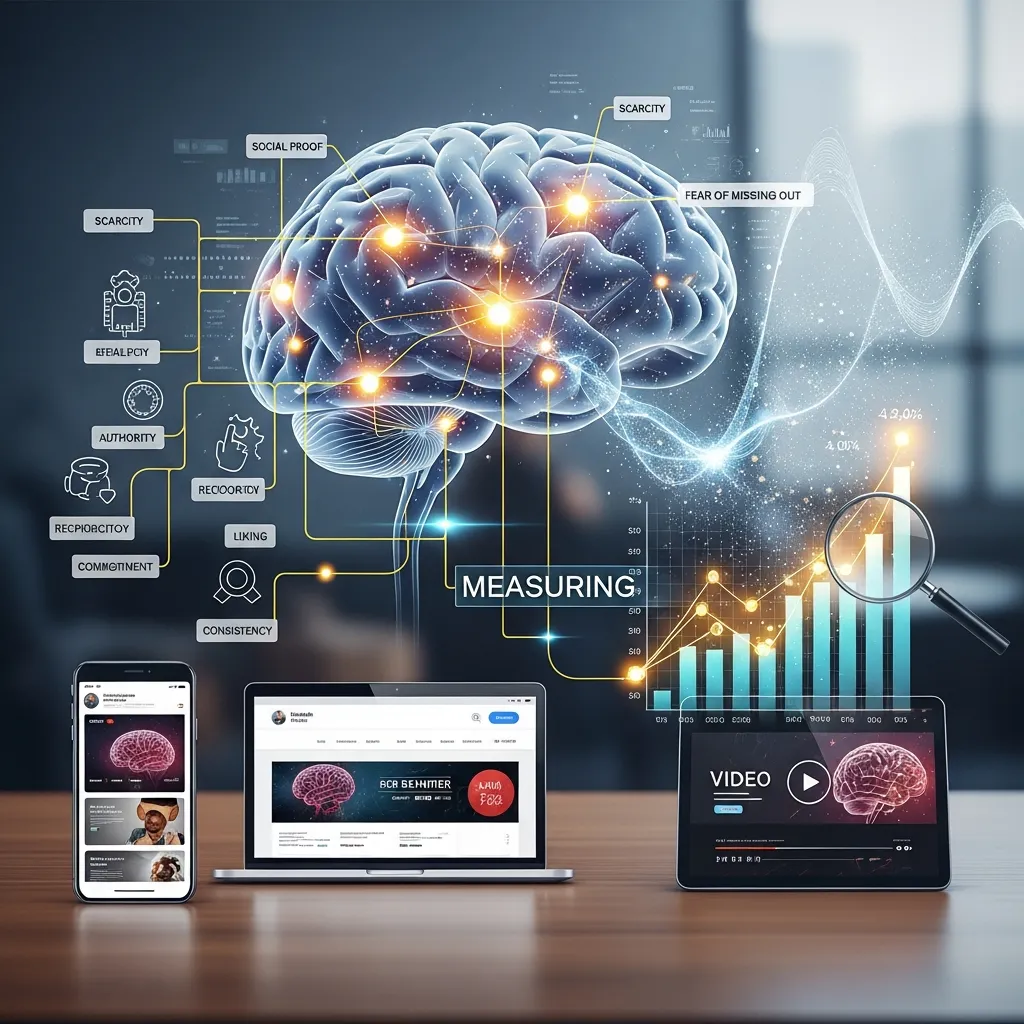
What metrics should you track to evaluate psychological trigger effectiveness?
Measuring the impact of psychological triggers in ads requires looking beyond vanity metrics:
- Click-through rate (CTR): Measures the immediate response to your ad’s hook. A high CTR relative to your benchmark indicates your trigger is generating attention.
- Conversion rate: The ultimate measure of whether the trigger is driving action, not just clicks.
- Cost per acquisition (CPA): Contextualizes conversion performance relative to spend.
- Engagement rate: For social ads, shares, comments, and saves indicate emotional resonance.
- Brand lift studies: Available on platforms like Meta and YouTube, these measure shifts in brand awareness and purchase intent—important for emotion and aspiration-based campaigns.
- Return on ad spend (ROAS): The bottom-line measure of campaign profitability.
Track these metrics across different creative variants to isolate the specific contribution of each psychological trigger.
How do you analyze conversion rates and ROI from psychological trigger testing?
Segment your data by trigger type and audience segment. A scarcity-based ad may generate a high conversion rate among warm retargeting audiences but underperform with cold traffic. An authority-based ad might shine in B2B campaigns but have minimal impact in B2C.
Use attribution modeling thoughtfully—last-click attribution often undervalues upper-funnel psychological triggers (like emotion and aspiration) that build brand affinity before a purchase decision crystallizes. Multi-touch attribution or data-driven models give a more accurate picture of how triggers contribute across the complete advertising funnel.
Conclusion
Psychological triggers in ads aren’t a set of tricks. They’re a framework for communicating in the language the human brain actually speaks—the language of emotion, social validation, loss, and desire.
The most effective advertisers combine multiple triggers across a carefully structured complete advertising funnel: awareness campaigns built on emotion and aspiration, consideration campaigns fueled by social proof and authority, and conversion campaigns sharpened by scarcity and urgency. Each layer reinforces the next.
As personalization technology advances and AI continues to reshape the landscape of trends dominating digital ads, the ability to identify the right psychological trigger for the right audience at the right moment will become an increasingly decisive competitive advantage. The marketers who understand human psychology—and apply it ethically and strategically—will consistently outperform those who rely on spend alone.
Start by auditing your current campaigns through a psychological trigger lens. What emotion does your ad lead with? What bias does your copy activate? What would make your audience feel that not acting is the wrong choice?
Answer those questions well, and your paid advertising strategy guide writes itself.
Frequently Asked Questions About Psychological Triggers in Ads
What are psychological triggers in advertising?
Psychological Triggers in Ads are emotional or cognitive cues used in ad copy, visuals, and offers to influence how people think, feel, and act. These triggers can include scarcity, urgency, social proof, authority, or fear of missing out, all of which help shape buying decisions more quickly than logic alone.
Why are psychological triggers important in a paid advertising strategy?
Psychological Triggers in Ads are important because they help turn attention into action. Even a well-targeted ad may underperform if it does not create urgency, trust, desire, or emotional relevance. Using the right trigger at the right moment can improve engagement, increase conversions, and strengthen overall ad performance.
What are the most effective psychological triggers in digital ads?
Some of the most effective Psychological Triggers in Ads include scarcity, social proof, reciprocity, authority, urgency, and emotional storytelling. The strongest trigger often depends on the audience, product, and platform, which is why testing different approaches is essential for better results.
How do psychological triggers fit into the complete advertising funnel?
Different Psychological Triggers in Ads work better at different stages of the funnel. Emotional appeal and curiosity are useful at the awareness stage, social proof and authority work well during consideration, and urgency or scarcity are often most effective at the conversion stage.
Are psychological triggers in ads manipulative?
Psychological Triggers in Ads become manipulative when they rely on deception, such as fake scarcity, false reviews, or misleading promises. When used ethically and backed by real value, they are simply a way to communicate more persuasively and connect with the audience in a meaningful way.
How can I use scarcity effectively in my ads without appearing dishonest?
To use Psychological Triggers in Ads ethically, scarcity should always be real. If you have limited stock, a genuine deadline, or a true limited-time offer, highlight it clearly. Avoid fake countdowns or misleading “only a few left” claims, because they can quickly damage trust.
What role does social proof play in advertising psychology techniques?
Social proof is one of the most powerful Psychological Triggers in Ads because it reduces uncertainty and builds confidence. Reviews, testimonials, ratings, customer counts, and user-generated content all show potential buyers that others already trust the brand or product.
How do I identify which psychological triggers resonate with my target audience?
The best way to find effective Psychological Triggers in Ads is through audience research, customer feedback, competitor analysis, and ad testing. Pay close attention to the language people use when describing their problems, goals, and frustrations, because that often reveals which emotional triggers matter most.
How does personalization amplify psychological triggers in ads?
Personalization makes Psychological Triggers in Ads more powerful by increasing relevance. A message about urgency, value, or social proof works much better when it is connected to a user’s interests, browsing behavior, or previous interactions with a brand rather than being shown as a generic ad.
What metrics should I track to measure the effectiveness of psychological triggers in ads?
To measure the success of Psychological Triggers in Ads, track metrics such as click-through rate, conversion rate, cost per acquisition, engagement rate, and return on ad spend. These numbers help show whether your triggers are attracting attention, building trust, and driving action.
How do psychological triggers differ across social media, search, and display advertising?
Psychological Triggers in Ads work differently depending on the platform. Search ads often perform best with urgency and authority because users already have intent, while social media ads rely more on emotion, storytelling, and FOMO. Display and retargeting ads often benefit from familiarity, repetition, and reminder-based triggers.
What are the emerging trends dominating digital ads in relation to psychological triggers?
The future of Psychological Triggers in Ads is being shaped by AI-driven personalization, interactive ad formats, and a stronger focus on ethical marketing. Brands that combine transparency, relevance, and emotional intelligence in their ad messaging are more likely to build trust and achieve long-term performance.