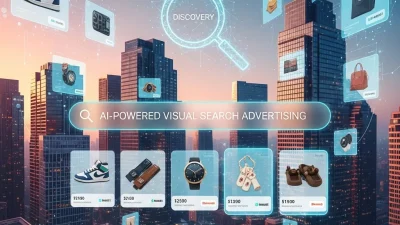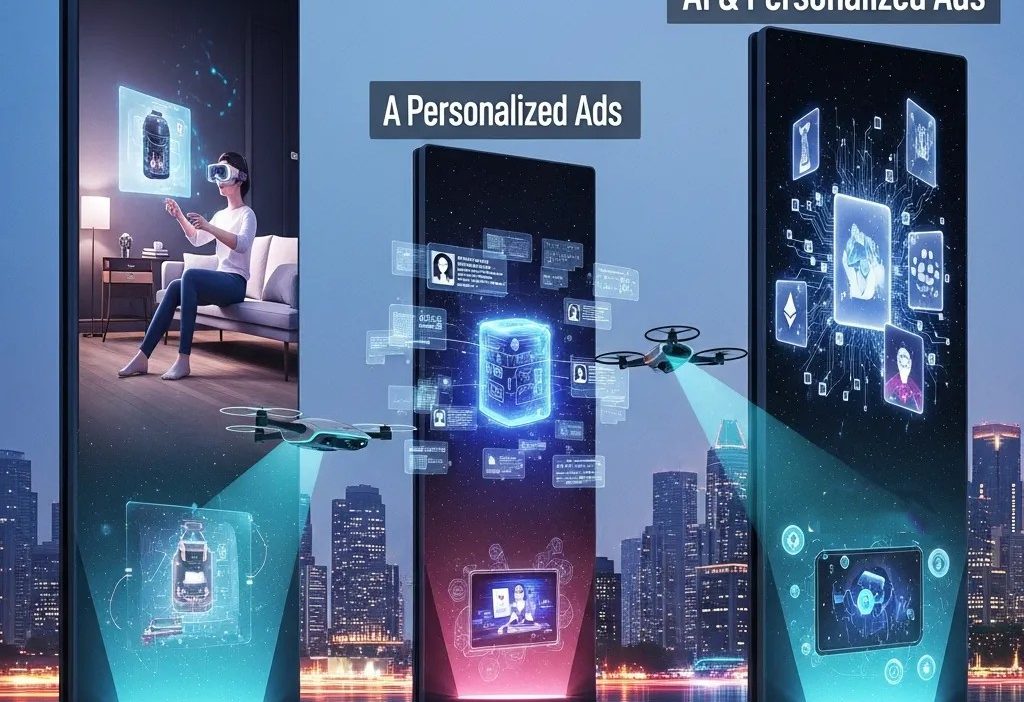
This blog explores the evolving landscape shaping the future of digital advertising. We review key trends like AI-Powered Advertising Strategies, the rise of Generative AI Advertising, the growing necessity for Privacy Advertising & Cookieless Strategies, and the shift toward omnichannel digital marketing. Read on to discover how these advancements are transforming the industry and what advertisers can expect in the coming years.
The future of digital advertising is arriving faster than most brands can adapt. Consumer behavior shifts rapidly, and technological leaps rewrite the rules of engagement every few months. Advertisers face a complex environment where traditional methods no longer guarantee a strong return on investment. Understanding the future of digital advertising is crucial for brands that want to remain visible, relevant, and profitable.
To stay competitive, marketing teams must anticipate the next wave of technological innovations. The future of digital advertising demands a deep understanding of artificial intelligence, data privacy, and interconnected consumer touchpoints. Campaigns that rely on outdated tracking methods or siloed channels will struggle to reach audiences effectively. Forward-thinking companies are already reshaping their frameworks to align with new consumer expectations.
In this comprehensive guide, we will explore the core pillars defining the future of digital advertising. We look closely at how machine learning transforms ad targeting and how generative models unlock new creative potentials. We will also examine the urgent transition toward privacy-centric campaigns and outline the benefits of unified customer experiences. By preparing for these shifts now, you can position your brand for sustainable growth.
The Rise of AI-Powered Advertising Strategies
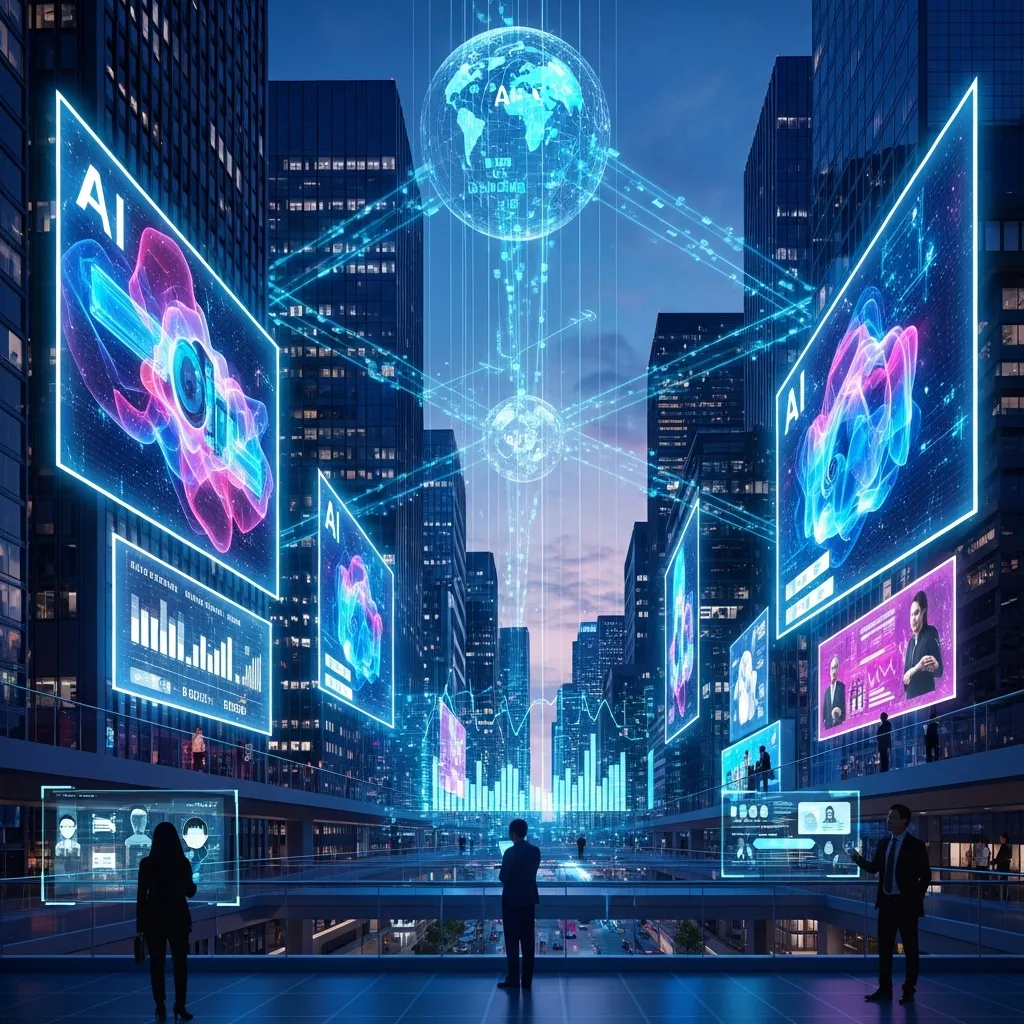
Artificial intelligence fundamentally alters how brands connect with their target audiences. AI-Powered Advertising Strategies sit at the core of the future of digital advertising, shifting the focus from manual guesswork to data-driven precision.
Transforming Ad Targeting and Personalization
Machine learning algorithms analyze vast datasets to identify granular consumer patterns. AI-Powered Advertising Strategies allow brands to segment audiences based on real-time behavior rather than broad demographics. This means users see highly relevant ads precisely when they are most likely to convert. The future of digital advertising relies heavily on this micro-targeting capability to boost engagement rates and reduce wasted ad spend.
Predictive Analytics and Journey Optimization
Predictive analytics takes historical data and forecasts future consumer actions. By integrating these models, companies can anticipate what a customer will want before the customer even searches for it. The future of digital advertising uses this foresight to optimize the entire buyer journey. Advertisers can map out specific touchpoints and deliver the right message at the exact moment a prospect is ready to make a purchase decision.
Automation in Campaign Management
Managing campaigns across multiple platforms requires immense effort. AI-Powered Advertising Strategies automate complex bidding processes and budget allocations across search and social channels. Algorithms continuously adjust bids in real time to secure the best ad placements at the lowest possible cost. This automation frees up marketing teams to focus on high-level strategy rather than getting bogged down in daily optimization tasks.
Real-World AI Implementation
Major e-commerce brands use AI to adjust ad creatives dynamically based on user weather patterns, location, and past purchase history. Streaming platforms use AI algorithms to promote specific shows to distinct user profiles, maximizing subscription retention. These real-world applications prove that AI-Powered Advertising Strategies are not just theoretical concepts, but practical tools driving the future of digital advertising.
Generative AI Advertising: Unleashing Efficiency
Creative production has historically been a bottleneck for marketing teams. Generative AI Advertising changes this dynamic entirely, enabling brands to scale their content creation without sacrificing quality.
Understanding Generative AI in Campaigns
Generative AI Advertising uses advanced neural networks to produce text, images, and even video content from simple prompts. The future of digital advertising will lean heavily on these tools to generate thousands of ad variations in minutes. This technology empowers advertisers to test multiple creative angles simultaneously, finding the most effective messaging faster than ever before.
AI-Powered Content Creation
Copywriters and designers now collaborate directly with AI assistants. Generative AI Advertising tools can draft compelling ad copy, design eye-catching banners, and script short-form videos. The future of digital advertising involves blending human creativity with machine efficiency. Brands can maintain a consistent voice while producing the sheer volume of content required to keep digital campaigns fresh and engaging.
Personalization at Scale
One of the biggest hurdles in marketing is delivering personalized creatives to diverse audience segments. Generative AI Advertising solves this by automatically tweaking ad elements—like background colors, tone of voice, or featured products—to match individual user preferences. The future of digital advertising promises hyper-personalized ad experiences for every single user, driven entirely by generative models working in the background.
Challenges and Ethical Considerations
The rapid adoption of Generative AI Advertising brings specific challenges. Brands must navigate copyright concerns regarding AI-generated visuals and ensure their messaging remains authentic. The future of digital advertising requires companies to establish clear ethical guidelines for AI use, ensuring that machine-generated content does not deceive consumers or violate intellectual property rights.
Privacy Advertising & Cookieless Strategies: Navigating a New Era
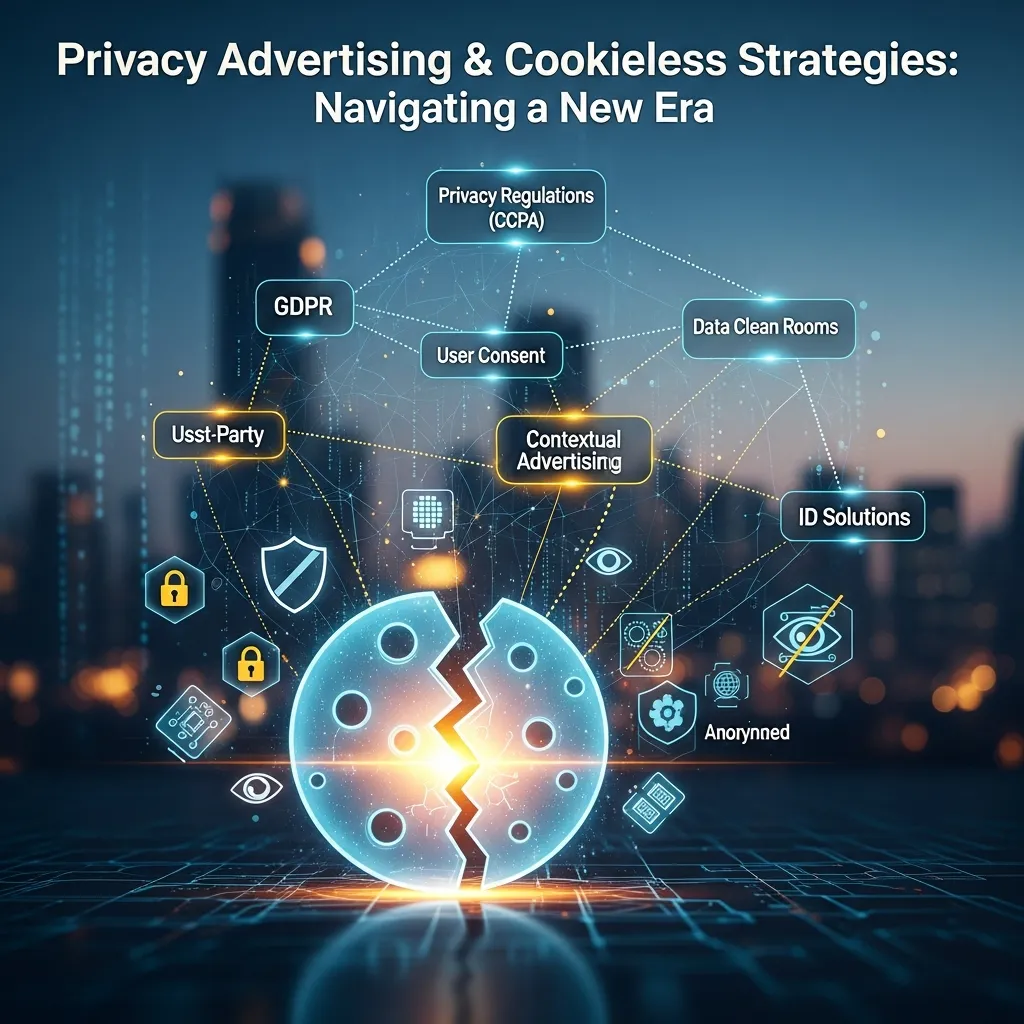
Consumer privacy is taking center stage. Stricter regulations and changing browser policies make Privacy Advertising & Cookieless Strategies essential for the future of digital advertising.
The Impact of Stricter Privacy Regulations
Laws like the GDPR in Europe and the CCPA in California enforce strict rules on how companies collect and use consumer data. Advertisers face hefty fines for non-compliance. The future of digital advertising is deeply intertwined with user consent. Brands must build trust by being transparent about data collection practices and offering users clear opt-out mechanisms.
The Deprecation of Third-Party Cookies
Web browsers are phasing out third-party cookies, eliminating the primary method advertisers have used to track users across the internet. Privacy Advertising & Cookieless Strategies are no longer optional; they are a survival requirement. The future of digital advertising demands a shift away from intrusive tracking toward methods that respect user anonymity while still delivering relevant messaging.
First-Party Data and Clean Rooms
To adapt, companies are prioritizing first-party data collection. Brands gather information directly from their customers through newsletter signups, loyalty programs, and direct purchases. Additionally, data clean rooms provide secure environments where multiple companies can pool their first-party data without exposing personally identifiable information. The future of digital advertising relies on these secure collaborations to gain audience insights.
Contextual Advertising Resurgence
With individual tracking limited, contextual advertising is making a strong comeback. Instead of targeting the user, brands target the content the user is consuming. If a user reads an article about running shoes, they see an ad for running shoes. Privacy Advertising & Cookieless Strategies leverage advanced AI to analyze page context, ensuring ads are highly relevant without relying on personal data. This approach is a cornerstone of the future of digital advertising.
Omnichannel Digital Marketing: A Unified Experience
Consumers interact with brands across smartphones, laptops, smart TVs, and physical stores. Omnichannel digital marketing ensures a cohesive message across all these varied platforms.
Defining the Omnichannel Approach
Omnichannel digital marketing connects every touchpoint into a seamless journey. If a customer adds an item to their cart on a mobile app but leaves, they might receive a targeted email reminder, followed by a social media ad. The future of digital advertising relies on this interconnected web to guide consumers smoothly toward a purchase, eliminating friction and disjointed messaging.
Integrating Digital Touchpoints
Brands must ensure their messaging, branding, and offers remain consistent across search, social, email, and display networks. Omnichannel digital marketing requires breaking down internal silos so that email teams, social media managers, and paid media buyers work from a unified strategy. The future of digital advertising demands this synchronization to build strong, recognizable brand identities.
Data Unification and Attribution
Executing omnichannel digital marketing effectively requires a single source of truth for customer data. Brands use Customer Data Platforms (CDPs) to unify interactions from various channels into comprehensive customer profiles. Accurate attribution models then help marketers understand which channels drive the most value. The future of digital advertising depends on accurately measuring how a podcast ad, a social post, and an email work together to generate a sale.
Creating Cohesive Customer Journeys
The future of digital advertising focuses heavily on the overall customer experience. Omnichannel digital marketing allows brands to tailor subsequent interactions based on previous behaviors across different platforms. This interconnected approach ensures the consumer feels understood and valued, fostering long-term loyalty and higher lifetime value.
Emerging Technologies Impacting the Industry
Beyond AI and privacy shifts, several emerging technologies are reshaping the future of digital advertising.
The Metaverse and Immersive Experiences
Virtual and augmented reality environments offer new spaces for brand interaction. The future of digital advertising includes virtual storefronts, branded digital assets, and immersive experiences within metaverse platforms. Advertisers are exploring how to engage audiences in these 3D spaces without disrupting the user experience.
Web3 and Decentralized Advertising
Blockchain technology and Web3 introduce decentralized advertising models. These frameworks allow users to own their data and potentially monetize their attention. The future of digital advertising could see users explicitly opting into ads in exchange for cryptocurrency tokens, fundamentally changing the value exchange between brands and consumers.
Voice Search Optimization
Smart speakers and virtual assistants change how people search for information. Voice search queries are typically longer and more conversational than typed searches. The future of digital advertising requires brands to optimize their content and ad campaigns for natural language processing, ensuring they capture high-intent voice traffic.
Connected TV (CTV) Advancements
Streaming services are replacing traditional television. Connected TV allows advertisers to bring the precision of digital targeting to the big screen. The future of digital advertising leverages CTV to deliver highly targeted video ads, complete with advanced measurement metrics that traditional broadcast television could never provide.
Challenges and Opportunities Ahead

The future of digital advertising is full of immense potential, but marketing teams must navigate significant hurdles to succeed.
Data Privacy and Ethical AI
Balancing personalization with user privacy is a constant challenge. The future of digital advertising requires brands to implement Privacy Advertising & Cookieless Strategies while deploying AI responsibly. Maintaining consumer trust is the most valuable asset a brand can hold in this new ecosystem.
The Talent Gap
The rapid evolution of technology creates a talent shortage. The future of digital advertising needs professionals who understand machine learning, data science, and omnichannel digital marketing strategy. Companies must invest in continuous training and upskilling to ensure their teams can leverage new tools effectively.
Measuring ROI in a Complex Ecosystem
With the loss of third-party cookies and the rise of multi-channel journeys, measuring campaign success is increasingly difficult. The future of digital advertising demands advanced media mix modeling and predictive analytics to understand true return on investment across fragmented platforms.
Innovation as a Competitive Advantage
Those who adapt quickly will thrive. The future of digital advertising rewards brands that test Generative AI Advertising tools, experiment with new platforms, and build robust first-party data structures. Proactive innovation is the ultimate driver of market share growth.
Preparing for What Comes Next
The future of digital advertising is defined by intelligence, privacy, and interconnected experiences. Advertisers can no longer rely on the playbooks of the past decade. By embracing AI-Powered Advertising Strategies, companies can achieve unparalleled targeting precision. Incorporating Generative AI Advertising allows for rapid, personalized content creation at scale.
Navigating the future of digital advertising also means respecting the consumer. Implementing Privacy Advertising & Cookieless Strategies ensures your brand remains compliant and trustworthy. Finally, weaving these elements into a cohesive omnichannel digital marketing approach guarantees that your audience receives a seamless, engaging experience everywhere they encounter your brand.
To prepare for the future of digital advertising, audit your current data collection practices. Begin building direct relationships with your customers to grow your first-party data. Investigate AI tools that can streamline your creative processes and automate your bidding. The ongoing transformation of the digital ecosystem presents massive opportunities for brands willing to innovate and adapt.
Frequently Asked Questions (FAQs)
1. What is the biggest challenge in the future of digital advertising?
The biggest challenge in the future of digital advertising is balancing hyper-personalization with stringent data privacy regulations. Advertisers must find ways to deliver relevant content without relying on intrusive tracking methods like third-party cookies.
2. How will AI change how ads are created?
Generative AI Advertising tools enable rapid creation of ad copy, images, and videos. This allows brands to test thousands of creative variations quickly, personalizing ad elements for different audience segments at scale.
3. What are cookieless strategies in digital advertising?
Cookieless strategies focus on targeting and tracking users without third-party cookies. They rely heavily on collecting first-party data directly from consumers, utilizing data clean rooms, and leveraging contextual advertising to match ads with relevant content.
4. Why is privacy becoming so important in digital advertising?
Privacy is critical due to growing consumer awareness and strict government regulations like GDPR and CCPA. The future of digital advertising requires brands to prioritize user consent and data protection to avoid heavy fines and maintain consumer trust.
5. What is omnichannel digital marketing and why does it matter?
Omnichannel digital marketing provides a unified consumer experience across all platforms, from social media to email to in-store visits. It matters because it removes friction from the buying journey and ensures consistent brand messaging, leading to higher conversion rates.
6. How can businesses prepare for the future of digital advertising?
Businesses can prepare by investing in AI-Powered Advertising Strategies, building robust first-party data infrastructures, and training their teams on new measurement protocols that do not rely on third-party tracking.
7. What role will the Metaverse play in advertising?
The Metaverse offers immersive, 3D environments for brands to interact with consumers. The future of digital advertising here includes virtual billboards, branded digital goods, and interactive experiences that blend entertainment with marketing.
8. Is Generative AI going to replace human advertisers?
No. Generative AI Advertising will augment human creativity, not replace it. Humans are still required to build the overall strategy, ensure brand voice consistency, and navigate the ethical considerations of campaign deployment.
9. How can I measure the effectiveness of new advertising strategies?
With traditional tracking fading, the future of digital advertising relies on Media Mix Modeling (MMM), incremental testing, and advanced Customer Data Platforms (CDPs) to accurately attribute sales and measure ROI across an omnichannel ecosystem.
10. What are the ethical considerations for AI in advertising?
Ethical considerations include preventing algorithmic bias, ensuring transparency when AI generates content, and protecting consumer privacy when machine learning models analyze behavioral data.
11. How will data privacy regulations continue to evolve?
Regulations will likely become more standardized and strict globally. The future of digital advertising will require built-in compliance mechanisms, giving consumers complete control over what data they share and how it is monetized.
12. What is the most exciting innovation in digital advertising today?
The integration of AI-Powered Advertising Strategies with real-time omnichannel digital marketing is incredibly exciting. It allows brands to deliver highly relevant, seamlessly connected experiences that truly add value to the consumer’s daily life.