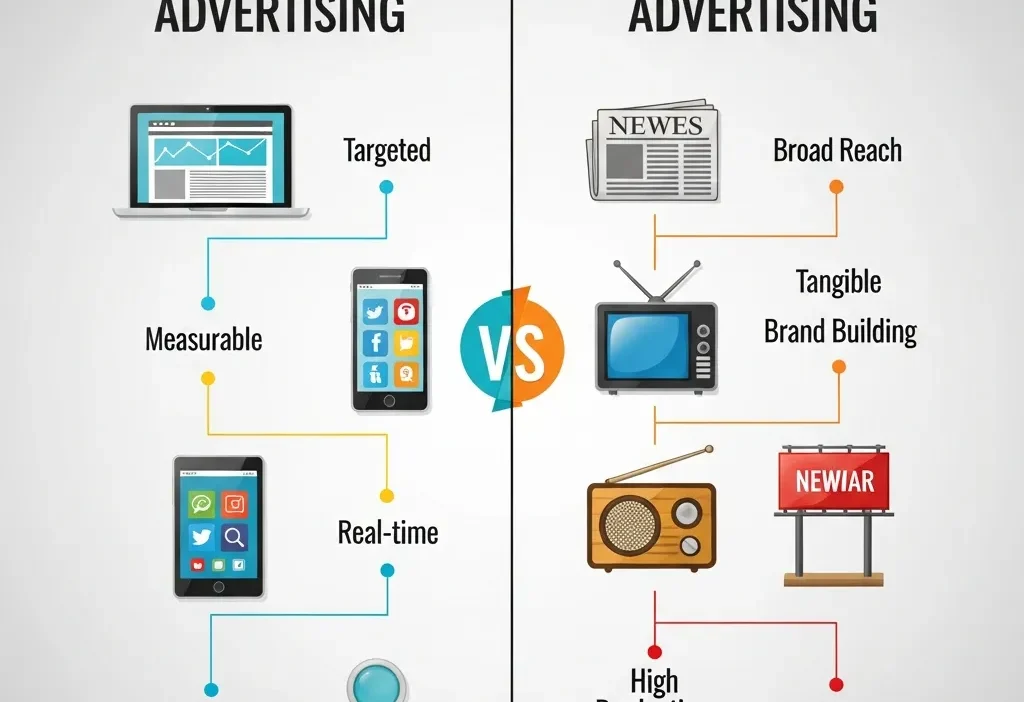
The way brands reach consumers has shifted dramatically over the past few decades. Billboards and television spots used to dominate the marketing landscape. Now, smartphones and social media feeds capture the majority of our attention. This shift has sparked an ongoing debate among marketers: digital advertising vs traditional advertising.
Choosing the right approach can make or break a campaign. While newer methods offer precision, older formats provide lasting physical presence. We are going to explore the strengths and weaknesses of both methods. By the end of this guide, you will understand the nuances of digital advertising vs traditional advertising, and you will learn how to Create a Good Advertisement in a multi-channel environment.
Understanding Traditional Advertising
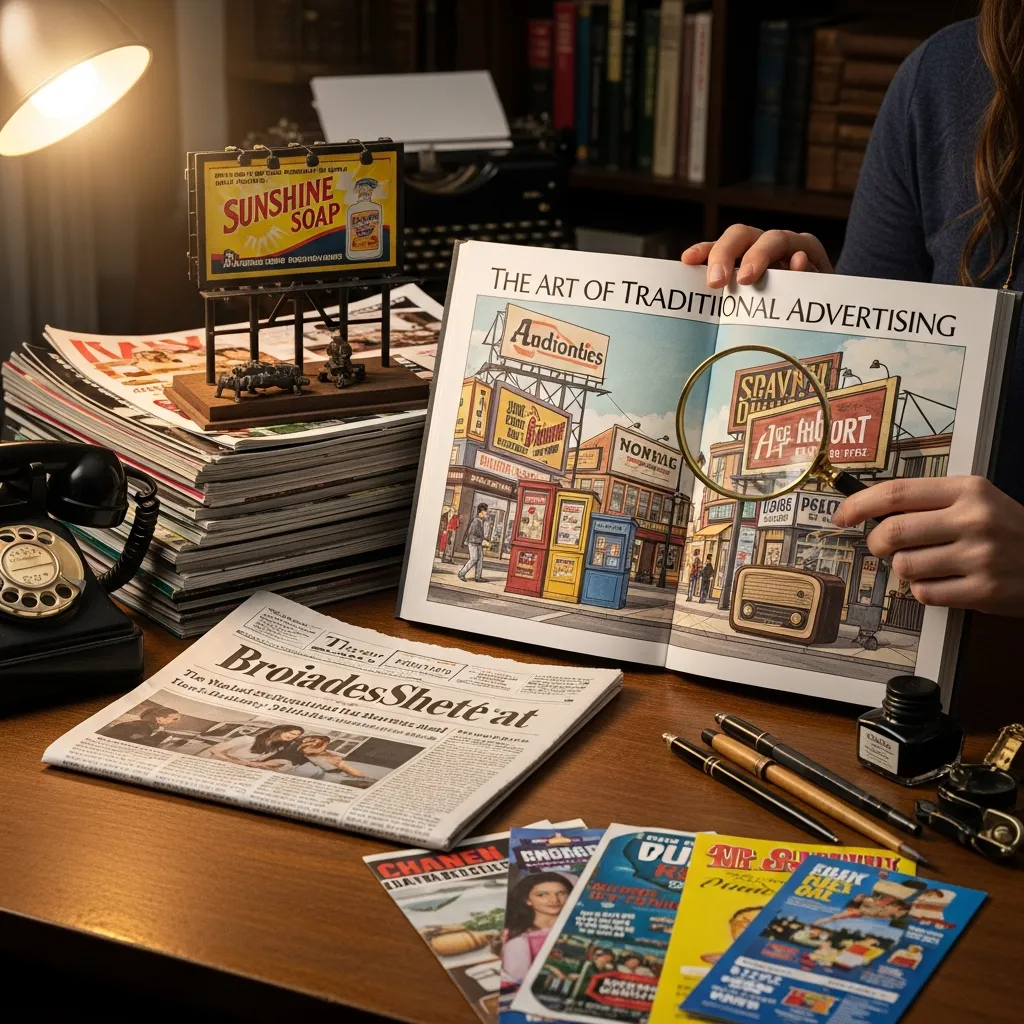
Before the internet changed everything, traditional advertising was the only way to reach an audience.
Definition and Historical Context
Traditional advertising refers to mass media marketing that does not rely on the internet. For over a century, brands relied on physical and broadcast formats to get their messages across. When looking at digital advertising vs traditional advertising, it helps to understand the foundational channels of the traditional approach.
Key Channels
Print Media (Newspapers, Magazines)
Print ads place visual and written content directly in the hands of readers. These are highly visible and often kept in homes or waiting rooms for weeks.
Broadcast Media (TV, Radio)
broadcast media Television and radio commercials reach wide audiences during specific programs. They combine audio and visual storytelling to build brand awareness.
Out-of-Home (Billboards, Banners)
Out-of-home (OOH) marketing includes billboards, bus stop posters, and transit wraps. They capture the attention of commuters and pedestrians in high-traffic areas.
Advantages of Traditional Advertising
When comparing Digital Advertising vs Traditional Advertising, traditional methods still offer several powerful advantages that make them relevant today.
Broad Reach and Familiarity
One of the biggest strengths in the debate of Digital Advertising vs Traditional Advertising is reach. A prime-time television commercial can reach millions of viewers simultaneously, something digital campaigns often achieve only with significant scaling. Traditional formats like TV, radio, and newspapers are deeply familiar to audiences, making them widely accepted and trusted across different age groups.
Tangibility and Credibility
Another key point in Digital Advertising vs Traditional Advertising is credibility. Physical formats such as magazines, newspapers, and billboards provide a tangible presence. When people hold a printed magazine or see a large billboard, it feels more permanent and authoritative. This physical presence often enhances brand trust and perceived legitimacy compared to digital ads.
Less Ad Fatigue
In the comparison of Digital Advertising vs Traditional Advertising, traditional ads are often less intrusive. Digital users are constantly bombarded with pop-ups, banners, and autoplay videos, leading to ad fatigue. In contrast, seeing a billboard while driving or flipping through a magazine feels more natural and less disruptive, resulting in a more relaxed user experience.
Disadvantages of Traditional Advertising
Despite its strengths, traditional advertising also has several limitations, especially when evaluated against modern digital strategies.
High Cost
A major drawback in Digital Advertising vs Traditional Advertising is cost. Traditional advertising channels like television, radio, and outdoor billboards require substantial investment. Securing a national TV slot or a high-traffic billboard location can be extremely expensive, making it less accessible for small businesses or beginners.
Limited Targeting
Targeting is where Digital Advertising vs Traditional Advertising shows a clear difference. While you can choose a TV channel or radio station based on general demographics, you cannot precisely control who sees or hears your ad. Unlike digital platforms, traditional advertising lacks advanced audience segmentation.
Difficult Measurement of ROI
Measuring success is another challenge in Digital Advertising vs Traditional Advertising. It is difficult to track how many people took action after seeing a billboard or newspaper ad. Without precise analytics, calculating return on investment (ROI) becomes uncertain and less data-driven.
Lack of Interactivity
Interactivity is a crucial factor in Digital Advertising vs Traditional Advertising. Traditional ads are static—you cannot click, share, or engage with them directly. This limits customer interaction and reduces opportunities for immediate conversion compared to digital advertising channels.
Examining Digital Advertising

The internet introduced a completely new way to reach consumers.
Definition and Evolution
Digital advertising encompasses all marketing efforts delivered through online channels. As we compare digital advertising vs traditional advertising, the online model stands out for its speed and precision.
Key Channels
Search Engine Marketing (SEO & SEM)
Brands pay or optimize content to appear at the top of search engine results when users look for specific terms.
Social Media Advertising
Platforms like Facebook, Instagram, and LinkedIn allow brands to serve ads directly in user feeds.
Display Advertising (Banners, Pop-ups)
These are visual ads placed on third-party websites to capture the attention of browsing users.
Video Advertising (YouTube, Streaming Services)
Short video commercials play before, during, or after online video content.
Email Marketing
Brands send promotional messages directly to a subscriber’s inbox.
Influencer Marketing
Brands partner with popular online personalities to promote products to their dedicated followers.
Advantages of Digital Advertising
Precise Targeting and Personalization
You can target users based on their exact location, browsing history, age, and interests.
Cost-Effectiveness and Scalability
You can launch an online campaign for a few dollars. If it works, you can scale it up immediately.
Measurable ROI and Analytics
Every click, view, and purchase is tracked in real-time.
Interactivity and Engagement
Users can like, share, and buy directly from an online ad.
Global Reach
A local business can easily advertise to customers on the other side of the world.
Disadvantages of Digital Advertising
Ad Blockers and Ad Fatigue
Many users install software to hide online ads because they feel overwhelmed by the constant digital noise.
Privacy Concerns
Consumers are increasingly worried about how their data is tracked and stored.
Constant Algorithm Changes
Search engines and social platforms update their rules frequently, which can suddenly ruin a successful campaign.
Requires Technical Expertise
Running a successful online campaign requires knowledge of analytics, bidding strategies, and platform interfaces.
Digital Advertising vs Traditional Advertising: A Direct Comparison
When evaluating digital advertising vs traditional advertising, several clear distinctions emerge.
Reach and Audience Targeting
Traditional media casts a wide net to reach a general population. Digital media uses a laser-focused approach to find specific individuals based on complex data points.
Cost and Budgeting
Traditional channels usually require large upfront commitments. Digital channels allow for flexible, daily budgets and pay-per-click models.
Measurement and Analytics
The digital advertising vs traditional advertising debate often centers on data. Digital provides instant, highly accurate metrics. Traditional relies on estimates and broad surveys.
Engagement and Interactivity
Digital formats invite the user to take immediate action. Traditional formats rely on passive consumption and delayed action.
Speed and Flexibility
You can launch or pause a digital campaign in minutes. Traditional campaigns take weeks or months to produce and distribute.
Formats
When deciding how to Create a Good Advertisement, traditional mediums require high-production value for a static delivery. Digital mediums require rapid testing and multiple variations of copy and imagery.
Hybrid Approaches: Integrating Digital and Traditional
You do not always have to choose one over the other. The most effective brands use both.
The Power of Omnichannel Marketing
An omnichannel approach provides a seamless experience for the consumer. They might see a billboard on their commute, and then receive a targeted social media ad later that evening.
Examples of Successful Integrated Campaigns
A brand might run a television commercial featuring a unique hashtag. Viewers then use that hashtag on social media to enter a contest. This blends broad reach with online engagement.
Synergies
Traditional advertising builds massive brand awareness and trust. This trust drives users to search for the brand online, where digital advertising captures the lead and finalizes the sale.
How to Create a Good Advertisement in Any Medium
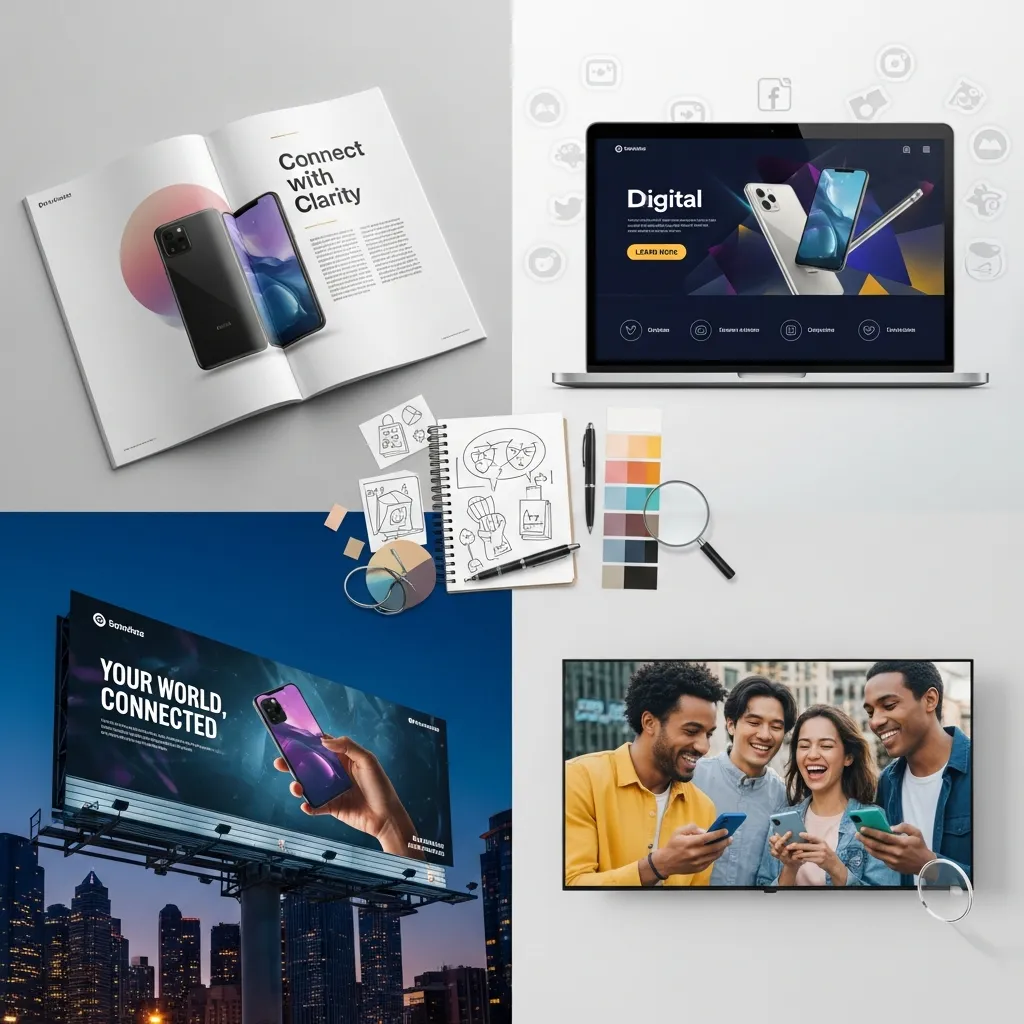
Whether you choose a billboard or a Facebook ad, the core principles of marketing remain the same.
Understanding Your Audience
To Create a Good Advertisement, you must know exactly who you are talking to. Understand their pain points, desires, and daily habits.
Clear Call to Action
Never leave the audience guessing what to do next. Tell them to visit a website, call a number, or buy a product.
Compelling Storytelling
People remember stories, not statistics. Use narratives that connect emotionally with the viewer.
Consistency in Branding
Your colors, fonts, and tone of voice should remain identical across all platforms. This builds immediate recognition.
A/B Testing and Optimization
Always test different headlines and images to see what works best. To Create a Good Advertisement, you must rely on data rather than assumptions.
The ongoing discussion of digital advertising vs traditional advertising reveals that both have distinct advantages. Traditional marketing offers massive reach, tangibility, and high credibility. Digital marketing provides incredible targeting, low entry costs, and precise analytics. The most successful modern brands do not view this as a strict digital advertising vs traditional advertising competition. Instead, they use a balanced approach, leveraging the strengths of both mediums to maximize their overall impact.
Future Outlook and Conclusion
The marketing landscape will continue to shift as technology advances. Artificial intelligence and augmented reality are already changing how consumers interact with brands. Personalization will become even more accurate, while privacy regulations will force marketers to adapt their tracking methods.
When navigating digital advertising vs traditional advertising, flexibility is your greatest asset. Keep testing new platforms while respecting the foundational power of traditional media. By maintaining a dynamic strategy, you will consistently Create a Good Advertisement that resonates with your audience, regardless of the medium.