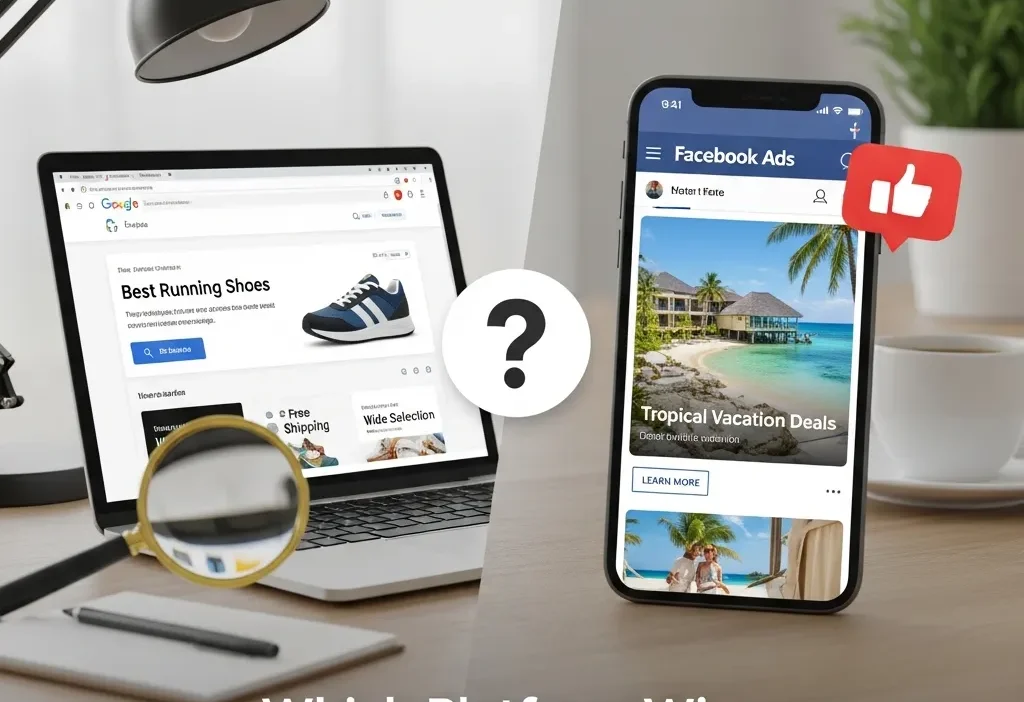
When deciding between google ads vs facebook ads, the choice comes down to user intent and your business goals. Google Ads captures high-intent users actively searching for a specific product or service. Facebook Ads excels at building brand awareness and targeting users based on their interests and demographics. For many businesses, the best approach to google ads vs facebook ads is not choosing one over the other, but using both platforms together to cover the entire customer journey.
Every digital marketing strategy eventually faces a critical question: where should you spend your advertising budget? Choosing the right advertising platform is vital for digital marketing success. Make the right choice, and you will see a high return on investment, steady lead generation, and scalable growth. Make the wrong choice, and you risk draining your budget with little to show for it.
The debate of google ads vs facebook ads is incredibly common among business owners and marketers. Both platforms offer massive audiences and sophisticated targeting capabilities, but they operate in fundamentally different ways. Google helps you find new customers, while Facebook helps new customers find you. Understanding the nuances of google ads vs facebook ads will help you allocate your budget effectively and achieve your marketing goals.
Google Ads: Capturing High-Intent Searches
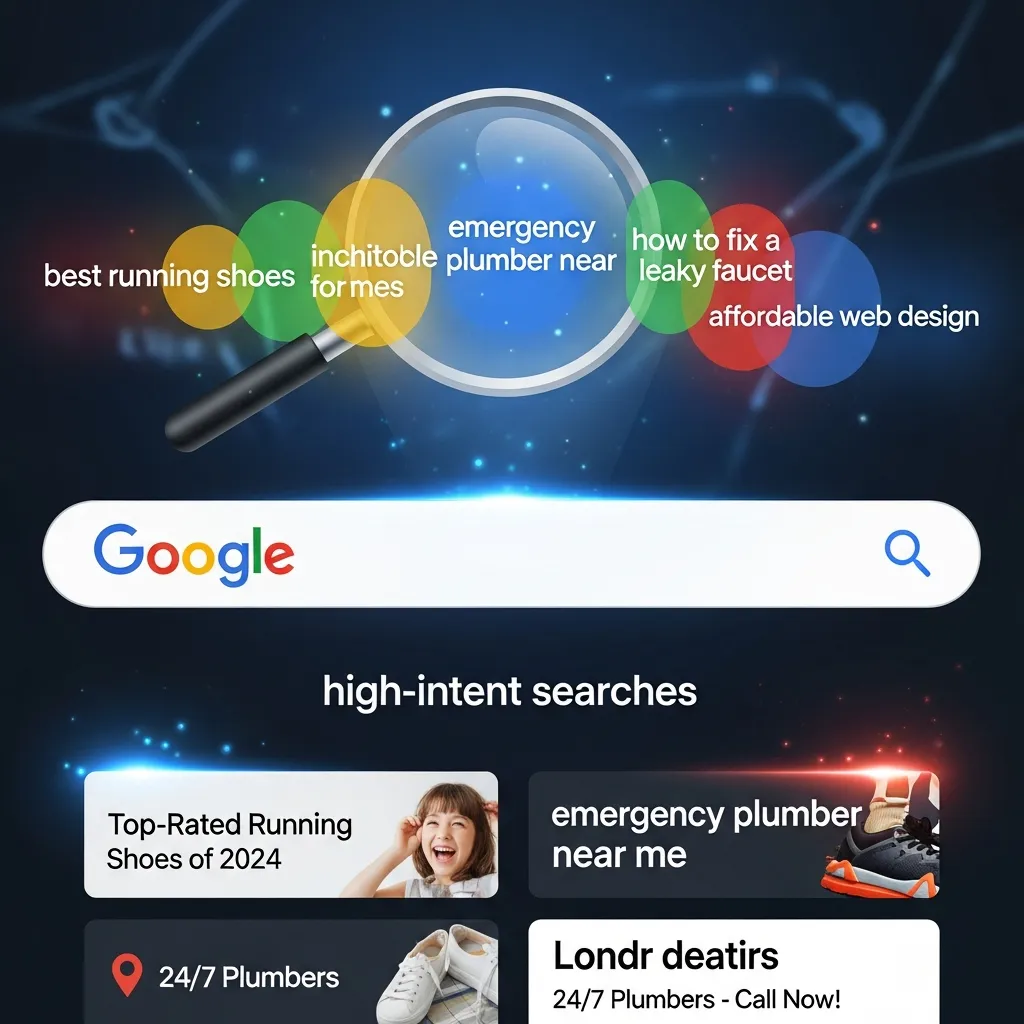
Google Ads, formerly known as Google AdWords, is the world’s largest pay-per-click (PPC) advertising platform. It operates primarily on the search network, allowing advertisers to bid on keywords so their ads appear alongside organic search results.
How it works
At its core, Google Ads relies on search intent. Users type specific queries into the search engine, and advertisers bid on those keywords. If your bid and quality score are high enough, your ad appears at the top of the search results page. Because users are actively looking for solutions, their intent to purchase or convert is generally very high.
Ad formats and placements
The most common format is the standard text ad displayed on the search engine results page (SERP). However, Google Ads also offers:
- Shopping Ads: Product listings with images and prices.
- Display Ads: Banner ads on websites across the Google Display Network.
- Video Ads: Pre-roll or mid-roll ads on YouTube.
- App Ads: Promotions driving app installs across Google’s network.
Pros
- Targeting high-intent users: You reach people exactly when they are looking to buy.
- Immediate results: Ads can start driving traffic the moment they go live.
- High conversion rates: Because of the strong user intent, clicks often lead directly to sales.
Cons
- High competition: Popular keywords can be very expensive.
- Text-heavy: Search ads rely entirely on compelling copy rather than eye-catching visuals.
- Steep learning curve: The platform is complex and requires active management.
Best for
Google Ads is ideal for lead generation, direct sales, local services, and capturing users who are ready to make a purchase immediately.
Facebook Ads: Building Brand Awareness
When comparing Google Ads vs Facebook Ads, it’s important to understand that Facebook Ads operates on a completely different principle. Instead of targeting users based on what they are actively searching for, it focuses on who they are. With billions of active users across Meta Platforms, businesses gain access to incredibly detailed audience data, making it a powerful tool for discovery and brand visibility.
How It Works
In the discussion of Google Ads vs Facebook Ads, Facebook advertising falls under paid social media marketing. Advertisers create visually engaging content and deliver it to users based on demographics, interests, behaviors, and even past interactions.
This means your brand can reach potential customers before they even realize they need your product or service. Unlike search-based intent marketing, Facebook Ads excels at generating demand and building awareness at the top of the funnel.
Ad Formats and Placements
One of the key differences in Google Ads vs Facebook Ads is the strong visual focus of Facebook’s ad ecosystem. It offers a variety of formats designed to capture attention quickly:
- Image Ads: Clean, high-quality visuals that communicate a clear message
- Video Ads: Short, engaging clips ideal for storytelling and engagement
- Carousel Ads: Multiple images or videos in a single scrollable unit
- Stories & Reels Ads: Full-screen vertical ads optimized for mobile users
These ads appear across multiple platforms within the Meta ecosystem, including Facebook News Feed, Instagram, Messenger, and the Audience Network, ensuring maximum visibility and reach.
Pros
In the broader comparison of Google Ads vs Facebook Ads, Facebook Ads offers several strong advantages:
- Massive audience reach: Access to billions of users worldwide
- Advanced targeting: Highly specific audience segmentation based on behavior and interests
- Strong visual storytelling: Ideal for building emotional connections with users
- Cost-effective branding: Lower average CPC compared to many search campaigns
Cons
However, when evaluating Google Ads vs Facebook Ads, there are also some limitations to consider:
- Passive audience intent: Users are browsing socially, not actively searching to buy
- Ad fatigue: Repetitive visuals can quickly reduce engagement and performance
- Tracking challenges: Privacy updates (like iOS changes) have made attribution less precise
- Creative dependency: Success relies heavily on strong visuals and compelling content
Best For
Within the Google Ads vs Facebook Ads debate, Facebook Ads is best suited for:
- Building brand awareness and visibility
- Reaching new audiences and expanding market reach
- Promoting visually appealing products or services
- Generating top-of-funnel leads and engagement
- Retargeting users who have previously interacted with your brand
Key Differences: Google Ads vs Facebook Ads
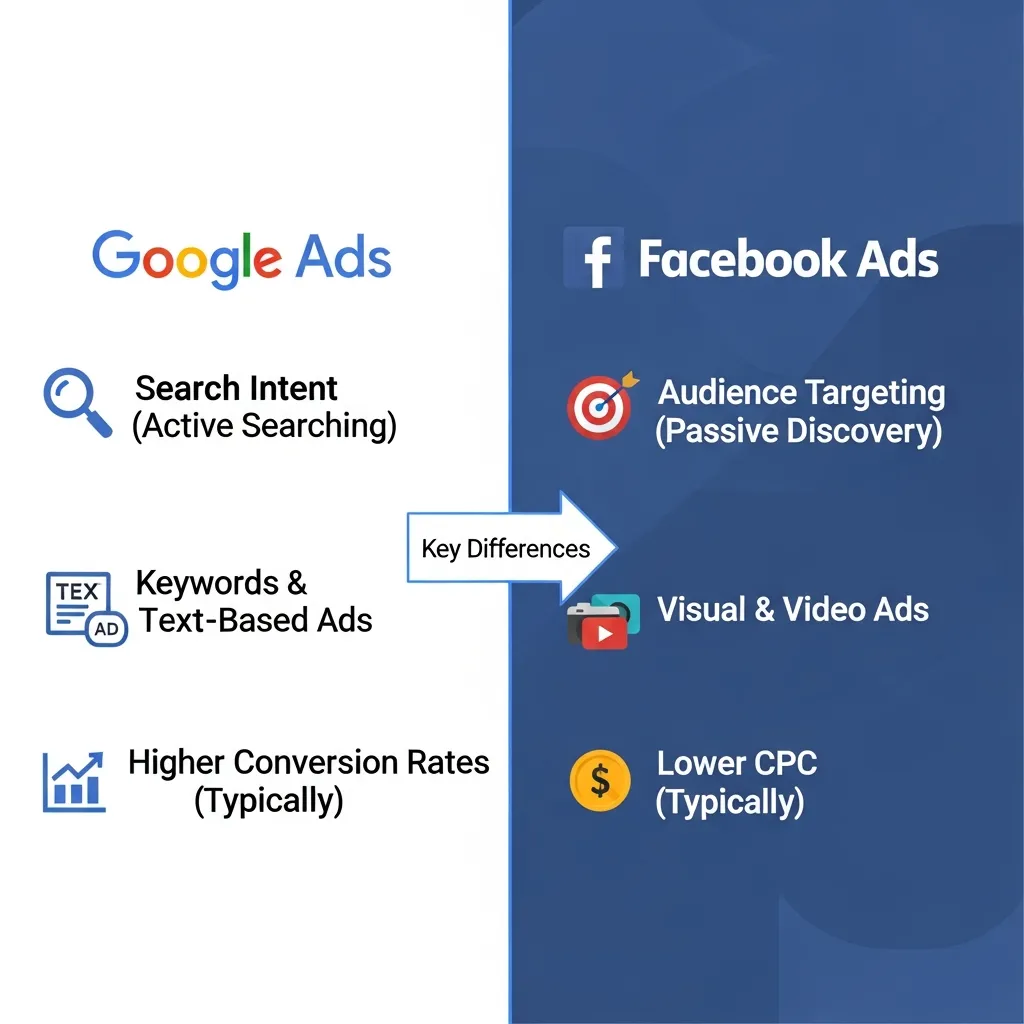
To truly understand google ads vs facebook ads, you need to look at how they differ across five major categories.
User intent
The biggest differentiator in google ads vs facebook ads is intent. Google users are proactive; they have a problem and want a solution now. Facebook users are passive; they are scrolling through their feeds and stumble upon your ad.
Targeting capabilities
Google targets based on search queries and keywords. Facebook targets based on user profiles, including age, location, hobbies, relationship status, and past online behaviors.
Ad creative
Google relies heavily on text. Your headline and description must do the heavy lifting. In the battle of google ads vs facebook ads, Facebook wins on visual creativity. You need striking images or engaging videos to stop users from scrolling past your ad.
Cost structure
Both platforms use a bidding system, but costs vary. Google Ads usually has a higher Cost Per Click (CPC) because the leads are warmer. Facebook Ads typically offers a lower CPC and is often measured by Cost Per Mille (CPM, or cost per 1,000 impressions).
Performance metrics
With Google, you look closely at Click-Through Rate (CTR) and Conversion Rate. With Facebook, metrics like Engagement Rate, Reach, and Return on Ad Spend (ROAS) take center stage.
When to Use Each Platform
Deciding between google ads vs facebook ads depends heavily on your specific business situation.
Scenarios for prioritizing Google Ads
- You sell a product or service that people actively search for (e.g., emergency plumbing, specific enterprise software).
- Your goal is immediate sales or lead generation.
- You have a product with a high search volume.
Scenarios for prioritizing Facebook Ads
- You are launching a completely new, innovative product that people don’t know exists yet.
- Your product is highly visual (e.g., fashion, home decor, food).
- Your primary goal is building brand awareness or a community.
Strategies for using both platforms together
The most successful marketers don’t view google ads vs facebook ads as a strict either/or scenario. Instead, they use them together. For example, you can use Facebook Ads to introduce your brand to a broad audience. Later, when those users search for your brand or product category on Google, your Google Ads capture that demand. You can also use Facebook retargeting to show ads to people who visited your site via a Google Ad but didn’t purchase.
Case Studies and Real-World Examples

Looking at real businesses helps clarify the google ads vs facebook ads debate.
Consider a local emergency roofing company. When a homeowner’s roof leaks, they don’t browse Facebook looking for a solution. They go to Google and type “emergency roof repair near me.” For this business, Google Ads is the clear winner, driving high-converting leads almost instantly.
On the other hand, consider a startup selling a new type of ergonomic dog bed. People might not be searching for this specific invention yet. The company uses Facebook Ads to show a video of a dog happily sleeping in the bed. The visual nature of the ad catches the attention of dog lovers, generating massive brand awareness and impulse purchases.
By understanding the strengths in the google ads vs facebook ads comparison, both businesses achieved remarkable ROI.
Optimizing Your Campaigns
Whether you lean toward google ads vs facebook ads, optimization is key to maximizing your ROI.
For Google Ads:
- Use negative keywords to prevent your ads from showing on irrelevant searches.
- Ensure your landing page matches the exact intent of your ad copy.
- Test different match types (exact, phrase, broad) to find the right balance of volume and relevance.
For Facebook Ads:
- Refresh your ad creatives regularly to combat ad fatigue.
- Use Lookalike Audiences to find new users similar to your best customers.
- Install the Meta Pixel correctly to track conversions and optimize delivery.
Making Your Final Advertising Decision
When evaluating google ads vs facebook ads, remember that neither platform is inherently better than the other. Google Ads is the ultimate tool for demand capture, connecting you with users ready to buy. Facebook Ads is the ultimate tool for demand generation, helping you build an audience and showcase your brand visually. By analyzing your product, your target audience, and your specific marketing goals, you can choose the platform—or the combination of both—that will drive the best results for your business.
Frequently Asked Questions about Google Ads vs Facebook Ads
1. What is the main difference in google ads vs facebook ads?
The main difference is user intent. Google targets users actively searching for something, while Facebook targets users based on their interests and demographics while they browse socially.
2. Which is cheaper in the google ads vs facebook ads comparison?
Generally, Facebook Ads offers a lower cost per click (CPC) than Google Ads. However, Google Ads often yields a higher conversion rate, which can balance out the overall cost per acquisition.
3. Should a small business use google ads vs facebook ads?
It depends on the business model. Local service businesses usually perform better with Google Ads, while highly visual ecommerce brands often see better initial results with Facebook Ads.
4. Can I run google ads vs facebook ads at the same time?
Yes. In fact, running them together is highly recommended. You can generate awareness on Facebook and capture search intent on Google.
5. Which platform is easier to learn: google ads vs facebook ads?
Many beginners find Facebook Ads slightly easier to set up initially due to its visual interface, but both platforms have a steep learning curve to master advanced optimization.
6. For B2B marketing, should I choose google ads vs facebook ads?
Google Ads is generally better for B2B because you can target specific industry keywords and software searches. However, Facebook can be used for B2B retargeting.
7. How does targeting differ in google ads vs facebook ads?
Google uses keyword targeting based on search queries. Facebook uses audience targeting based on demographics, behaviors, and interests.
8. Which platform gives faster results in google ads vs facebook ads?
Google Ads typically delivers faster direct sales because you are capturing people who already want to buy. Facebook requires more time to nurture the audience.
9. What role does ad creative play in google ads vs facebook ads?
Creative is crucial on Facebook; you need strong images and videos. On Google Search, creative relies entirely on strong, persuasive text copywriting.
10. How do privacy changes affect google ads vs facebook ads?
Apple’s iOS privacy updates have heavily impacted Facebook’s ability to track users, making attribution harder. Google Ads relies more on direct search data, making it slightly more resilient to these specific changes.
11. Which yields a higher ROI in google ads vs facebook ads?
ROI varies wildly by industry. High-ticket items often see better ROI on Google due to search intent, while impulse buys see great ROI on Facebook.
12. How do I decide between google ads vs facebook ads for my startup?
Evaluate your product. If people are already searching for a solution like yours, start with Google. If your product is new and highly visual, start with Facebook.