Advertising copywriting turns audience attention into action by blending psychology, clarity, persuasion, and timing so messages feel relevant, trusted, and compelling enough to drive response.
Why advertising copywriting matters
Advertising copywriting is one of the most important skills behind modern marketing because it connects strategy with human behavior. A campaign may have a strong budget, beautiful visuals, and powerful targeting, but without the right words, the message often disappears into noise. advertising copywriting gives shape to the promise, the emotion, and the reason to act. It translates a brand’s value into language that people quickly understand and feel.
At its core, advertising copywriting is not just about writing catchy lines. It is about creating a response. The response may be a click, a purchase, a sign-up, a call, a visit, or even a memory that lasts long after the ad is gone. Good advertising copywriting understands that people do not move because of information alone. They move because the information feels personally meaningful, emotionally safe, and practically useful.
The best advertising copywriting respects the audience’s time. People are busy, skeptical, and constantly exposed to marketing. That means the copy must earn attention fast. It must show relevance, reduce friction, and create momentum. When advertising copywriting is done well, the message feels less like an interruption and more like a helpful answer that arrives at the right moment.
What advertising copywriting really does
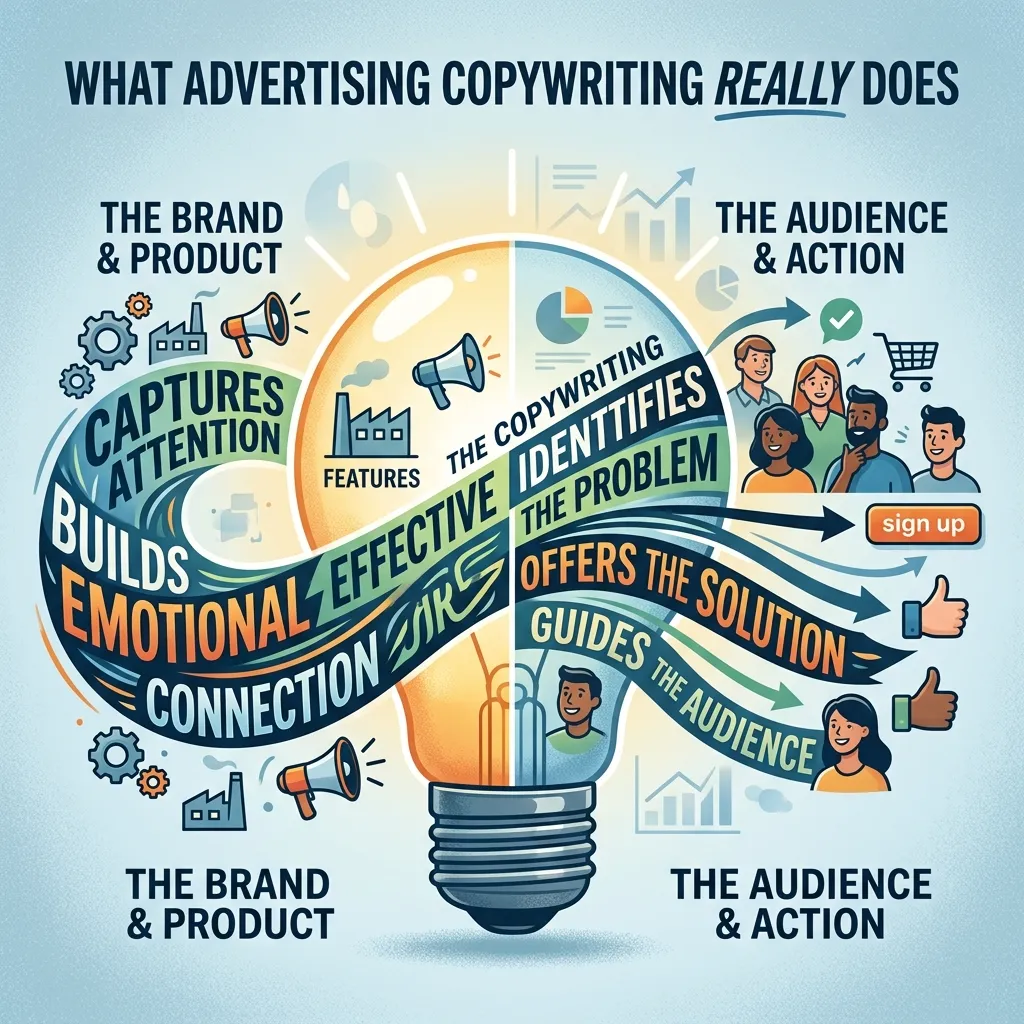
advertising copywriting is the craft of using words to influence decisions in paid media, promotional messages, and brand campaigns. It works across formats such as display ads, social media ads, video scripts, landing pages, email promotions, search ads, and sponsored content. In every case, the goal is the same: help the reader or viewer understand why the offer matters now.
A strong piece of advertising copywriting does several jobs at once. It grabs attention, clarifies the offer, creates emotional interest, and makes the next step feel simple. That combination matters because attention without interest does not convert, and interest without clarity often fades. advertising copywriting works when every line supports the action the brand wants the audience to take.
It also does something more subtle. advertising copywriting helps people justify decisions. Buyers often want reassurance that they are making a smart choice. The copy can provide that reassurance by pointing to convenience, safety, status, savings, speed, comfort, or confidence. When the message matches the buyer’s internal reasoning, the path to action becomes easier.
The psychology behind effective advertising copywriting
advertising copywriting is powerful because it speaks to the way people naturally think. People do not make decisions in a purely logical way. They rely on shortcuts, emotions, habits, and social signals. Effective advertising copywriting understands those patterns and uses them respectfully. It does not manipulate blindly. It aligns the message with what the audience already cares about.
One major psychological principle is relevance. People pay attention when something feels connected to their current need, fear, desire, or goal. advertising copywriting must therefore answer the silent question in the reader’s mind: why should I care? If the answer is immediate and believable, the message has a much better chance of working.
Another principle is reduction of effort. People prefer easy decisions. advertising copywriting should therefore minimize confusion and make the next action feel light and safe. Short sentences, clear offers, direct benefits, and simple calls to action all help. When the brain senses less friction, it becomes easier to move forward. advertising copywriting often wins by removing uncertainty rather than adding more information.
Trust is also essential. Buyers rarely respond well to exaggerated claims, vague promises, or emotional pressure that feels forced. advertising copywriting should build credibility through specificity, proof, tone, and realism. A trustworthy message makes the audience feel understood rather than pushed. That emotional safety matters because people often buy when they feel confident, not merely when they feel persuaded.
The core structure of high-performing advertising copywriting
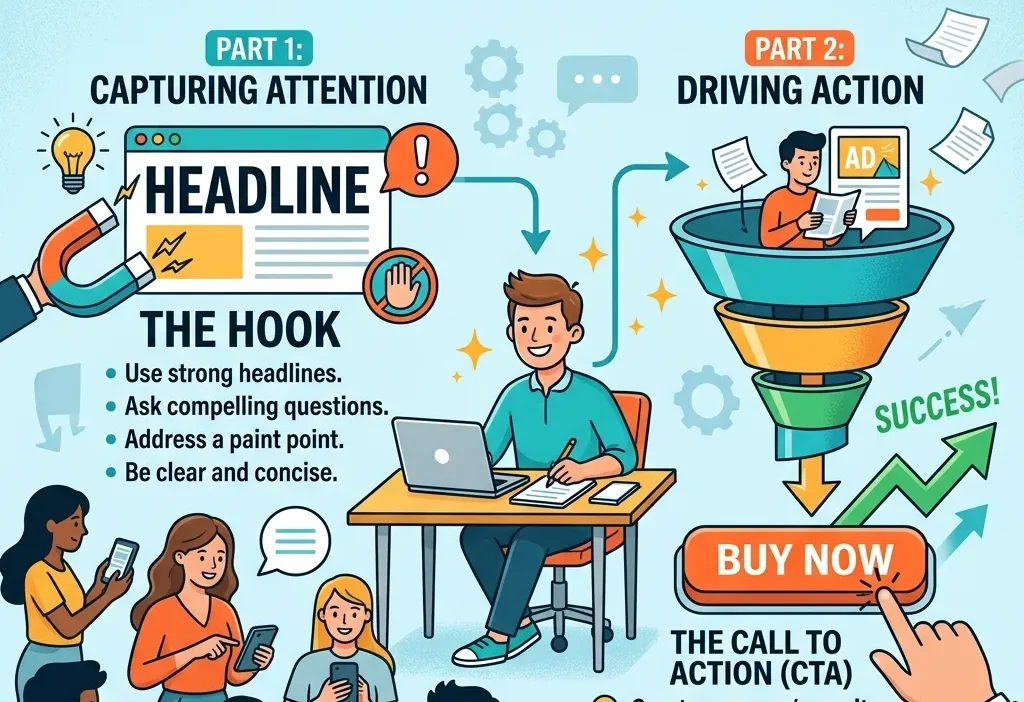
Most effective advertising copywriting follows a clear structure, even when the final message feels creative and fresh. The structure usually includes attention, interest, desire, and action. The opening needs to stop the scroll or the skim. The middle needs to make the offer feel meaningful. The ending needs to make the next step obvious.
The opening is where the battle begins. advertising copywriting must earn those first few seconds by using a relevant hook, a strong promise, a surprising insight, or a direct problem statement. The hook should not be clever for its own sake. It should create momentum. If the audience feels seen immediately, they are more likely to keep reading.
The middle section is where the value gets explained. advertising copywriting should translate features into benefits and benefits into outcomes. A feature tells what something is. A benefit tells what it does. An outcome tells why that matters in real life. This progression helps the audience imagine the result for themselves, which is a major part of persuasion.
The close is where the choice becomes simple. advertising copywriting should end with a clear call to action that matches the user’s readiness. Some people are ready to buy, while others are only ready to learn more. The right CTA respects that level of intent. The goal is not to force action; it is to make the natural next step easy to take.
Table: Common goals and copy angles in advertising copywriting
| Campaign Goal | Best Copy Angle | Psychological Trigger | Example Outcome |
|---|---|---|---|
| Brand awareness | Curiosity and identity | Recognition | People remember the message |
| Lead generation | Clarity and value | Utility | People exchange contact details |
| Product sales | Benefit and urgency | Desire | People buy sooner |
| App installs | Convenience and speed | Ease | People download immediately |
| Event registrations | Excitement and timeliness | Anticipation | People sign up now |
| Retention | Loyalty and habit | Familiarity | People return again |
Why headlines matter so much
In advertising copywriting, the headline does more work than most people realize. It is often the first and sometimes the only sentence the audience reads. That means the headline must quickly prove relevance. A strong headline can increase attention, while a weak headline can make the rest of the message invisible.
Good advertising copywriting treats the headline like a promise. It can promise a result, a solution, a benefit, a transformation, or a specific emotional payoff. But the promise must be believable. If the headline feels too broad or too dramatic, the audience may stop trusting the message. The best headlines are specific, sharp, and aligned with real desire.
A good headline also respects context. advertising copywriting for search ads may be more direct, while social ads may allow more curiosity. Email subject lines may use a more personal tone, while landing page headlines may need more clarity. The headline’s job changes slightly by format, but the core rule stays the same: make the value obvious fast.
The role of emotion in persuasion
Many beginners think advertising copywriting is mostly about logic, but emotion usually starts the response. People may justify with facts, but they often begin with feeling. They want relief, excitement, confidence, safety, belonging, pride, or convenience. advertising copywriting works best when it speaks to those feelings in a credible way.
Emotion does not mean exaggeration. It means understanding what the audience wants to feel before, during, and after the purchase. A traveler may want peace of mind. A parent may want safety. A founder may want efficiency. A fashion buyer may want confidence. advertising copywriting becomes stronger when it aligns the offer with the emotional state the buyer is already seeking.
The most persuasive messages do not force emotion. They reveal it. advertising copywriting can gently name the pain, reflect the dream, or show the better future. That is why great copy often feels almost obvious once you see it. It is speaking a feeling the audience already had but had not fully named.
Advertising copywriting across different channels

advertising copywriting changes depending on where the message appears. A social ad must move quickly. A search ad must match intent. A video script must create pacing and rhythm. A landing page must build logic and trust. The format changes, but the human brain stays the same. That is why advertising copywriting must adapt without losing clarity.
Cross-Channel Advertising works best when the same core message appears consistently across multiple touchpoints, even if the wording changes slightly for each platform. A person may first see an ad on social media, then search for the brand, then open an email, then click a remarketing ad. advertising copywriting should create a connected experience so the message feels familiar and reassuring at each stage.
One of the biggest mistakes in advertising copywriting is writing each channel in isolation. When the language changes too much, the audience feels a disconnect. Consistency creates recognition, and recognition reduces resistance. When the audience sees the same promise repeated in different forms, the brand feels more stable and more trustworthy.
Writing for attention without sounding fake
Attention is expensive. People scan, skip, mute, and scroll constantly. advertising copywriting has to stand out without sounding desperate. That means the language must feel human, useful, and confident. Overhyped copy often creates skepticism. Underpowered copy creates invisibility. The right balance is direct enough to be clear and distinct enough to feel fresh.
One effective way to do this is by using specific language. Instead of saying something is “amazing,” explain what makes it better. Instead of saying it is “fast,” show how fast. Instead of saying it is “easy,” explain what becomes simpler. advertising copywriting becomes more believable when it replaces vague praise with concrete detail.
Another way to hold attention is by speaking to a real moment. A person is more likely to care if the copy reflects a situation they recognize. That could be a deadline, a pain point, a desire, a fear, or a goal. advertising copywriting that begins with a familiar moment feels less like marketing and more like recognition.
How to build trust through copy
Trust is not built through one phrase alone. It is built through many small choices in advertising copywriting. Clear claims, honest tone, specific benefits, and realistic expectations all help. If the message feels polished but empty, the audience may admire it without acting on it. If it feels grounded and useful, they are more likely to respond.
Proof matters. advertising copywriting can use testimonials, statistics, certifications, guarantees, demonstrations, and comparisons when appropriate. Proof is not about overwhelming the reader. It is about helping them feel secure enough to continue. A buyer who trusts the message will usually spend more time with it, and that extra time increases conversion chances.
Tone also matters. A brand that sounds too aggressive may trigger resistance. A brand that sounds too passive may fail to inspire action. advertising copywriting should sound confident, calm, and helpful. The reader should feel that the brand knows what it is doing and respects the reader’s intelligence.
The relationship between features and benefits
A feature is what the product or service has. A benefit is what the feature does for the customer. An outcome is the deeper change the customer receives. advertising copywriting becomes much more persuasive when it moves through all three layers. Many weak ads stop at features, but buyers care most about results.
For example, a feature might be a noise-canceling design. The benefit might be fewer distractions. The outcome might be better focus, more rest, or a calmer journey. advertising copywriting should always connect the dot between what exists and why it matters. That connection makes the message feel useful rather than technical.
People buy outcomes, not just objects. They want confidence, ease, speed, comfort, status, relief, and transformation. advertising copywriting must therefore shift the conversation from product description to life improvement. The more clearly the copy shows how life gets better, the stronger the message becomes.
How audience intent shapes the message
Not every audience is ready for the same kind of message. Some people are just learning. Others are comparing. Others are ready to buy. advertising copywriting becomes more effective when it matches the buyer’s intent level. A person researching may need education, while a person close to purchase may need reassurance and a clear offer.
This is where timing matters. advertising copywriting should not push hard when the audience is still unfamiliar. It should also not waste time when the audience is already warm. Matching intent makes the copy feel natural. The audience feels guided rather than pressured, which improves response and brand perception at the same time.
The best advertisers read intent through behavior, context, and channel. Search behavior often signals a more specific need than social browsing. Retargeted visitors may already know the brand. First-time viewers may need more explanation. advertising copywriting should reflect those differences so each message feels personally relevant.
Privacy changes how copy should sound
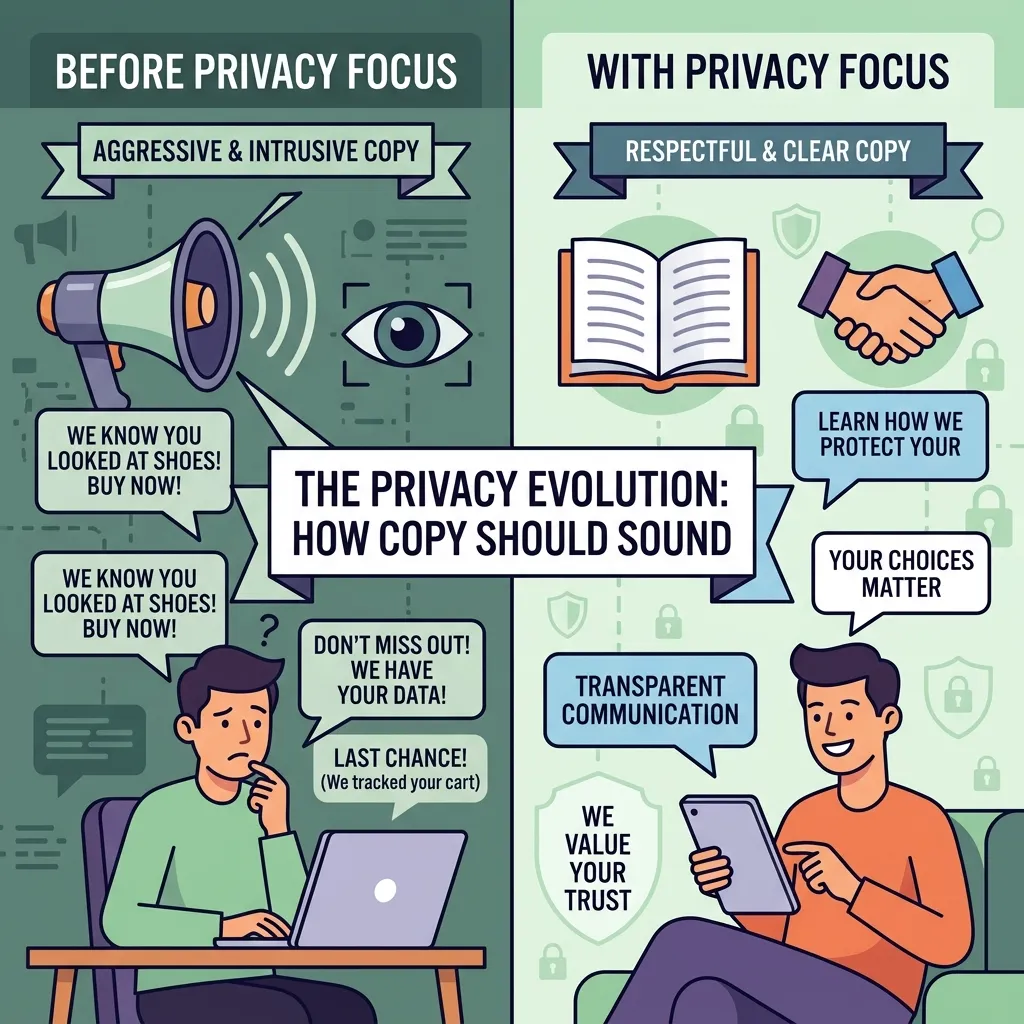
The marketing landscape has changed, and Privacy-First Advertising is now shaping how brands collect data, target users, and communicate value. That shift matters because audiences are more aware of how information is used. advertising copywriting must therefore feel respectful, transparent, and value-driven. When trust is fragile, the language becomes even more important.
Privacy-focused environments often reduce the amount of data available for precision targeting. That means advertising copywriting has to do more of the persuasive work on its own. The message must be clear enough to stand even when the audience is less narrowly defined. This increases the importance of relevance, simplicity, and broad but honest value propositions.
In a privacy-aware world, the copy should not rely on invasive language or manipulative pressure. Instead, it should emphasize usefulness, control, and clarity. advertising copywriting can thrive under these conditions because good writing never depended only on tracking. Strong messaging has always been about understanding human motivation. Privacy simply makes that truth more visible.
The role of AI in modern advertising
Technology is changing the workflow, and Mastering AI-Powered Advertising has become a practical advantage for teams that want to move faster without losing quality. AI can help with drafts, variations, testing ideas, and audience insights. But the strategic heart of advertising copywriting still belongs to the human writer. AI accelerates the process; it does not replace judgment.
The best use of AI is not blind automation. It is structured support. A skilled copywriter can use AI to generate angles, summarize research, create variant hooks, and test different tones. Then the human rewrites with nuance, brand voice, and empathy. advertising copywriting becomes stronger when machine speed and human understanding work together.
AI also pushes copywriters to be sharper. If AI can create average text quickly, human advertising copywriting must rise above average. That means more specificity, more insight, more tone control, and more emotional intelligence. The advantage is not in producing words. The advantage is in producing the right words.
When advertising becomes event-based
Some campaigns are tied to moments rather than evergreen offers. Event Advertising Methods are especially useful when a brand is promoting launches, conferences, seasonal experiences, live activations, or short-term opportunities. In these cases, advertising copywriting needs urgency, timing, and excitement without feeling forced.
Event-based messaging works because time creates action. People respond when they believe an opportunity is limited. But urgency must be credible. advertising copywriting for events should make the date, value, audience, and benefit very clear. A vague event message may sound interesting but fail to move people. Specificity turns curiosity into registration.
The emotional angle matters too. Event copy should help the audience imagine the experience. What will they gain? Who will they meet? What will they learn? Why should this matter now? advertising copywriting becomes more effective when it turns a date on a calendar into a meaningful opportunity that feels worth showing up for.
The difference between good and great copy
Good advertising copywriting communicates the offer. Great advertising copywriting makes the audience feel that the offer was made for them. That feeling is powerful because people respond to relevance faster than to broad persuasion. The more personal the message feels, the more likely it is to perform.
Great copy also has rhythm. It is easy to read, easy to follow, and easy to remember. It uses sentence length, pacing, and emphasis carefully. advertising copywriting should sound natural when spoken and clear when scanned. A message that feels smooth will usually outperform one that feels cluttered or overworked.
Another difference is confidence. Strong advertising copywriting does not apologize for the value it offers. It presents the offer clearly and lets the audience decide. That calm confidence creates trust. It signals that the brand understands the market and knows why the offer matters.
Building a practical copywriting process
A reliable process makes advertising copywriting faster and more effective. Start with research. Learn the audience, the offer, the objections, and the desired action. Then define the emotional promise. After that, choose a hook, a benefit stack, proof points, and a CTA. This structure keeps the work focused and reduces creative confusion.
Once the first draft is written, edit for clarity first and style second. advertising copywriting often improves when unnecessary words are removed. Every line should earn its place. If a sentence does not clarify, persuade, or support the action, it should be cut or rewritten. Precision improves performance.
Testing comes next. Different headlines, CTAs, emotional angles, and proof points may perform differently across audiences. advertising copywriting should be seen as a process of refinement, not a one-time task. The market tells you what works. Strong teams listen and adjust quickly.
Common mistakes in advertising copywriting
One common mistake is trying to say too much. When advertising copywriting includes every possible detail, the message loses force. The audience does not need everything at once. They need the right thing first. Clarity usually beats completeness in paid messages.
Another mistake is focusing on the brand instead of the buyer. People care less about how clever the company sounds and more about what the offer does for them. advertising copywriting should center the audience’s needs, not the company’s self-image. The strongest copy feels useful, not self-congratulatory.
A third mistake is writing without a clear action. If the reader does not know what to do next, the message has failed. advertising copywriting must guide the audience toward a specific step. Even if the goal is awareness, the copy should still create a direction.
A useful table for copy angles
| Copy Angle | Works Best When | Audience Feeling | Risk if Misused |
|---|---|---|---|
| Urgency | Time-sensitive offers | Immediate action | Pressure and resistance |
| Curiosity | New or novel ideas | Interest | Confusion |
| Reassurance | High-consideration purchases | Safety | Boredom |
| Status | Premium or aspirational products | Pride | Snobbery |
| Relief | Problem-solving offers | Comfort | Weak emotional pull |
| Belonging | Community-based brands | Connection | Generic messaging |
Advertising copywriting for brand memory
A campaign does not end when the click happens. advertising copywriting also shapes how the brand is remembered. People may forget the exact words, but they remember how the message made them feel. That memory affects future decisions, repeat purchases, and referrals.
This is why tone consistency matters. A confident, helpful voice is easier to recognize over time. When advertising copywriting repeatedly delivers the same kind of experience, the audience begins to trust the brand’s personality. Repetition creates familiarity, and familiarity often creates preference.
Brand memory also comes from simplicity. If the message is too crowded, people may not remember anything clearly. advertising copywriting should therefore protect one main idea per campaign. That single idea becomes easier to recall and easier to connect with in future interactions.
The future of writing for paid media

The future of advertising copywriting will likely be shaped by faster tools, tighter privacy rules, and more demanding audiences. That does not reduce the value of the craft. It increases it. As automation grows, the brands that win will still need language that understands human emotion and decision-making.
People will continue to ignore generic noise. They will continue to pay attention to messages that feel relevant and respectful. advertising copywriting will remain essential because it bridges the gap between machine efficiency and human meaning. The tools may change, but the need for persuasive clarity will not.
Writers who thrive in this future will likely be those who can think strategically, write quickly, test intelligently, and adapt across channels. They will treat advertising copywriting as both art and performance. That combination is what turns words into business results.
Final checklist for stronger copy
Before launching a campaign, ask whether the message is clear, credible, emotionally relevant, and action-oriented. Ask whether the audience can understand the offer in seconds. Ask whether the copy feels respectful, specific, and useful. advertising copywriting improves when these questions are used consistently.
Also ask whether the message fits the channel. A social ad, a search ad, a landing page, and an email should not all sound identical, even if they share the same core idea. advertising copywriting must adapt to format while staying aligned with the same promise. That balance is what creates performance.
Finally, ask whether the copy solves a real problem. The strongest advertising copywriting does not simply describe a product. It helps someone imagine a better outcome and believe it is possible. That belief is the foundation of conversion.
Conclusion
advertising copywriting succeeds when it combines psychology, clarity, trust, and timing in a way that feels human. The best messages do not just promote a product; they help the audience recognize a need, imagine a better outcome, and feel safe enough to act. In a world full of noise, the brands that win are the ones that communicate simply, honestly, and with purpose. As channels evolve and privacy grows more important, advertising copywriting becomes even more valuable because strong words still shape decisions. When the copy respects the reader and speaks to real motivation, it does more than sell. It builds attention, confidence, and long-term brand value.
FAQs
1. What is advertising copywriting?
advertising copywriting is the practice of writing persuasive marketing messages for ads, promotions, landing pages, and campaigns. Its goal is to generate action through clear and compelling language.
2. Why is advertising copywriting important?
It matters because even a great product can fail without the right message. advertising copywriting helps brands grab attention, build trust, and turn interest into response.
3. What makes advertising copywriting effective?
Effective advertising copywriting is clear, relevant, emotionally resonant, and action-oriented. It speaks to audience needs while making the next step simple.
4. How does psychology influence advertising copywriting?
Psychology shapes how people notice, trust, and act. advertising copywriting works better when it reflects real motivations such as desire, fear, convenience, status, or relief.
5. Is short copy always better?
Not always. Short copy is useful when attention is limited, but advertising copywriting should always match the format, the audience, and the level of intent.
6. How does AI affect advertising copywriting?
AI can speed up drafts, variations, and testing, but human judgment still matters most. Mastering AI-Powered Advertising means using tools without losing strategy or empathy.
7. How does privacy change copywriting?
Privacy makes targeting less dependent on personal data, so messaging must carry more weight. Privacy-First Advertising works best when the copy is respectful, transparent, and useful.
8. What is the role of headlines in advertising copywriting?
Headlines do the first job of earning attention. A strong headline makes the message relevant fast and encourages the reader to keep going.
9. How can brands use advertising copywriting across channels?
The core message should stay consistent while the wording adapts to each platform. Cross-Channel Advertising works best when every touchpoint feels connected.
10. What should beginners focus on first?
Beginners should focus on clarity, audience understanding, and a strong call to action. Once those basics are solid, advertising copywriting becomes much easier to improve.