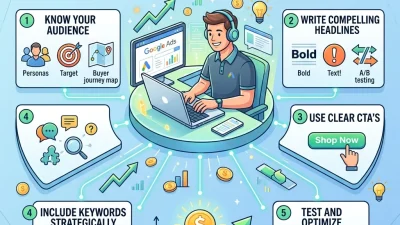
Persuasive ad copywriting is the craft of writing words that convince people to take action—clicking, buying, or signing up. It works by combining a strong headline, benefit-driven body copy, and a clear call to action, all rooted in audience psychology. The best persuasive ad copywriting speaks to emotions, builds trust with social proof, and pairs seamlessly with smart Advertising Design.
Every day, the average person sees thousands of ads. Most are forgotten in seconds. A few stick. The difference almost always comes down to the words. Persuasive ad copywriting is what turns a passing glance into a click, and a click into a sale.
This guide breaks down exactly how persuasive ad copywriting works—from the psychology that drives buying decisions to the practical building blocks of a high-converting ad. You’ll learn the key elements of great copy, proven strategies for writing it, real Advertising Copywriting examples worth studying, and how to measure what’s working.
Whether you’re a marketer, business owner, or aspiring copywriter, you’ll walk away with practical techniques you can apply today. Let’s start with the fundamentals.
What is persuasive ad copywriting?
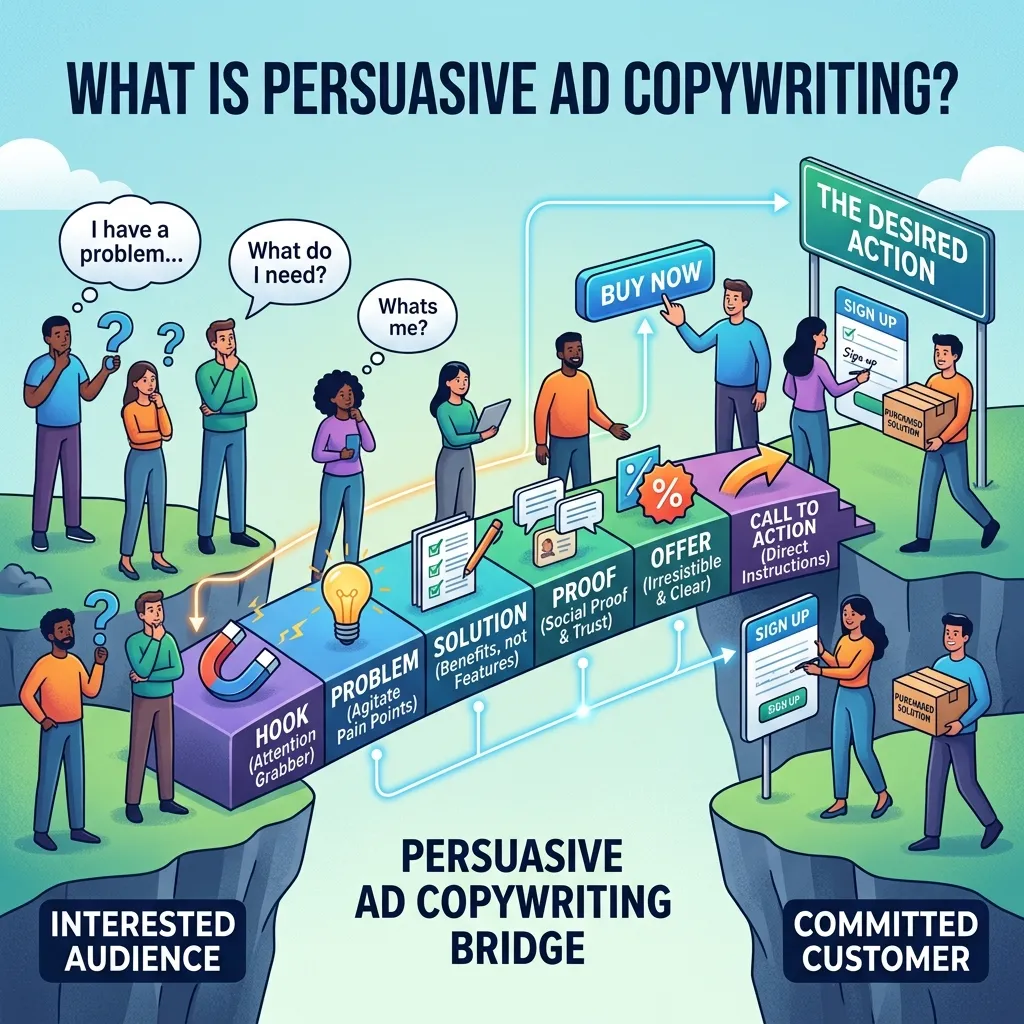
Persuasive ad copywriting is writing designed to influence a reader’s decision and prompt a specific action. Unlike informational writing, which aims to educate, persuasive ad copywriting aims to convert. It blends marketing strategy with the art of language.
At its core, this discipline rests on a few principles. It focuses on the reader, not the brand. It promises a clear benefit. And it removes friction, making the next step feel obvious and easy.
The psychology behind effective ad copy
Buying decisions are rarely logical. Research from Harvard Business School professor Gerald Zaltman suggests that 95% of purchasing decisions happen subconsciously, driven by emotion. Persuasive ad copywriting taps into this reality.
Several psychological triggers do the heavy lifting:
- Reciprocity: People feel compelled to give back when they receive something first, like a free trial or helpful guide.
- Loss aversion: We fear missing out more than we enjoy gaining. Fear of loss can be twice as motivating as the promise of a reward.
- Social proof: When unsure, people follow the crowd. Reviews and testimonials reduce risk.
- Authority: Expert endorsements and credentials build instant trust.
How persuasive ad copywriting differs from other writing
A novelist builds worlds. A journalist reports facts. A copywriter, by contrast, has one job: drive action. Every word earns its place by moving the reader closer to a decision. There’s no room for filler, and clarity always beats cleverness.
What are the key elements of persuasive ad copy?
Strong ad copy isn’t a single sentence—it’s a structure. Each part plays a distinct role in guiding the reader from curiosity to action.
The headline: grabbing attention instantly
Your headline is the most important line you’ll write. On average, 80% of people read the headline, but only 20% read the rest. If the headline fails, the whole ad fails.
Great headlines do one of a few things: promise a benefit, spark curiosity, or address a pain point. Compare “Our software has many features” with “Cut your reporting time in half.” The second wins because it leads with value.
The body copy: engaging and informing
Once the headline hooks the reader, the body copy keeps them engaged. This is where you expand on the promise, address objections, and build desire. Keep sentences tight. Use “you” more than “we.” Focus on what the reader gains.
The call to action: guiding the reader
A call to action (CTA) tells the reader exactly what to do next. “Start your free trial,” “Download the guide,” “Shop the sale.” Effective CTAs use action verbs and often add urgency. Without a clear CTA, even brilliant copy leaves the reader unsure of the next step.
Storytelling in advertising
Stories stick. Facts inform, but narratives create emotional connection. A short story about a customer who solved a problem with your product can outperform a list of features. Storytelling makes abstract benefits feel real and relatable.
What strategies make ad copy more compelling?
Knowing the parts is one thing. Assembling them into copy that converts requires strategy.
Know your audience with buyer personas
You can’t persuade someone you don’t understand. A buyer persona is a detailed profile of your ideal customer—their goals, frustrations, and language. When you write to a specific person rather than a vague crowd, your copy feels personal and relevant.
Highlight benefits, not just features
This is the golden rule of Advertising Copywriting. A feature is what your product does. A benefit is what the customer gets. A drill’s feature is a half-inch bit; the benefit is a perfectly mounted shelf. Always translate features into outcomes the reader cares about.
Use emotional triggers
Emotion drives action. Joy, fear, belonging, pride, and relief all influence behavior. A security company sells peace of mind, not cameras. A fitness brand sells confidence, not equipment. Identify the emotion behind the purchase and write to it.
Create urgency and scarcity
When something feels limited, we want it more. Phrases like “only 3 left in stock,” “offer ends Sunday,” or “limited spots available” push readers to act now instead of later. Use these honestly—false scarcity erodes trust fast.
Lean on social proof and testimonials
People trust people. Including reviews, star ratings, customer counts, or testimonials makes your claims believable. “Join 50,000 happy customers” carries more weight than any promise you make about yourself.
What are some persuasive ad copywriting examples worth studying?
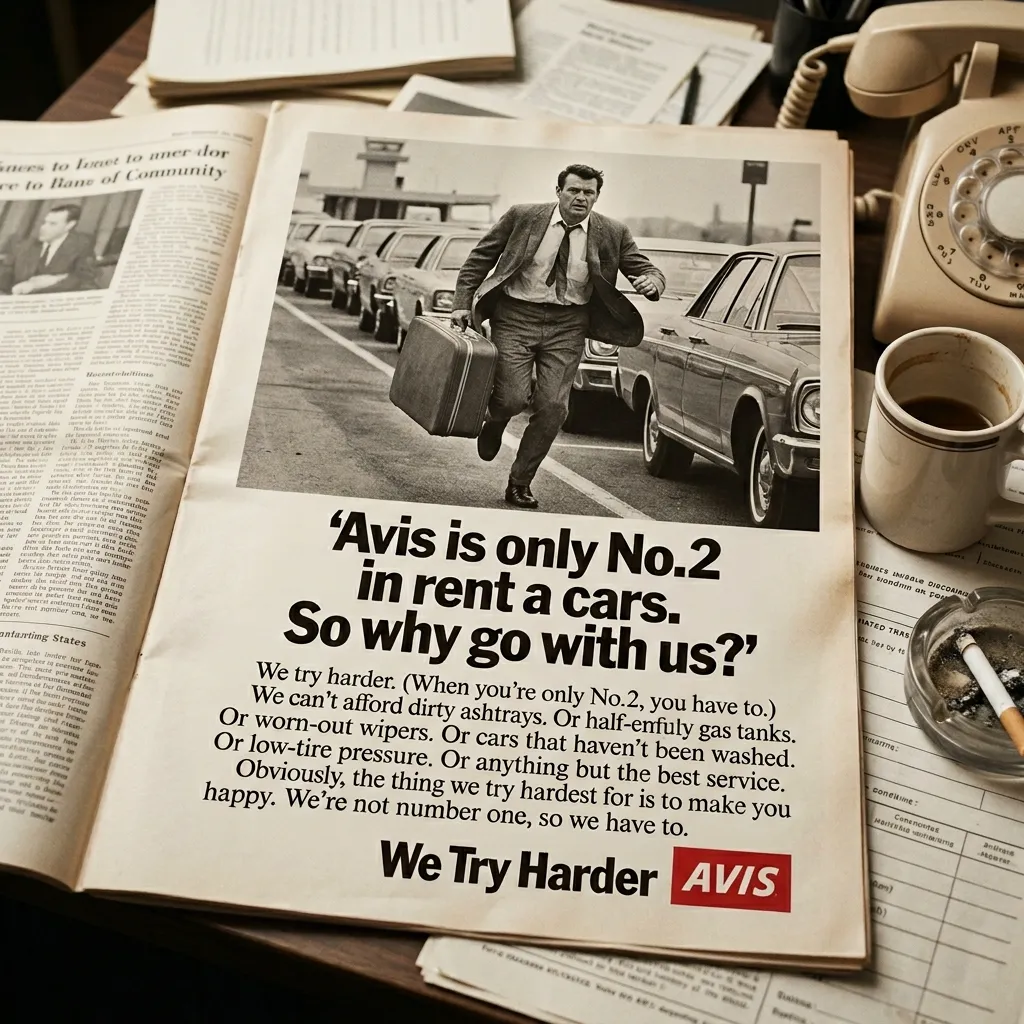
Looking at real campaigns reveals what theory looks like in practice. Here are a few Advertising Copywriting examples and why they worked.
Nike – “Just Do It.” Three words. No mention of shoes. This tagline sells motivation and self-belief, tapping directly into emotion and identity. It proves that the best copy often sells a feeling, not a product.
De Beers – “A Diamond Is Forever.” Launched in 1947, this line reframed diamonds as a symbol of eternal love. It created an entire cultural expectation and is widely credited with cementing the diamond engagement ring tradition.
Apple – “1,000 songs in your pocket.” Instead of listing the iPod’s storage specs in gigabytes, Apple translated the feature into a vivid, tangible benefit. It’s a masterclass in turning technical detail into something anyone can picture.
The lesson across these Ad Copy Examples is consistent: lead with emotion, keep it simple, and focus on what the product means to the customer’s life.
How does Advertising Design work with copywriting?
Words rarely work alone. Advertising Design—the visual layout, imagery, color, and typography—shapes how copy lands. A brilliant headline buried in cluttered design gets ignored.
Good design directs the eye. It establishes hierarchy, making sure the reader sees the headline first, then the body, then the CTA. Color creates mood and draws attention to key elements like buttons. White space gives the message room to breathe.
The strongest ads happen when copywriter and designer collaborate from the start. Copy and design should reinforce the same message, not compete for attention. When Advertising Design and copy align, the whole ad becomes more memorable and persuasive.
How does persuasive ad copywriting change across channels?
The principles stay the same, but the execution shifts depending on where the ad appears.
Digital ads: social media and search
Social media copy is short, punchy, and scroll-stopping. You have a fraction of a second to earn attention. Search ads, meanwhile, are intent-driven—someone is already looking for a solution, so copy should match their query and promise a clear answer.
Email marketing: crafting persuasive email copy
Email Marketing remains one of the highest-ROI channels available, returning an estimated $36 to $40 for every $1 spent, according to industry data. Persuasive email copy starts with the subject line, which determines whether the message gets opened at all. From there, a focused message and single clear CTA drive results. Personalization—using the reader’s name, history, or preferences—boosts engagement significantly.
Traditional ads: print, radio, and TV
Print copy must be visually scannable and benefit-led. Radio relies on repetition and a memorable hook since there’s no visual. TV combines sight, sound, and motion, so copy must sync with imagery to tell a cohesive story in 30 seconds or less.
How do you measure ad copy effectiveness?
Great copywriting isn’t guesswork—it’s tested and refined. Measurement turns opinion into evidence.
A/B testing
A/B testing means running two versions of an ad with one variable changed—a headline, a CTA, an image—to see which performs better. It removes the guesswork and lets data guide your decisions. Test one element at a time for clear results.
Key performance indicators
The KPIs you track depend on your goal. Common ones include:
- Click-through rate (CTR): The percentage of viewers who click your ad.
- Conversion rate: The percentage who complete the desired action.
- Cost per acquisition (CPA): How much you spend to gain one customer.
- Return on ad spend (ROAS): Revenue earned per dollar spent.
Iteration and optimization
No ad is perfect on the first try. The best copywriters treat every campaign as a learning loop—write, test, analyze, improve. Small, continuous tweaks compound into major gains over time.
How do you overcome common copywriting challenges?
Even seasoned writers hit roadblocks. Knowing how to push through keeps your work sharp.
Writer’s block is best beaten by starting messy. Write a terrible first draft, then edit. Studying competitor ads, reviewing customer feedback, or using a swipe file of headlines you admire can also spark ideas.
Staying creative and relevant requires staying curious. Trends, slang, and platforms shift constantly. Read widely, watch what’s working in your industry, and never stop testing new angles. Relevance comes from genuinely understanding your audience’s changing needs.
Mastering persuasive ad copywriting for business growth
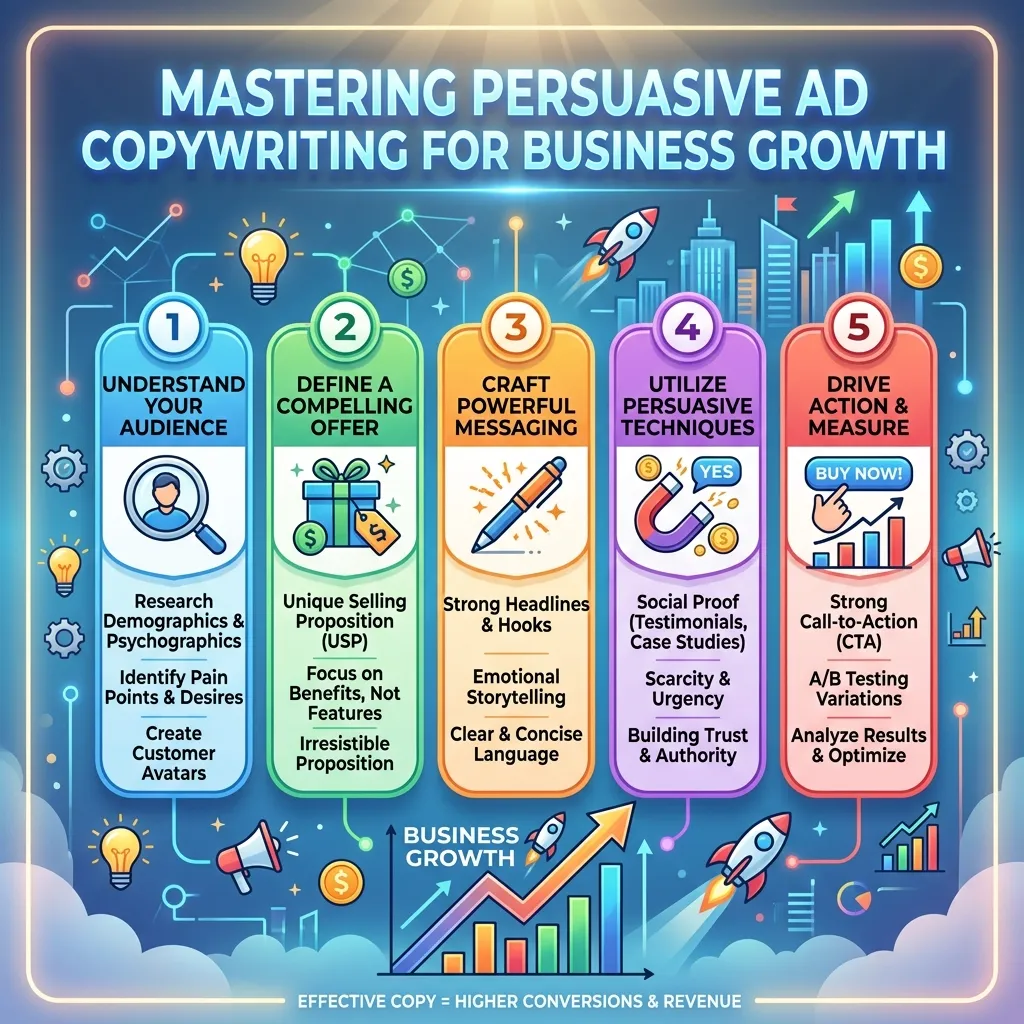
Persuasive ad copywriting is a skill that pays dividends across every part of your marketing. The fundamentals never change: understand your audience deeply, lead with benefits, trigger emotion, prove your claims, and always tell the reader what to do next.
The most effective copy pairs clear, compelling words with thoughtful Advertising Design and adapts smartly to each channel—from social media to Email Marketing. And because no ad is ever truly finished, the writers who win are the ones who keep testing and refining.
Start small. Pick one ad you’re running now and rewrite the headline to lead with a benefit. Test it against the original. Measure the result. That single habit—write, test, improve—is the engine behind every great campaign.
Frequently asked questions
What is persuasive ad copywriting?
Persuasive ad copywriting is the practice of writing advertising text designed to convince readers to take a specific action, such as buying a product or signing up for a service. It combines marketing psychology with clear, benefit-focused language.
How do you write persuasive ad copy?
Start by understanding your audience, then write a benefit-driven headline, engaging body copy that addresses objections, and a clear call to action. Use emotional triggers, social proof, and urgency to strengthen the message, then test and refine it.
What are some examples of good ad copy?
Classic Ad Copy Examples include Nike’s “Just Do It,” De Beers’ “A Diamond Is Forever,” and Apple’s “1,000 songs in your pocket.” Each succeeds by selling an emotion or vivid benefit rather than listing product features.
What is the difference between features and benefits in ad copywriting?
A feature describes what a product does or has. A benefit explains what the customer gains from it. For example, “long battery life” is a feature; “stay connected all day without charging” is the benefit. Persuasive copy leads with benefits.
How important is a call to action in ad copy?
A call to action is essential. It tells the reader exactly what to do next, removing confusion. Even the most compelling copy underperforms without a clear, action-oriented CTA like “Start your free trial” or “Shop now.”
Can persuasive ad copywriting be used in email marketing?
Yes. Email Marketing relies heavily on persuasive copywriting, starting with a compelling subject line and a focused message with a single clear CTA. With an estimated return of $36 to $40 per dollar spent, persuasive email copy is one of the highest-ROI applications.
How does advertising design influence ad copy effectiveness?
Advertising Design shapes how copy is read and understood. Layout, color, imagery, and white space guide the reader’s eye and establish hierarchy. When design and copy reinforce the same message, the ad becomes far more memorable and persuasive.
What are the best tools for ad copywriting?
Useful tools include AI writing assistants for drafting and ideation, headline analyzers for testing impact, grammar checkers for polish, and A/B testing platforms for measuring performance. The right mix depends on your channel and budget.
How can I improve my persuasive ad copywriting skills?
Practice consistently, study successful Advertising Copywriting examples, build a swipe file of ads you admire, and learn the fundamentals of psychology and persuasion. Most importantly, test your copy and learn from real performance data.
What is A/B testing in ad copywriting?
A/B testing is comparing two versions of an ad that differ by one element—such as the headline or CTA—to see which performs better. It replaces guesswork with data, helping you make informed decisions about what resonates with your audience.
How do you make ad copy more engaging?
Make ad copy more engaging by writing to a specific reader, leading with benefits, using storytelling, and triggering emotion. Short sentences, active voice, and the word “you” all help. Social proof and urgency add further pull.
What is the role of emotion in persuasive ad copywriting?
Emotion is central. Research suggests most buying decisions are driven by feelings rather than logic. Persuasive ad copywriting works by tapping into emotions like joy, fear, belonging, or relief, then connecting those feelings to the product’s benefit.