To improve ad conversion rate, align your ad copy with high-converting landing pages, target the right audience with precise segmentation, test creative variations through A/B testing, and integrate campaigns across channels. Consistent optimization, persuasive messaging, and data-driven decisions are what turn clicks into customers.
Getting people to click your ad is only half the battle. The real win happens when those clicks become sales, sign-ups, or leads. Yet many advertisers pour budget into campaigns that attract attention but fail to convert—wasting money on traffic that bounces away.
This guide breaks down exactly how to improve ad conversion rate using proven, actionable strategies. You’ll learn the fundamentals of conversion tracking, the art of Persuasive Ad Copywriting, and how to build landing pages that seal the deal. We’ll also cover Conversion Rate Optimization Ads, smart audience targeting, and the role of Cross-Channel Advertising in maximizing your results.
Whether you’re running a small business campaign or managing enterprise-level ad spend, these techniques will help you stretch every dollar further. By the end, you’ll have a clear roadmap to improve ad conversion rate and drive sustainable growth.
Understanding the Fundamentals of Ad Conversion

Before you can improve ad conversion rate, you need to understand what a conversion actually is and why it matters.
What is an ad conversion?
An ad conversion happens when a user completes a desired action after clicking your ad. That action might be making a purchase, filling out a form, downloading an app, or subscribing to a newsletter. The specific goal depends on your campaign objective.
Your conversion rate is calculated by dividing the number of conversions by the total number of ad interactions, then multiplying by 100. For example, if 1,000 people click your ad and 50 make a purchase, your conversion rate is 5%.
Why is it crucial to improve ad conversion rate?
A higher conversion rate means you’re getting more value from your existing traffic. Instead of spending more to reach new audiences, you maximize results from the clicks you already pay for. This lowers your cost per acquisition and boosts return on ad spend (ROAS).
When you improve ad conversion rate, you also improve profitability. Even a small lift—say, from 2% to 3%—can dramatically increase revenue without raising your budget.
Key metrics to track for conversion success
To measure progress, monitor these core metrics:
- Conversion rate: The percentage of users who complete your goal action.
- Cost per conversion: How much you spend to acquire one conversion.
- Click-through rate (CTR): The percentage of people who click after seeing your ad.
- Bounce rate: The percentage of visitors who leave without taking action.
- Return on ad spend (ROAS): Revenue generated for every dollar spent.
Tracking these numbers reveals where your funnel leaks and where to focus your optimization efforts.
The Power of Persuasive Ad Copywriting
Words sell. Strong Persuasive Ad Copywriting can be the difference between an ad that’s ignored and one that drives action.
How do you craft irresistible headlines?
Your headline is the first thing people read—and often the only thing. Make it count. Effective headlines speak directly to a need, spark curiosity, or promise a clear benefit. Use numbers, ask questions, or highlight a solution to a pain point.
Keep headlines concise and specific. “Save 30% on Your First Order” beats a vague line like “Great Deals Available.”
Writing compelling body copy that drives action
Once your headline hooks the reader, your body copy must keep them engaged. Focus on benefits, not just features. Explain how your product solves a problem or improves your customer’s life.
Use clear, simple language. Short sentences and active voice keep readers moving toward your call to action. Persuasive Ad Copywriting works best when it feels like a conversation rather than a sales pitch.
The role of emotion and urgency in ad copy
People make decisions based on emotion and justify them with logic. Tap into feelings like excitement, fear of missing out, or relief. Phrases like “limited time,” “only a few left,” or “offer ends tonight” create urgency that nudges hesitant buyers to act.
Use urgency honestly. False scarcity erodes trust and damages your brand over time.
A/B testing your copy for optimal performance
Never assume your first draft is your best. Test different headlines, calls to action, and value propositions to see what resonates. Run two versions of an ad simultaneously, then keep the winner. This iterative process is central to Conversion Rate Optimization Ads and helps you steadily improve ad conversion rate.
Designing High-Converting Landing Pages
A great ad means little if it leads to a confusing or slow landing page. The destination matters as much as the ad itself.
Creating a seamless experience from ad to landing page
Your landing page should deliver exactly what your ad promised. If your ad advertises a 30% discount, that offer must be front and center on the page. This consistency—called “message match”—reassures visitors they’re in the right place and reduces bounce rates.
What are the elements of a high-converting landing page?
The best landing pages share common traits:
- A clear, benefit-driven headline that matches the ad.
- Concise, persuasive copy that addresses visitor concerns.
- Trust signals like reviews, testimonials, and security badges.
- A single, focused goal without distracting links or menus.
- A strong visual hierarchy that guides the eye toward action.
Why mobile responsiveness and speed matter
More than half of web traffic comes from mobile devices. If your landing page loads slowly or looks broken on a phone, you’ll lose conversions instantly. According to Google, the probability of a bounce increases by 32% as page load time goes from one to three seconds.
Optimize images, minimize code, and test your page across devices to keep load times fast.
Clear calls to action (CTAs)
Your CTA tells visitors exactly what to do next. Make it specific and action-oriented: “Start My Free Trial” works better than a generic “Submit.” Use contrasting colors so the button stands out, and place it where it’s easy to find without scrolling endlessly.
Strategic Targeting and Audience Segmentation
Even the best ad fails if it reaches the wrong people. Precise targeting ensures your message lands with those most likely to convert.
How do you identify your ideal customer?
Start by building a detailed buyer persona. Consider their age, location, income, interests, and challenges. The more clearly you define your audience, the better you can tailor your messaging and improve ad conversion rate.
Leveraging demographic, psychographic, and behavioral data
Modern ad platforms offer powerful targeting options:
- Demographic data: Age, gender, location, and income.
- Psychographic data: Values, interests, and lifestyle.
- Behavioral data: Past purchases, browsing history, and engagement patterns.
Combining these layers lets you reach audiences with pinpoint accuracy, reducing wasted spend on uninterested viewers.
Retargeting strategies to capture missed conversions
Most visitors won’t convert on their first visit. Retargeting—also called remarketing—lets you show ads to people who previously engaged with your brand. These warm audiences convert at much higher rates because they already know who you are. A well-structured retargeting campaign is one of the most reliable ways to improve ad conversion rate.
The Impact of Visuals and Ad Formats
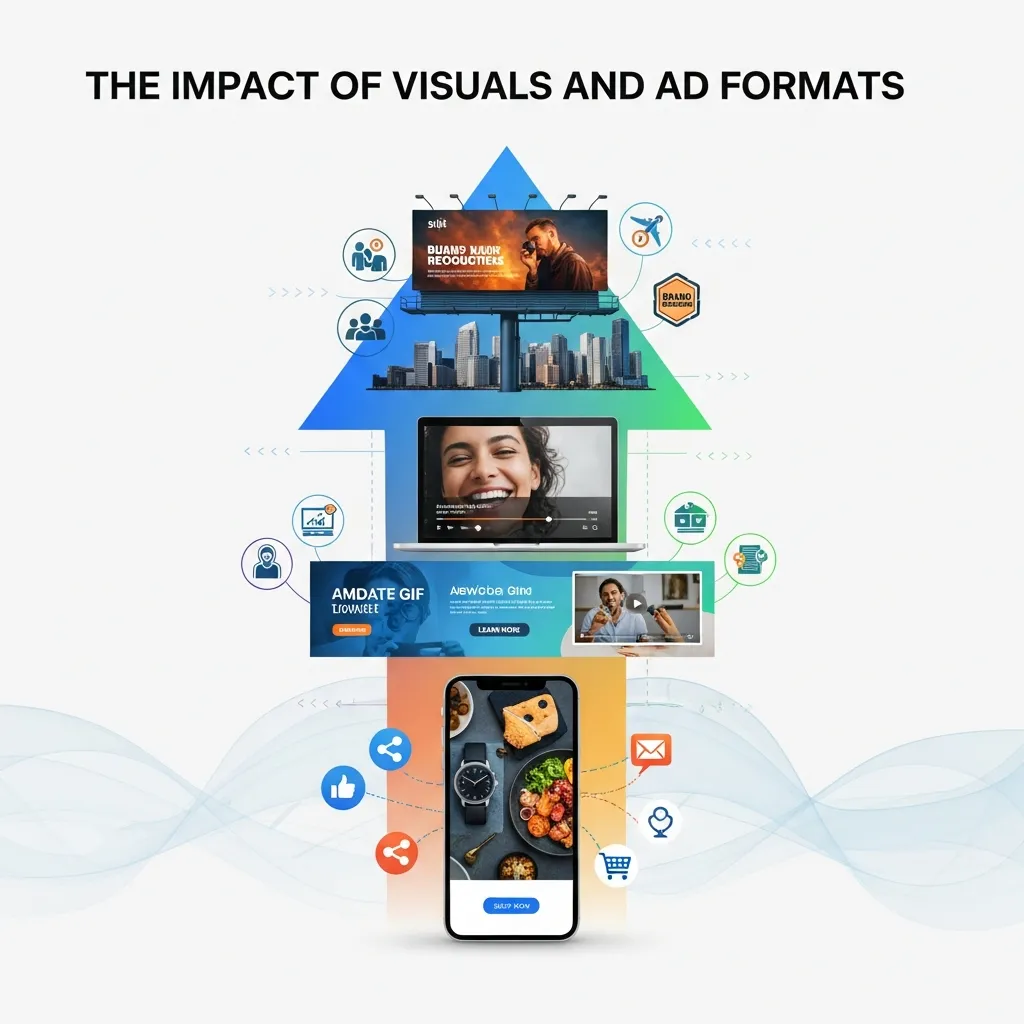
Visuals grab attention faster than text. The right imagery and format can significantly lift your conversion rate.
Eye-catching imagery and video
High-quality images and video stop the scroll and communicate value instantly. Video, in particular, drives engagement—it lets you demonstrate products, tell stories, and build emotional connections quickly. Keep visuals relevant, clear, and aligned with your message.
Choosing the right ad format for your goal
Different formats serve different objectives. Carousel ads showcase multiple products, video ads build awareness, and lead-form ads simplify sign-ups. Match your format to your campaign goal for the best results.
Consistency in branding
Use consistent colors, fonts, and tone across all your ads. Familiar branding builds trust and makes your campaigns instantly recognizable, which supports stronger conversion rates over time.
Cross-Channel Advertising for Enhanced Reach and Conversion
Customers don’t live on a single platform, so your ads shouldn’t either. Cross-Channel Advertising connects your message across multiple touchpoints.
Integrating your ad campaigns across platforms
A coordinated strategy ensures your brand appears consistently wherever your audience spends time—on social media, search engines, and display networks. Cross-Channel Advertising reinforces your message and increases the chances of conversion through repeated, cohesive exposure.
The synergy of social media, search, and display ads
Each channel plays a role. Search ads capture high-intent buyers actively looking for solutions. Social ads build awareness and engagement. Display ads keep your brand top of mind. Together, they create a funnel that guides prospects from discovery to conversion.
Measuring cross-channel performance to improve ad conversion rate
Use unified analytics to track how channels work together. Attribution models help you understand which touchpoints drive conversions, so you can allocate budget wisely. Effective measurement is essential to refine your Cross-Channel Advertising and improve ad conversion rate.
Continuous Optimization: The Key to Sustained Success
Conversion optimization isn’t a one-time task. It’s an ongoing process of testing, learning, and refining.
The importance of ongoing A/B testing
Markets shift, audiences evolve, and what worked last month may not work today. Continuous A/B testing keeps your campaigns sharp. Test one variable at a time—headlines, images, CTAs—to clearly identify what drives improvement.
Analyzing data and making informed adjustments
Let data guide your decisions. Review performance reports regularly to spot trends and identify underperforming elements. Small, data-backed tweaks compound over time, helping you steadily improve ad conversion rate.
Staying ahead of algorithm changes
Ad platforms frequently update their algorithms. Stay informed about changes to bidding, targeting, and ad placement. Adapting quickly keeps your campaigns competitive and your conversion rates stable.
Advanced Strategies to Improve Ad Conversion Rate
Once you’ve mastered the basics, these advanced tactics can push your results even higher.
Personalization and dynamic content
Personalized ads speak directly to individual users based on their behavior and preferences. Dynamic content automatically adjusts headlines, images, or offers to match each viewer, making your message far more relevant—and more likely to convert.
Harnessing the power of user-generated content
User-generated content (UGC) like reviews, photos, and testimonials builds trust through social proof. Featuring real customers in your ads makes your brand more relatable and credible, which encourages new prospects to act.
Implementing exit-intent pop-ups and other on-site tools
Exit-intent pop-ups detect when a visitor is about to leave and present a last-minute offer—like a discount or free resource. These tools recover potential conversions that would otherwise be lost, adding incremental gains to your campaign.
Common Pitfalls to Avoid When Optimizing for Conversion
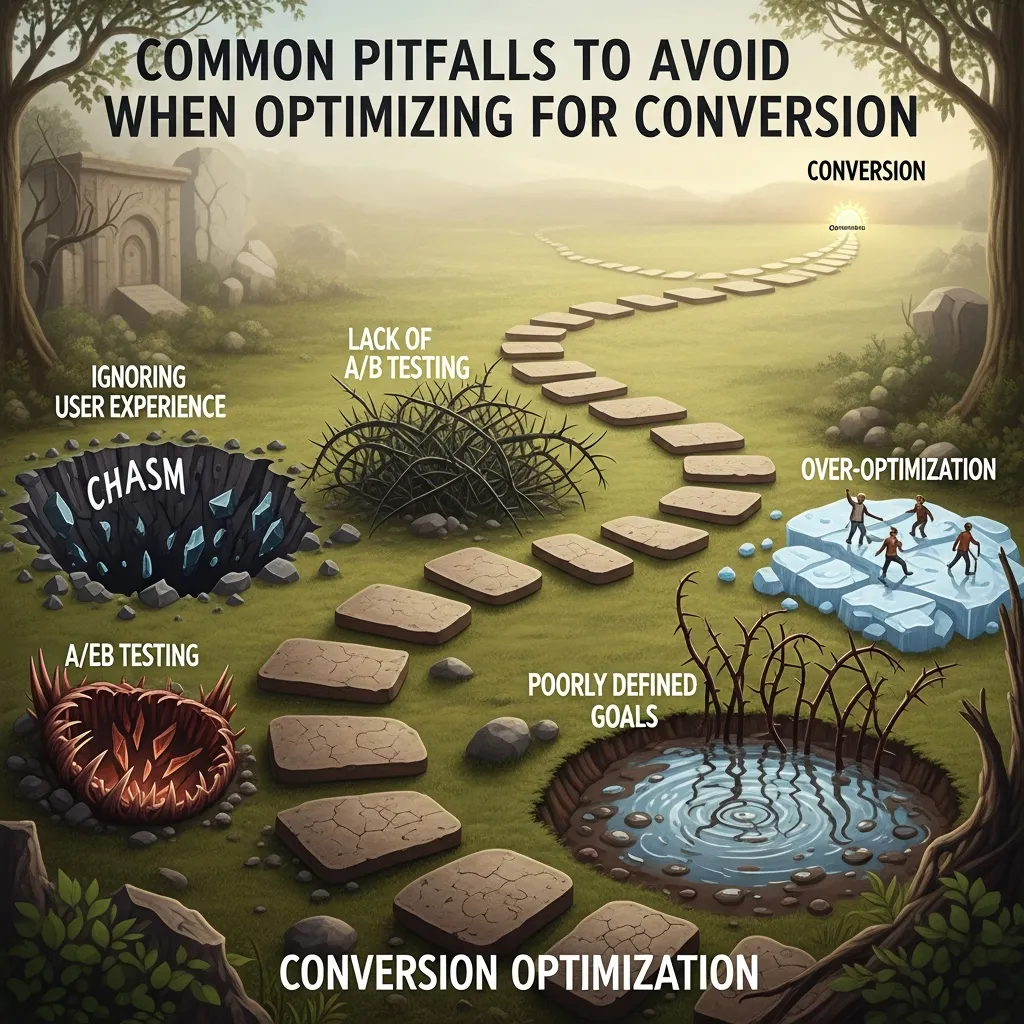
Even experienced advertisers make mistakes. Avoid these common traps to protect your conversion rate.
Generic ad copy
Vague, one-size-fits-all messaging fails to connect. Invest in specific, benefit-driven Persuasive Ad Copywriting that speaks directly to your audience’s needs.
Poorly designed landing pages
A cluttered, slow, or confusing landing page undoes all your hard work. Keep your pages clean, fast, and focused on a single goal.
Ignoring data and analytics
Guesswork leads to wasted spend. Always base decisions on real data. Ignoring your analytics means missing opportunities to optimize and grow.
Conclusion
Improving your ad conversion rate comes down to a few core principles: craft compelling, Persuasive Ad Copywriting; build seamless, high-converting landing pages; target the right audiences; and embrace Cross-Channel Advertising for maximum reach. Layer in continuous testing and data analysis, and you’ll create campaigns that consistently turn clicks into customers.
Conversion optimization is a marathon, not a sprint. The advertisers who win long-term are those who keep testing, learning, and refining. Start applying these Conversion Rate Optimization Ads strategies today, and watch your results climb. Every improvement you make compounds—helping you improve ad conversion rate and fuel lasting business growth.
Frequently Asked Questions
What is a good Improve Ad Conversion Rate?
A good Improve Ad Conversion Rate benchmark depends on your industry, but most businesses see average conversion rates between 2% and 5%. A rate above 5% is generally considered strong when compared with industry standards.
How often should I test to Improve Ad Conversion Rate?
To Improve Ad Conversion Rate, run A/B tests continuously. Test one variable at a time and collect enough conversion data before deciding which version performs better.
Does increasing ad spend Improve Ad Conversion Rate?
No. Simply increasing your budget won’t Improve Ad Conversion Rate. Better targeting, persuasive ad copy, relevant offers, and optimized landing pages have a much greater impact on conversions.
What is Conversion Rate Optimization for Improve Ad Conversion Rate?
Conversion Rate Optimization (CRO) is the process of testing and improving ads, landing pages, and user experiences to Improve Ad Conversion Rate without necessarily increasing advertising spend.
How does Persuasive Ad Copywriting Improve Ad Conversion Rate?
Persuasive Ad Copywriting helps Improve Ad Conversion Rate by grabbing attention, highlighting customer benefits, addressing pain points, and encouraging users to take action with compelling calls to action.
How does Cross-Channel Advertising Improve Ad Conversion Rate?
Cross-Channel Advertising helps Improve Ad Conversion Rate by reaching potential customers across multiple platforms, increasing brand recognition, and creating more opportunities for conversions.
Is mobile optimization important to Improve Ad Conversion Rate?
Yes. A fast, mobile-friendly website is essential to Improve Ad Conversion Rate because most users browse and purchase on smartphones. Slow pages often lead to higher bounce rates and fewer conversions.
How can I tell if my landing page will Improve Ad Conversion Rate?
Monitor conversion rate, bounce rate, time on page, and user behavior. Regular testing and optimization help Improve Ad Conversion Rate by identifying weaknesses in your landing page.
Does SEO help Improve Ad Conversion Rate?
Yes. Although SEO focuses on organic traffic, fast-loading pages, relevant content, and a better user experience also Improve Ad Conversion Rate for paid advertising campaigns.
Can remarketing Improve Ad Conversion Rate?
Absolutely. Remarketing helps Improve Ad Conversion Rate by targeting previous visitors who already know your brand, making them more likely to complete a purchase or desired action.
What are the latest trends to Improve Ad Conversion Rate?
Current strategies to Improve Ad Conversion Rate include AI-powered personalization, dynamic creative optimization, short-form video ads, first-party data, and privacy-focused audience targeting.
How can I track and Improve Ad Conversion Rate?
Use tools such as Google Ads Conversion Tracking, Meta Pixel, and analytics platforms to monitor conversions, evaluate campaign performance, and continuously Improve Ad Conversion Rate through data-driven optimization.