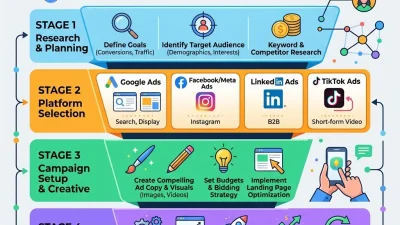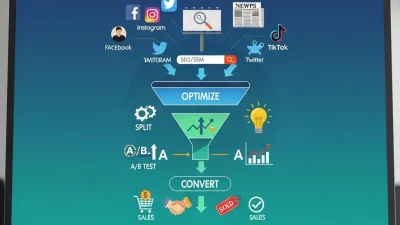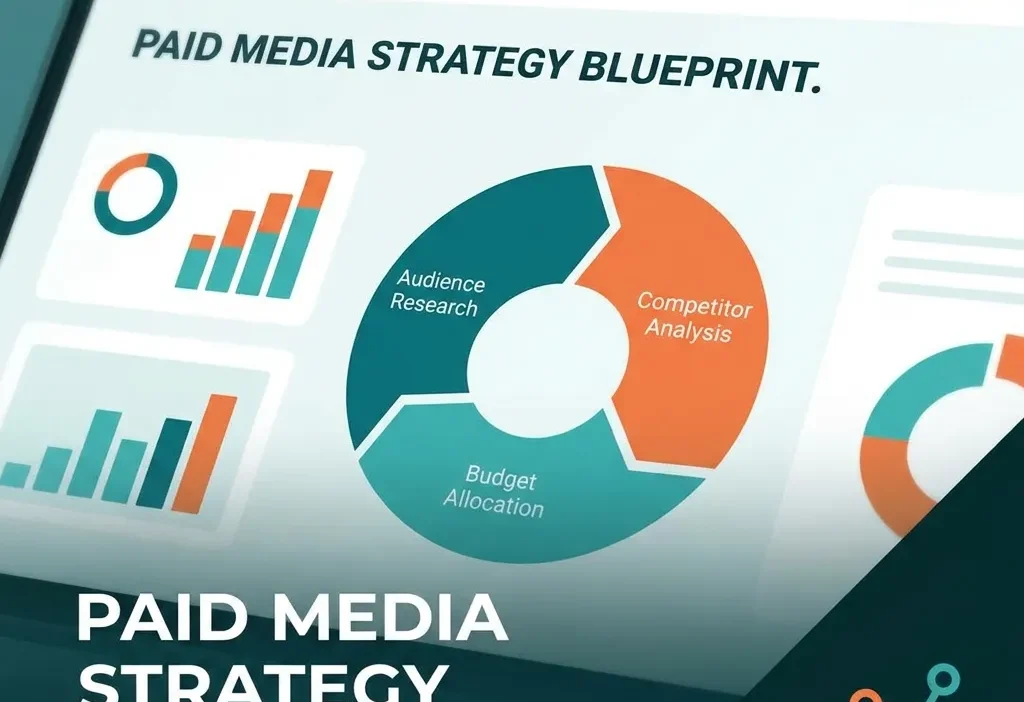
A paid media strategy is a structured plan for buying advertising placements across platforms like Google, Meta, and programmatic networks to drive measurable business outcomes. The most effective paid media strategies combine precise audience targeting, compelling ad copywriting, optimized landing pages, and continuous data-driven refinement to maximize ROI.
Every dollar spent on advertising is a question: will this work? For businesses that lack a structured paid media strategy, the answer is often “not as well as it should.” Wasted spend, low conversion rates, and underwhelming ROI are symptoms of a plan that hasn’t been built with intention.
A well-constructed paid media strategy changes that equation entirely. It gives your advertising a backbone—clear objectives, the right platforms, compelling creative, and a system for measuring what’s working. When these elements align, paid media stops being a cost center and starts behaving like a revenue engine.
This guide covers everything you need to build, execute, and optimize a paid media strategy that delivers. From designing high-converting Landing Page Conversion Ads and mastering Google Ads Copywriting, to improving your Ad Conversion Rate and leveraging a Paid Webinar Platform for lead generation—you’ll find actionable guidance at every stage. Whether you’re refining an existing approach or building from scratch, this is your roadmap.
What is a Paid Media Strategy—and Why Does it Matter?
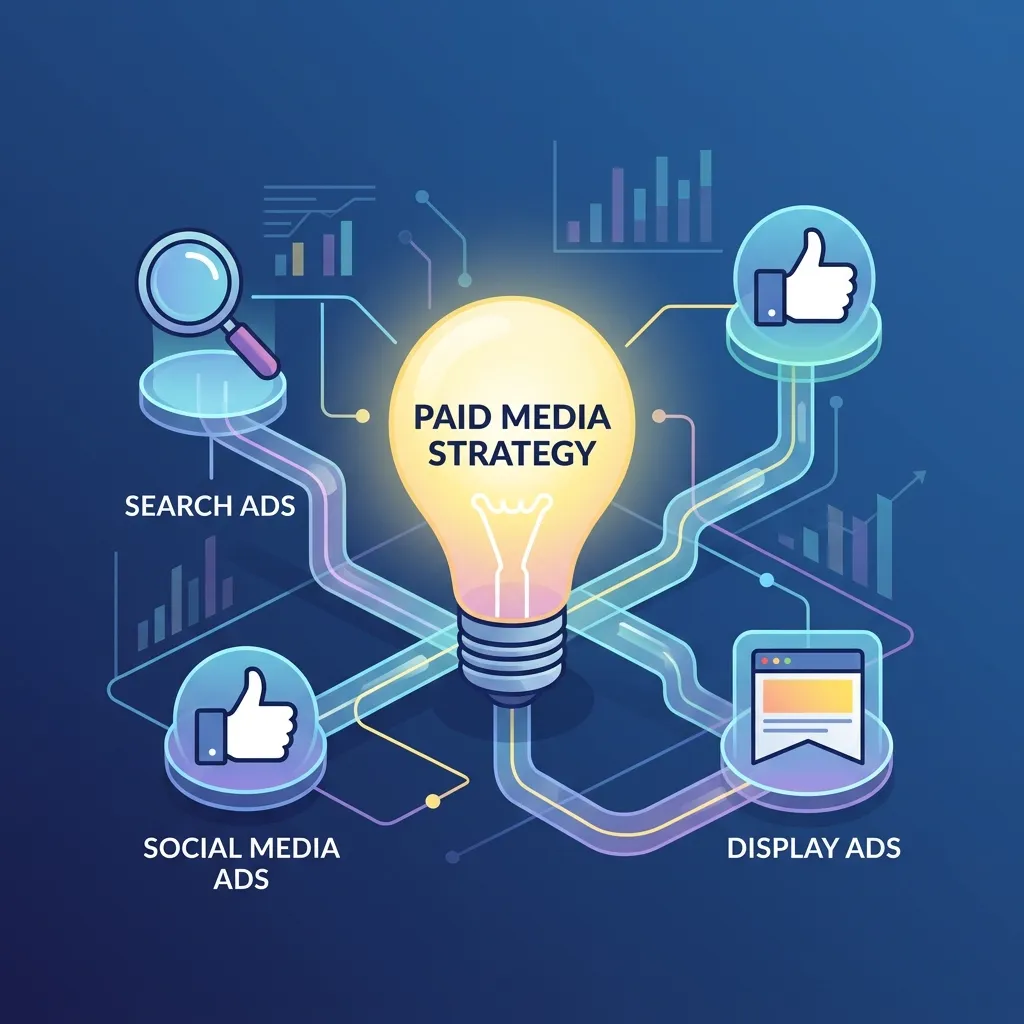
A paid media strategy is a documented framework for how a business allocates budget, selects platforms, creates ad content, and measures performance across paid advertising channels. It encompasses everything from Google Search and Display ads to Meta campaigns, programmatic placements, sponsored content, and beyond.
The distinction between “running ads” and having a paid media strategy is significant. Running ads is transactional. A paid media strategy is deliberate—it maps advertising decisions back to specific business goals, audience segments, and measurable outcomes.
For modern businesses, a strong paid media strategy is non-negotiable. Organic reach on social platforms has declined sharply over the past decade. Search engine results pages are increasingly crowded. The businesses that cut through the noise are those with a clear, well-funded, and intelligently executed approach to paid placement.
The Role of AI Visibility in Today’s Paid Media Landscape
AI-powered tools are reshaping how ads are bought, optimized, and delivered. Google’s Performance Max campaigns, Meta’s Advantage+ suite, and programmatic platforms powered by machine learning are changing what “optimization” means in practice. Advertisers who understand how to feed these systems—with quality creative, precise signals, and clean conversion data—gain a compounding advantage over those who don’t.
Key Pillars of an Effective Paid Media Strategy
Understanding Your Audience and Setting Clear Objectives
Every effective paid media strategy begins with two questions: who are you trying to reach, and what do you want them to do? Audience definition should go beyond demographics. Behavioral data, purchase intent signals, psychographic profiles, and platform-specific interest categories all sharpen your targeting and reduce wasted spend.
Objectives should be specific and tied to measurable KPIs. Brand awareness campaigns optimize for reach and impressions. Lead generation campaigns prioritize form submissions or calls. E-commerce campaigns focus on purchases and return on ad spend (ROAS). Conflating these objectives—or failing to define them at all—is one of the most common and costly mistakes in paid advertising.
Budget Allocation and Bidding Strategies
Budget allocation within a paid media strategy should reflect both the sales funnel and the platform’s cost dynamics. A common framework allocates the majority of budget to bottom-of-funnel conversion campaigns, with smaller allocations toward mid-funnel consideration and top-of-funnel awareness.
Bidding strategy selection matters as much as budget size. Manual CPC gives you control during the data-gathering phase. Target CPA and Target ROAS automated strategies outperform manual bidding once campaigns accumulate sufficient conversion history—typically 30 to 50 conversions per month, per campaign.
Platform Selection: Where Should Your Paid Media Strategy Live?
Platform selection should follow your audience, not trends. Google Search captures high-intent demand—users actively searching for solutions. Meta platforms (Facebook and Instagram) excel at demand generation, reaching users based on interest and behavioral data. LinkedIn’s paid media environment is purpose-built for B2B targeting by job title, seniority, and industry. Programmatic advertising extends reach across the open web with granular audience controls.
The strongest paid media strategies use multiple platforms in coordination, assigning each channel a specific role in the customer journey rather than running identical campaigns everywhere.
Mastering Landing Page Conversion Ads
Designing High-Converting Landing Pages
Landing Page Conversion Ads only perform as well as the pages they send traffic to. A high-converting landing page has a single, clear objective—no navigation menus pulling visitors away, no competing calls to action, no ambiguous value propositions.
The anatomy of an effective landing page for paid traffic includes: a headline that mirrors the ad’s messaging, a concise explanation of the offer’s value, social proof (testimonials, case studies, or logos), and a prominent, action-oriented CTA button. Page speed is equally critical—Google data indicates that conversion rates drop sharply as page load time increases beyond three seconds.
Integrating Your Paid Media Strategy with Landing Page Optimization
Message match—the alignment between ad copy and landing page content—is one of the highest-leverage optimizations available to paid advertisers. When a user clicks a Google Ad promising “Free 30-Day Trial,” and the landing page opens with the same language and offer, conversion rates improve substantially. Disconnect between ad and page creates friction; friction kills conversions.
A/B Testing and Continuous Improvement
A/B testing should be a permanent feature of any paid media strategy, not a one-time project. Test one variable at a time: headlines, hero images, CTA button copy, form length, or social proof placement. Use statistical significance thresholds before declaring a winner, and document every test and its outcome to build an institutional knowledge base over time.
Optimizing Ad Conversion Rate
Understanding Ad Conversion Rate Metrics
Ad Conversion Rate is the percentage of ad clicks that result in a desired action—a purchase, form submission, phone call, or download. It is calculated by dividing total conversions by total clicks and multiplying by 100. Industry benchmarks vary significantly by sector and platform; Google Ads search campaigns across all industries average around 3–4%, while top-performing accounts regularly achieve rates of 10% or higher.
Strategies for Improving Ad Conversion Rate
Improving Ad Conversion Rate requires diagnosis before action. Low conversion rates can stem from poor audience targeting, weak ad creative, misaligned landing pages, or friction in the conversion process itself. Systematic testing across each of these variables—rather than guessing—is what separates high-performing accounts from average ones.
Audience refinement is often the fastest win. Excluding irrelevant search terms, tightening geographic targeting, or layering in-market audience segments onto existing campaigns can improve conversion rates without changing a single word of ad copy.
The Impact of Compelling Creatives and Ad Formats
Creative quality directly influences Ad Conversion Rate. Visually distinctive ads generate higher click-through rates; clear, benefit-led messaging converts clicks into actions. Responsive Search Ads (RSAs) in Google and dynamic creative options on Meta allow platforms to test combinations at scale—but the quality of the inputs still determines the quality of the outputs. Strong creative assets are the foundation; automation amplifies them.
Crafting Impactful Google Ads Copywriting
Best Practices for Google Ads Copywriting
Google Ads Copywriting operates under tight constraints—headlines max out at 30 characters, descriptions at 90—which means every word must earn its place. Effective Google Ads Copywriting leads with the benefit, not the feature. “Cut Hiring Time by 50%” outperforms “AI-Powered Recruitment Software” because it answers the reader’s implicit question: what’s in it for me?
Keywords Integration and Ad Group Structure
Tightly themed ad groups—where keywords, ad copy, and landing pages all share a common focus—produce better Quality Scores, lower CPCs, and higher Ad Conversion Rates. Single keyword ad groups (SKAGs) have largely given way to small, themed clusters as match types have broadened, but the underlying principle remains: relevance between keyword, ad, and landing page is the cornerstone of efficient Google Ads Copywriting.
Writing Headlines and Descriptions That Grab Attention
The most effective headlines in Google Ads combine a keyword with a specific benefit and a differentiator. Including numbers (“Rated 4.9/5 by 10,000+ Users”), time-bound language (“Get Started Today”), or a clear competitive advantage strengthens click-through rates. Descriptions should expand on the headline’s promise, address a key objection, and close with a direct call to action.
The Art of Persuasive Ad Copywriting
Principles of Persuasive Ad Copywriting
Persuasive Ad Copywriting draws on principles first articulated by Robert Cialdini—reciprocity, social proof, scarcity, authority, liking, and commitment. Applied to advertising, these translate to tactics like customer testimonials (social proof), limited-time offers (scarcity), expert endorsements (authority), and free trials (reciprocity).
The most durable principle across all Persuasive Ad Copywriting is specificity. Specific claims are more credible and more memorable than vague ones. “Saves teams 6 hours per week” is more persuasive than “saves you time.” Data, when available, always outperforms generalities.
Storytelling and Emotional Appeals in Advertising
Emotion drives decisions; logic justifies them. The most effective paid ads connect with a genuine human desire or frustration before presenting a solution. A recruitment platform ad that opens with “Tired of sorting through unqualified applicants?” establishes emotional resonance before making a product claim. This structure—problem, empathy, solution—is one of the most reliable frameworks in Persuasive Ad Copywriting.
Calls to Action That Drive Results
A strong CTA is specific, urgent, and low-friction. “Book Your Free Demo” outperforms “Learn More” because it tells the user exactly what will happen next and signals no financial commitment. Matching the CTA to the user’s stage in the funnel matters too—a cold audience responds better to “Get the Free Guide” than to “Buy Now.”
Leveraging a Paid Webinar Platform for Lead Generation
Integrating Paid Media Strategy with Content Marketing
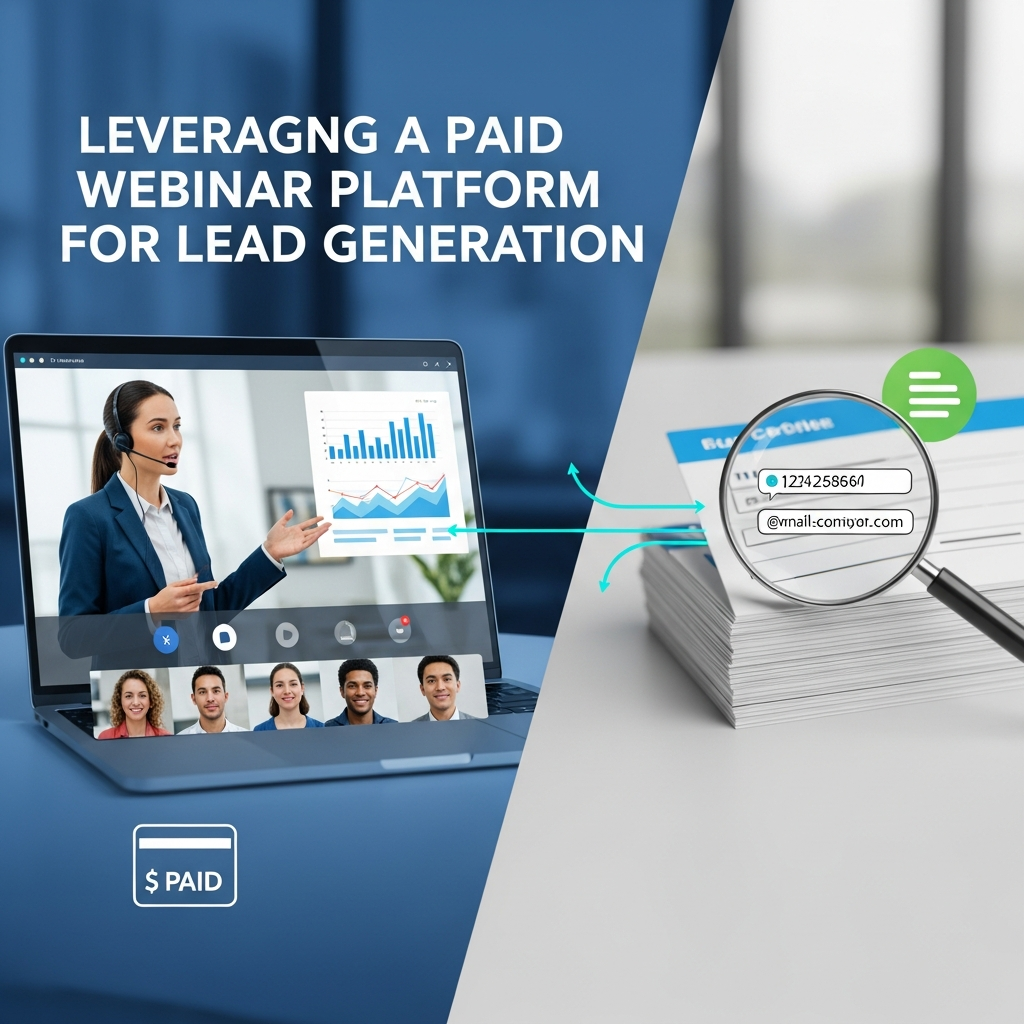
A Paid Webinar Platform sits at the intersection of paid media and content marketing. Webinars generate highly qualified leads—attendees self-select based on genuine interest in the topic—and provide a structured environment for demonstrating expertise and building trust before asking for a sale.
Promoting webinars through targeted paid ads extends their reach far beyond an organic email list. A targeted LinkedIn campaign promoting a B2B webinar on a relevant industry topic can generate registrations at a lower CPL than many direct-response campaigns, because the offer carries inherent value.
Promoting Webinars Through Targeted Ads
Paid promotion for a Paid Webinar Platform should use the same audience-first logic as any other paid media strategy element. Retarget website visitors with webinar registration ads. Target lookalike audiences based on your existing customer list. Use LinkedIn to reach specific job titles and industries. Test urgency-based messaging as the webinar date approaches (“Only 3 days left to register”).
Post-webinar, repurpose the recorded content as gated assets promoted through continued paid campaigns, extending the lead-generation value of a single webinar event across weeks or months.
Measuring and Analyzing Paid Media Performance
Key Performance Indicators for Your Paid Media Strategy
The KPIs that matter most in a paid media strategy depend on campaign objectives. For awareness: reach, impressions, and frequency. For consideration: click-through rate (CTR), engagement rate, and video view rate. For conversion: Ad Conversion Rate, cost per acquisition (CPA), and ROAS.
Tracking these metrics in isolation is less valuable than tracking trends over time and benchmarking against historical performance. A 3% conversion rate is either excellent or disappointing depending on what it was last month and what the industry average is.
Utilizing Analytics Tools
Google Analytics 4, platform-native dashboards, and third-party attribution tools like Northbeam or Triple Whale provide the data infrastructure for informed paid media decisions. Accurate conversion tracking is the prerequisite for everything else—without clean data flowing into your ad platforms, automated bidding strategies cannot optimize effectively.
Iterative Optimization Based on Data Insights
Optimization is not a single event. The most effective paid media strategies operate on a structured testing calendar: weekly performance reviews, monthly creative refreshes, and quarterly strategic reassessments. This cadence prevents both under-reaction (leaving underperforming campaigns running too long) and over-reaction (making changes before statistical significance is reached).
Advanced Paid Media Techniques
Retargeting and Remarketing Strategies
Retargeting—serving ads to users who have previously visited your website or engaged with your content—consistently delivers higher Ad Conversion Rates than cold prospecting campaigns. These users have already demonstrated interest; the ad’s job is to re-engage and convert, not to introduce. Segment retargeting audiences by behavior (product page visitors vs. checkout abandoners, for example) and tailor messaging to each group’s position in the funnel.
Dynamic Creative Optimization
Dynamic Creative Optimization (DCO) allows platforms to automatically test and serve the best-performing combinations of headlines, images, descriptions, and CTAs. On Meta, Dynamic Creative is a campaign-level setting. On Google, RSAs with multiple headline and description inputs serve a similar function. DCO increases testing velocity without increasing manual workload—a meaningful advantage for teams with limited resources.
AI-Driven Optimization for Your Paid Media Strategy
AI-driven tools within Google Ads and Meta Ads have become sophisticated enough to outperform manual management on many standard optimization tasks, provided they receive accurate signals. Conversion tracking quality, first-party audience data, and creative diversity are the three inputs that most directly determine AI optimization performance. Investing in these areas is now a core component of any modern paid media strategy.
Future Trends in Paid Media
The Rise of AI and Machine Learning in Paid Advertising
AI’s influence on paid media will only deepen. Generative AI is beginning to assist with ad creative production at scale—enabling rapid iteration of Google Ads Copywriting and visual assets. Predictive bidding models are becoming more accurate as they access richer data sets. Advertisers who understand how to collaborate with AI systems—setting smart constraints, feeding quality inputs, and evaluating outputs critically—will hold a durable competitive advantage.
Privacy Changes and Adapting to New Regulations
Third-party cookie deprecation, iOS privacy changes, and tightening data regulations across jurisdictions are reshaping how paid media audiences are built and measured. First-party data—email lists, CRM data, purchase history—is becoming the most valuable targeting asset an advertiser can own. Businesses that invest now in building and activating first-party data will be better insulated against future privacy-driven disruption.
Emerging Platforms and Ad Formats
Connected TV (CTV), audio advertising through Spotify and podcast networks, and retail media networks (Amazon, Walmart) represent significant growth areas in paid media. Short-form video—particularly on TikTok, YouTube Shorts, and Instagram Reels—continues to attract both audience attention and advertiser budget. A forward-looking paid media strategy monitors these channels and tests selectively, rather than waiting until adoption is universal.
Conclusion
A paid media strategy is not a set-and-forget document. The platforms evolve, audience behaviors shift, creative gets fatigued, and competitive landscapes change. What remains constant is the underlying logic: know your audience, set clear objectives, create compelling ads, send traffic to optimized pages, measure everything, and improve continuously.
The businesses that win in paid media are those that treat it as a discipline, not a shortcut. They invest in Google Ads Copywriting that genuinely engages. They obsess over Landing Page Conversion Ads that convert. They track Ad Conversion Rate with the same rigor they apply to revenue. They use tools—including Paid Webinar Platforms, AI-driven optimization, and dynamic creative—not because they’re novel, but because they work.
Start with the fundamentals outlined in this guide, build your testing culture from day one, and let data drive your decisions. The compounding returns of a well-executed paid media strategy make the investment worthwhile many times over.
Frequently Asked Questions
What is a paid media strategy?
A paid media strategy is a structured plan for investing in advertising placements across platforms like Google, Meta, LinkedIn, and programmatic networks to achieve specific business outcomes. It includes audience targeting, platform selection, budget allocation, creative development, and performance measurement.
How can I improve my Landing Page Conversion Ads?
Improve Landing Page Conversion Ads by ensuring message match between your ad copy and landing page content, simplifying the page to a single CTA, improving load speed, and A/B testing headlines and hero images. Removing navigation menus and reducing form fields also reliably lifts conversion rates.
What are the key factors influencing Ad Conversion Rate?
Ad Conversion Rate is influenced by audience relevance, ad creative quality, landing page experience, offer strength, and the alignment between the ad’s promise and the post-click experience. Technical factors like page speed and form length also play a significant role.
What are some tips for effective Google Ads Copywriting?
Lead headlines with specific benefits rather than product features. Use numbers and data where possible. Ensure tight keyword-to-ad-to-landing-page relevance. Include a clear, action-oriented CTA in descriptions. Test multiple headline combinations using Responsive Search Ads to identify top performers.
How can I make my Ad Copywriting more persuasive?
Apply social proof, specificity, and emotional relevance. Use customer language—the exact words your audience uses to describe their problems—rather than internal marketing terminology. Open with an acknowledged pain point, empathize, then present your solution with a specific, credible claim.
What role does a Paid Webinar Platform play in a paid media strategy?
A Paid Webinar Platform generates highly qualified leads by attracting prospects genuinely interested in the topic. Promoted through targeted paid ads, webinars can deliver lower cost-per-lead than direct-response campaigns while simultaneously building trust and demonstrating expertise.
How often should I review my paid media strategy?
Conduct weekly performance reviews at the campaign level, monthly creative and audience assessments, and quarterly strategic reviews that examine platform allocation, budget distribution, and objective alignment. Major platform changes or business shifts may warrant additional out-of-cycle reviews.
What are the common pitfalls to avoid in paid media?
The most common pitfalls include: launching campaigns without accurate conversion tracking, neglecting landing page optimization, making bid or budget changes before reaching statistical significance, failing to refresh creative regularly, and conflating different campaign objectives within a single campaign structure.
Can AI truly enhance my paid media strategy?
Yes—AI-driven tools within Google Ads and Meta Ads outperform manual optimization on many standard tasks when given quality inputs. Accurate conversion tracking, first-party audience data, and diverse creative assets are the three factors that most determine how effectively AI optimization tools perform.
What is the difference between organic and paid media?
Organic media refers to content that earns visibility without direct payment—SEO-driven blog content, social media posts, and email newsletters. Paid media involves purchasing ad placements for guaranteed visibility. Paid media delivers faster, more predictable reach; organic media builds compounding long-term value.